


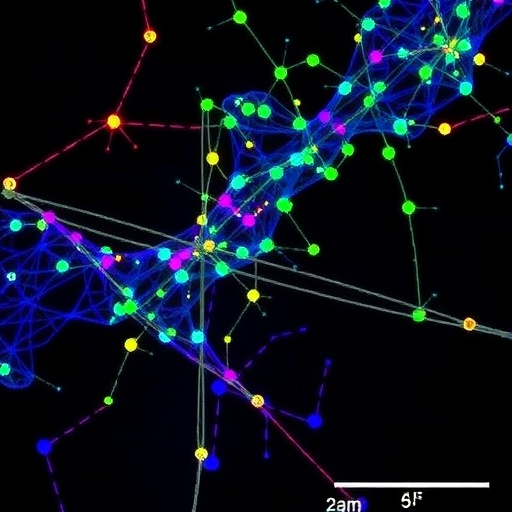
In the relentless battle against glioblastoma, one of the deadliest and most invasive brain tumors known to medicine, recent scientific advances are shedding new light on the cellular mechanisms that drive tumor progression. Glioblastoma’s notorious ability to migrate and invade healthy brain tissue has long frustrated clinicians and researchers alike, making it a prime target for innovative therapeutic strategies. A groundbreaking study published in Cell Death Discovery (2026) by Zhang, Wang, Ouyang, and colleagues elucidates the pivotal role of tubulin folding cofactor B (TBCB) in glioblastoma cell migration, revealing molecular insights that could transform future treatment approaches.
Central to the study is the function of microtubules, integral components of the cytoskeleton that orchestrate cellular shape, intracellular transport, and motility. Microtubules are dynamic polymers composed of α- and β-tubulin heterodimers, whose proper folding and assembly are critical for maintaining cellular integrity and facilitating migration. Tubulin folding cofactors, including TBCB, are essential chaperones that ensure the correct folding of tubulin monomers, thereby regulating microtubule stability and organization. Until now, however, the specific contribution of TBCB to glioblastoma pathology had not been comprehensively explored.
Zhang and colleagues embarked on an in-depth investigation, combining molecular biology, biochemistry, and advanced imaging techniques to decode TBCB’s mechanistic role within glioblastoma cells. Their findings demonstrated that TBCB is remarkably overexpressed in glioblastoma tissues compared to normal brain samples. This upregulation correlated strongly with increased cell motility, a hallmark of cancer invasiveness. By manipulating TBCB levels through gene silencing and overexpression models, the authors observed dramatic alterations in glioblastoma cell migration capabilities, directly implicating TBCB as a key regulator.
Perhaps most striking was the discovery that TBCB modulates microtubule dynamics by influencing tubulin folding efficiency and subsequent polymerization. Aberrant expression of TBCB disrupted microtubule networks, fostering cytoskeletal rearrangements conducive to enhanced cellular movement. These structural changes appeared to prime glioblastoma cells for invasive behavior by facilitating the extension of membrane protrusions known as lamellipodia and filopodia – cellular appendages fundamental to tissue infiltration. Such insights highlight the cytoskeletal underpinnings of glioblastoma dissemination with unprecedented clarity.
The researchers further delved into the signaling pathways governing TBCB expression and activity. Their data revealed TBCB as an effector downstream of key oncogenic signals frequently mutated in glioblastoma, including the PI3K/AKT and MAPK cascades. This positions TBCB not simply as a structural supporter but as a mediator actively integrated into tumor-driving networks. Pharmacological inhibition of these pathways attenuated TBCB expression and impeded microtubule remodeling, suggesting potential therapeutic avenues for targeting glioblastoma invasiveness.
In parallel, Zhang et al. interrogated the interplay between TBCB and other microtubule-associated proteins (MAPs) that regulate cytoskeletal stability and dynamics. The study revealed that TBCB cooperates with several MAPs to orchestrate precise microtubule configurations essential for directional migration. Disruption of this coordination through TBCB depletion led to disorganized microtubules and impaired migratory capacity, confirming the interdependency of cytoskeletal regulators in glioblastoma cells.
One of the innovative aspects of this research is the use of live-cell super-resolution microscopy to visualize, in real time, how alterations in TBCB expression impact microtubule behavior and cell morphology at nanoscale resolution. This approach unveiled that increased TBCB levels accelerate microtubule nucleation rates and promote persistent microtubule growth at the leading edge of migrating cells, providing mechanistic explanations for the enhanced invasive potential observed.
Clinical implications of these findings are profound. Glioblastoma’s infiltrative nature is a predominant factor limiting surgical resection and contributing to recurrence. Targeting TBCB-mediated pathways offers a promising strategy to contain tumor spread by stabilizing microtubule architecture and impeding migration. Such interventions could augment current treatment modalities, including chemotherapy and radiation, by reducing dissemination and ultimately improving patient survival.
Moreover, the research illuminated the prognostic relevance of TBCB expression patterns. Analysis of patient-derived glioblastoma samples and associated clinical data indicated that elevated TBCB correlates with poorer overall survival and increased metastatic propensity. This suggests that TBCB might serve as both a biomarker for aggressive disease and a predictor of treatment response, enabling more personalized therapeutic approaches.
Further exploration into TBCB’s structural biology through cryo-electron microscopy revealed specific domains responsible for its interaction with nascent tubulin monomers and other cofactors. Such detailed molecular mapping opens the door to rational drug design, aiming to develop small molecules or biologics capable of selectively modulating TBCB activity without compromising normal cellular functions—a critical consideration given TBCB’s fundamental role in general cell biology.
The study also raised intriguing questions about TBCB’s role beyond glioblastoma, potentially extending to other cancers marked by high migratory capacity and microtubule dysregulation. Preliminary data from the authors suggest a conserved mechanism across gliomas and possibly other solid tumors, warranting broader oncological investigations.
In summary, the work by Zhang and colleagues represents a significant leap forward in understanding the molecular drivers of glioblastoma migration. By uncovering how TBCB orchestrates cytoskeletal dynamics to foster an invasive phenotype, this research paves the way for innovative therapeutic strategies centered on microtubule regulation. As glioblastoma continues to pose formidable clinical challenges, targeting TBCB offers a beacon of hope to stem this lethal cancer’s relentless spread.
Future investigations will undoubtedly expand on these findings, exploring combinatorial treatments that integrate TBCB targeting with current modalities, and validating the clinical utility of TBCB as a biomarker in larger patient cohorts. The intersection of cutting-edge imaging, molecular biology, and translational research embodied in this study exemplifies the future of precision oncology—where unraveling the minutiae of cellular processes translates directly into transformative patient outcomes.
The discovery of TBCB’s critical role not only enriches our fundamental understanding of tumor biology but also exemplifies how targeted molecular insights can inspire novel approaches to disrupt the machinery cancer cells exploit to survive and thrive. As the scientific community continues to decode the molecular choreography of glioblastoma, innovations like these bring us closer to effective therapies that may one day transform fatal diagnoses into manageable conditions.
Cite Scienmag News
Nathaniel Bowman. (July 1, 2026). Tubulin Cofactor B Drives Glioblastoma Cell Migration. Scienmag. https://scienmag.com/tubulin-cofactor-b-drives-glioblastoma-cell-migration/
Nathaniel Bowman. "Tubulin Cofactor B Drives Glioblastoma Cell Migration." Scienmag, 1 July 2026, https://scienmag.com/tubulin-cofactor-b-drives-glioblastoma-cell-migration/. Accessed 4 September 2026.
Nathaniel Bowman. "Tubulin Cofactor B Drives Glioblastoma Cell Migration." Scienmag. July 1, 2026. https://scienmag.com/tubulin-cofactor-b-drives-glioblastoma-cell-migration/


