


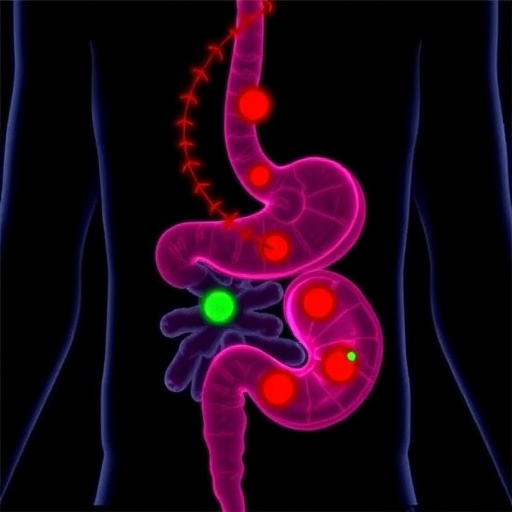
Immunotherapy has changed the treatment landscape for cancer, but its benefits remain unevenly distributed among patients with gastric cancer. Immune checkpoint blockade (ICB), which is designed to release molecular restraints on T cells, can produce durable responses in some individuals while producing little or no benefit in others. A new study in Science Bulletin points to the tumor microenvironment as a major determinant of this difference, identifying a macrophage balance that appears to influence whether gastric tumors remain immunologically active or become resistant to treatment.
The researchers constructed a high-resolution single-cell atlas from more than 240,000 cells obtained from patients with gastric cancer. Single-cell RNA sequencing enabled them to examine gene-expression programs in individual cells rather than averaging signals across entire tumor samples. This approach revealed extensive cellular diversity within the tumor microenvironment, including multiple macrophage populations, T-cell states and metabolic programs associated with treatment response. Instead of finding that one immune cell type alone predicted outcome, the investigators identified a functional relationship between two macrophage states characterized by high expression of CXCL10 and OLR1.
Macrophages are adaptable immune cells that can respond to signals from cancer cells, stromal tissue and other immune populations. In the gastric tumors examined in the study, Mac-CXCL10 and Mac-OLR1 represented distinct functional states. The relative abundance of these populations was more informative than the simple presence or absence of either one. Tumors with a higher Mac-CXCL10/Mac-OLR1 ratio were more likely to respond to ICB therapy and were associated with longer progression-free survival. This ratio therefore emerged as a potential indicator of the immune conditions that make a tumor more receptive to checkpoint blockade.
The favorable macrophage state was closely linked to a population of interferon-responsive CD8-positive T cells. Interferons are signaling proteins that help coordinate antiviral and antitumor immunity by regulating antigen presentation, immune-cell recruitment and cytotoxic activity. The study suggests that Mac-CXCL10 cells and interferon-responsive CD8-positive T cells form a coordinated “interferon-responsive immune hub” within the tumor microenvironment. In this setting, macrophage-derived signals may help sustain T-cell activation, while activated T cells reinforce an inflammatory circuit capable of supporting tumor-cell recognition and destruction.
The opposing Mac-OLR1 state was associated with lipid-related metabolic programs and features of immune suppression. OLR1, also known as the lectin-like oxidized low-density lipoprotein receptor-1, can bind oxidized lipid particles and is involved in cellular responses to lipid stress. The findings indicate that the accumulation of oxidized lipids in the tumor environment may contribute to the development or maintenance of this macrophage population. Such metabolic pressure could alter macrophage gene expression and behavior, shifting the immune ecosystem away from effective T-cell stimulation.
A central mechanism identified by the researchers involved prostaglandin E₂, or PGE₂, a lipid-derived signaling molecule with broad effects on inflammation and immunity. Mac-OLR1 macrophages were linked to increased PGE₂-related activity. PGE₂ can influence immune-cell migration, cytokine production and T-cell function through signaling pathways that regulate intracellular cyclic AMP and downstream transcriptional responses. In the context of this study, PGE₂ was associated with suppression of interferon signaling in CD8-positive T cells, potentially weakening the production of effector molecules and reducing the ability of these cells to attack malignant cells.
This macrophage–T-cell relationship offers a possible explanation for why some gastric tumors fail to respond even when immune checkpoint molecules are therapeutically blocked. ICB can remove inhibitory signals such as those mediated by PD-1 or related pathways, but this intervention may be insufficient if the surrounding tissue continues to deliver metabolic and inflammatory signals that disable T cells. A PGE₂-rich environment could therefore act as an additional layer of immune resistance, limiting the restoration of T-cell activity after checkpoint inhibition.
The study also raises the possibility of combining immunotherapy with interventions aimed at the tumor’s lipid metabolism or PGE₂ signaling. Strategies that reduce oxidized-lipid stress, alter OLR1-associated macrophage programs or inhibit PGE₂ production and activity could, in principle, shift the macrophage balance toward a more immune-supportive state. Such approaches might enhance the effect of checkpoint blockade, although the study does not establish a treatment regimen for patients. The safety, timing and selectivity of any macrophage- or PGE₂-targeted therapy will require careful evaluation, since these pathways also participate in normal tissue repair and inflammatory control.
The investigators emphasize that their findings require further clinical validation before the macrophage ratio can be used as a routine biomarker. Nevertheless, the work provides a detailed framework for understanding gastric cancer immunotherapy resistance as an ecosystem-level problem. The outcome of treatment may depend not simply on whether immune cells are present, but on how macrophage states, lipid metabolism and T-cell interferon signaling interact within individual tumors. By identifying the Mac-CXCL10/Mac-OLR1 balance and its connection to PGE₂-mediated suppression, the study points toward a more precise form of immunotherapy in which the immune environment itself becomes a therapeutic target.
Web References:
https://doi.org/10.1016/j.scib.2026.07.049
References:
Science Bulletin, DOI: 10.1016/j.scib.2026.07.049
Cite Scienmag News
Nathaniel Bowman. (August 12, 2026). How Macrophages Help Gastric Tumors Resist Immunotherapy. Scienmag. https://scienmag.com/how-macrophages-help-gastric-tumors-resist-immunotherapy/
Nathaniel Bowman. "How Macrophages Help Gastric Tumors Resist Immunotherapy." Scienmag, 12 August 2026, https://scienmag.com/how-macrophages-help-gastric-tumors-resist-immunotherapy/. Accessed 4 September 2026.
Nathaniel Bowman. "How Macrophages Help Gastric Tumors Resist Immunotherapy." Scienmag. August 12, 2026. https://scienmag.com/how-macrophages-help-gastric-tumors-resist-immunotherapy/


