


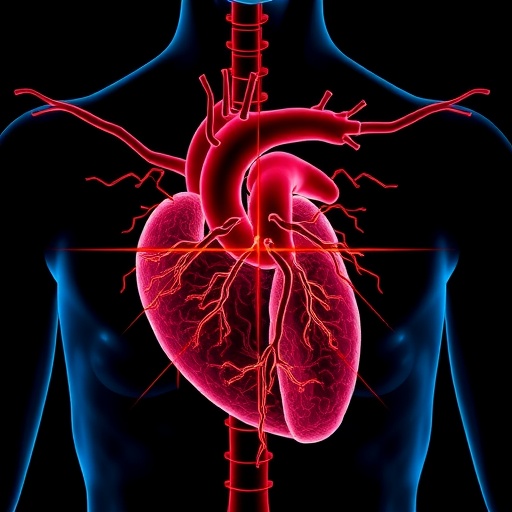
A new prospective cohort study published in Nature Communications is drawing attention to a question with major implications for cardiovascular medicine: how do chronic health conditions shape a person’s risk of developing aortic disease? In the study, Yu, Lu, Yang and colleagues combine predictive modeling with etiological analysis to examine not only which long-term conditions are associated with aortic disease, but also what those associations may reveal about the biological pathways leading to damage in the body’s largest artery.
The aorta carries oxygen-rich blood from the heart to the rest of the body. Although it is built to withstand constant pressure, its wall can weaken, stiffen or become structurally abnormal over time. Aortic disease includes conditions such as aneurysm, in which the artery expands dangerously, and dissection, in which a tear forms between layers of the vessel wall. These disorders can progress silently and may become life-threatening before symptoms appear, making early identification of people at elevated risk a central challenge in preventive cardiology.
The study’s prospective design is especially important. In a prospective cohort, researchers assess participants’ health characteristics before the outcome of interest occurs and then follow them over time. This approach can provide a clearer temporal sequence than a purely cross-sectional analysis, where disease and risk factors are measured at the same moment. By tracking chronic conditions and subsequent aortic disease, the researchers can investigate whether specific health patterns precede the vascular outcome and whether combinations of conditions offer more information than any single diagnosis alone.
The predictive component of the research addresses a practical medical question: can routinely recorded health information help identify people who may require closer monitoring? Chronic conditions can influence the cardiovascular system in different ways. High blood pressure increases mechanical stress on the aortic wall, while disorders affecting metabolism, inflammation, kidney function or connective tissue may alter the vessel’s structure and resilience. A predictive model can evaluate how much these factors contribute to risk when considered together, potentially helping clinicians decide who may benefit from imaging, specialist assessment or more aggressive risk-factor management.
Prediction, however, is not the same as causation. A factor may improve a model’s ability to forecast disease without directly causing it. For that reason, the study also includes etiological analyses, which are designed to explore whether observed relationships may reflect underlying biological or causal processes. Such analyses can help distinguish a direct contribution from indirect effects, shared risk factors or medical conditions that simply occur alongside aortic disease. This distinction matters because prevention depends on knowing which pathways are modifiable and which associations are mainly markers of vulnerability.
The research speaks to a broader shift in cardiovascular science. Aortic disease has traditionally been approached through individual risk factors, family history and imaging findings, but patients often live with several chronic conditions at once. These conditions may interact through overlapping mechanisms, including persistent inflammation, impaired tissue repair, vascular remodeling and abnormal blood-pressure regulation. Studying multimorbidity—the presence of multiple long-term diseases—could therefore produce a more realistic picture of risk than examining conditions in isolation.
For patients, the findings underscore why chronic disease management extends beyond the organ system where a diagnosis first appears. Controlling blood pressure, maintaining kidney and metabolic health, avoiding tobacco exposure and following medical advice may all be relevant to preserving vascular integrity, even when a person has no known aortic abnormality. The study does not, based on the available citation alone, establish a universal screening recommendation or indicate that every person with a chronic condition should undergo aortic imaging. Instead, its value lies in clarifying how medical histories might be integrated into more individualized risk assessment.
The work may also be useful for researchers developing clinical decision-support tools. A model that identifies higher-risk individuals could eventually be incorporated into electronic health records, where it might flag combinations of diagnoses that deserve attention. Yet such tools must be carefully validated across different populations and health-care systems. Predictive performance can decline when a model is applied to groups that differ from the original cohort in age, ancestry, disease prevalence, access to care or diagnostic practices. Clinical usefulness also depends on whether identifying risk leads to an intervention that improves outcomes.
As with all observational cohort studies, the interpretation of the results requires caution. Even a large and carefully designed prospective analysis can be affected by unmeasured confounding, differences in medical surveillance and inaccuracies in recorded diagnoses. People with more chronic illnesses may visit doctors more often, increasing the chance that aortic disease is detected. Etiological analyses can strengthen an argument about mechanisms, but they do not automatically replace evidence from clinical trials or laboratory research. The study’s conclusions will therefore be most powerful when combined with imaging studies, genetic research and long-term intervention trials.
By linking chronic conditions with both disease prediction and possible biological causation, the Nature Communications report places aortic health within the wider context of whole-person medicine. Its central message is that the risk of aortic disease may be shaped by a network of interconnected conditions rather than by a single isolated diagnosis. As medicine moves toward earlier detection and more personalized prevention, understanding that network could help clinicians recognize silent vascular danger sooner—and give patients a better chance to protect an artery they may never have known was at risk.
Cite Scienmag News
Phoebe Ingram. (August 11, 2026). Chronic Conditions Linked to Aortic Disease Risk in Prospective Cohort Study. Scienmag. https://scienmag.com/chronic-conditions-linked-to-aortic-disease-risk-in-prospective-cohort-study/
Phoebe Ingram. "Chronic Conditions Linked to Aortic Disease Risk in Prospective Cohort Study." Scienmag, 11 August 2026, https://scienmag.com/chronic-conditions-linked-to-aortic-disease-risk-in-prospective-cohort-study/. Accessed 3 September 2026.
Phoebe Ingram. "Chronic Conditions Linked to Aortic Disease Risk in Prospective Cohort Study." Scienmag. August 11, 2026. https://scienmag.com/chronic-conditions-linked-to-aortic-disease-risk-in-prospective-cohort-study/


