


Rhabdomyosarcoma is the most common soft tissue sarcoma of childhood and the third most common extracranial solid tumor in children, trailing only neuroblastoma and Wilms tumor. Although modern multimodal treatment—systemic chemotherapy combined with surgery and/or radiotherapy—cures more than 75 percent of children in the low-risk category, the outlook for high-risk patients remains grim: five-year progression-free survival in that group sits between 45 and 65 percent, and children whose disease has already metastasized at diagnosis survive at a rate of only about 30 percent. For these patients, whose second-line options are poorly defined and often involve intensifying toxic regimens with limited benefit, the arrival of tumor-agnostic targeted drugs has been one of the most closely watched developments in pediatric oncology.
Chief among those new options are tropomyosin receptor kinase (TRK) inhibitors, oral small-molecule drugs such as larotrectinib and entrectinib that are prescribed not on the basis of where a tumor arises or what it looks like under the microscope, but on whether it carries a fusion of one of the three NTRK genes. When NTRK1, NTRK2 or NTRK3 is rearranged with a partner gene, the resulting chimeric protein carries a tyrosine kinase domain that fires without its normal neurotrophin ligand, driving constant signaling through the MAPK, PI3K and PKC pathways and pushing cells toward malignant growth. TRK inhibitors block that constitutive activity, and in fusion-positive cancers they have produced striking responses with a side-effect profile that is mostly mild and reversible, dominated by neurologic effects such as ataxia, dizziness, appetite increase and paresthesia—a consequence of the receptors’ normal role in nerve cells.
The catch is that nobody knew how often NTRK fusions occur in rhabdomyosarcoma. That gap is what motivated a team at Semmelweis University in Budapest to systematically map TRK protein expression across fifteen years of pediatric rhabdomyosarcoma cases, and their findings, published in Pathology and Oncology Research, deliver a sobering lesson about the limits of a popular screening shortcut. The study, led by Renáta Lajti of the Pediatric Center together with colleagues from the Department of Pathology and Experimental Cancer Research, examined samples from all 45 children treated for rhabdomyosarcoma at the center between 2007 and 2022, including patients diagnosed elsewhere. The cohort was nearly evenly split by sex, with a median age at diagnosis of just four years, and more than three-quarters of the children fell into the high-risk, very-high-risk or metastatic categories of the CWS 2012 treatment guidelines used in Hungary.
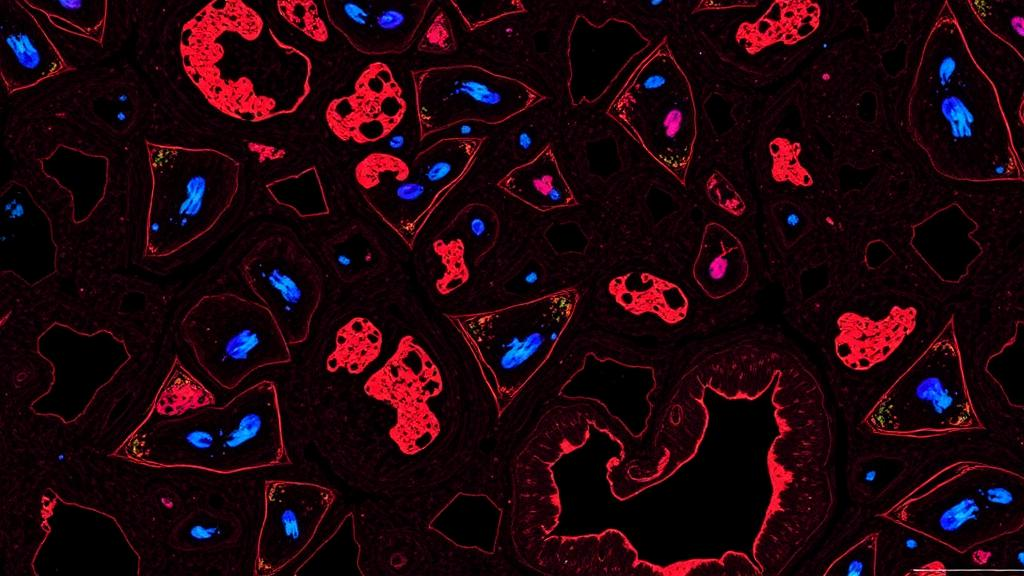
The researchers chose immunohistochemistry as their first-line screen, staining 4-micrometer sections from formalin-fixed, paraffin-embedded blocks with the Ventana pan-TRK (EPR17341) antibody, which recognizes a conserved C-terminal region shared by all three TRK proteins. The staining was run on a fully automated Leica BOND-MAX platform with heat-based epitope retrieval, and the digitized slides were scored by the percentage of tumor cells showing positivity: samples with at least 1 percent stained cells counted as positive, a deliberately low threshold chosen to maximize sensitivity, with intensity graded as mild (1 to 50 percent of cells), moderate (50 to 75 percent) or strong (more than 75 percent). Hematoxylin-eosin stains on adjacent sections ensured that expression was evaluated specifically in neoplastic cells rather than surrounding tissue—an important control, since the antibody cannot distinguish wild-type TRK protein from any abnormal form.
The headline result was that pan-TRK expression turned up in 17 of the 45 cases, or 38 percent of the cohort. Far more striking, however, was where that positivity concentrated. Histological subtype was the only clinicopathological feature showing a statistically significant association with TRK expression: 7 of the 8 alveolar rhabdomyosarcomas—the unfavorable subtype linked to PAX3/FOXO1 or PAX7/FOXO1 fusions and a more aggressive clinical course—were TRK-positive, compared with just 27 percent of the favorable-histology group. No significant correlations emerged with sex, age, tumor size, tumor site, lymph node status, primary metastasis, risk group, recurrence or survival. Staining was predominantly cytoplasmic, seen in 94 percent of positive cases, with nuclear and membrane positivity each appearing in about a third.
That subcellular pattern produced the study’s most unexpected finding. When the team dichotomized the staining patterns into a purely cytoplasmic group and a complex group involving nuclear or membrane components, they found a statistically significant association with tumor recurrence: every non-recurrent tumor in the cohort showed exclusively cytoplasmic TRK localization, while all four recurrent tumors fell into the complex category. The authors caution that this association has not been described before, cannot be tied to specific fusion partners without molecular confirmation, and may simply reflect the small number of cases—but they note it fits with emerging evidence from prostate and colorectal cancer showing that the subcellular compartmentalization of proteins can serve as an independent prognostic indicator.
Then came the disappointment at the heart of the paper. Because immunohistochemical positivity can reflect not only NTRK fusions but also wild-type overexpression or other genetic changes, the researchers subjected all 17 positive cases to confirmatory molecular testing: fluorescence in situ hybridization with break-apart probes for all three NTRK genes in 14 cases, and next-generation sequencing with the TruSight Oncology 500 panel—which covers 523 genes and detects fusions through its RNA component—in 5 cases, with two patients tested by both methods. In four cases, FISH could not be evaluated, presumably because of degraded nucleic acid in the long-archived tissue. But in every test that produced a result, the answer was the same: no NTRK fusion, no pathogenic point mutation, no copy number variation. The pan-TRK immunohistochemistry, in other words, had a positive predictive value of exactly zero for detecting actionable NTRK fusions in this cohort.
The result is less surprising in light of the broader literature than it is sobering. A recent meta-analysis reported an overall false-negative rate of 18 percent for pan-TRK immunohistochemistry across solid tumors, with NTRK3 fusions escaping detection most often, and both the sensitivity and specificity of the stain have been shown to be particularly poor in sarcomas. Prior studies of various sarcoma subtypes had already found that immunohistochemical positivity corresponds to a true fusion in only a minority of cases, but no one had systematically examined the question in pediatric rhabdomyosarcoma before. The Budapest team is, to their knowledge, the first to do so—and their data suggest that the low specificity seen across sarcomas extends to this tumor type as well.
Does this mean the staining is useless? Not quite, the authors argue. Immunohistochemistry remains far cheaper and more widely available than genetic testing, and in a tumor where the baseline prevalence of NTRK fusions is unknown, a cheap first-pass screen still has a logic—provided that no one treats a positive stain as sufficient grounds for prescribing a TRK inhibitor. Increased TRK expression can arise from point mutations or amplifications for which inhibitor efficacy has never been clinically demonstrated, and the drugs are approved only for fusion-positive disease. Genetic confirmation by FISH or next-generation sequencing remains the gold standard, and any patient whose molecular test does confirm an NTRK fusion becomes a genuine candidate for targeted therapy at relapse or progression.
The point was driven home, fittingly, by a case that fell just outside the study window. During the course of the work, the same institution encountered a pediatric rhabdomyosarcoma in which strong pan-TRK staining was confirmed by all three modalities in sequence: FISH revealed rearranged NTRK3 signals with the split pattern indicating a gene fusion, and next-generation sequencing corroborated the rearrangement. That child has been scheduled to receive TRK inhibitor therapy—a real-world demonstration of exactly the pipeline the study was designed to evaluate, in which an affordable immunostain flags a candidate and molecular testing seals the diagnosis. The authors’ conclusion is measured: pan-TRK immunohistochemistry is not an effective standalone pre-screen for NTRK fusions in pediatric rhabdomyosarcoma, but the unexpected link between subcellular TRK localization and recurrence hints at a second, prognostic life for the stain—one that larger, multicenter studies will now need to test.
Subject of Research: Pan-TRK immunohistochemistry and NTRK fusion testing in pediatric rhabdomyosarcoma
Article Title: TRK immunohistochemistry in pediatric rhabdomyosarcomas: diagnostic and prognostic utility and limitations
Article References: TRK immunohistochemistry in pediatric rhabdomyosarcomas: diagnostic and prognostic utility and limitations. (n.d.). https://doi.org/10.3389/pore.2026.1612374
Image Credits: AI Generated
DOI: 10.3389/pore.2026.1612374
Keywords: rhabdomyosarcoma, NTRK fusions, TRK inhibitors, immunohistochemistry, pediatric oncology, fluorescence in situ hybridization, next-generation sequencing, alveolar histology, targeted therapy, biomarker screening, tumor recurrence, Semmelweis University
Cite Scienmag News
Juliet Wilcox. (October 16, 2026). TRK Protein Staining in Childhood Rhabdomyosarcoma Flags Aggressive Tumors but Misses the Gene Fusions That Matter. Scienmag. https://scienmag.com/trk-protein-staining-in-childhood-rhabdomyosarcoma-flags-aggressive-tumors-but-misses-the-gene-fusions-that-matter/
Juliet Wilcox. "TRK Protein Staining in Childhood Rhabdomyosarcoma Flags Aggressive Tumors but Misses the Gene Fusions That Matter." Scienmag, 16 October 2026, https://scienmag.com/trk-protein-staining-in-childhood-rhabdomyosarcoma-flags-aggressive-tumors-but-misses-the-gene-fusions-that-matter/. Accessed 16 October 2026.
Juliet Wilcox. "TRK Protein Staining in Childhood Rhabdomyosarcoma Flags Aggressive Tumors but Misses the Gene Fusions That Matter." Scienmag. October 16, 2026. https://scienmag.com/trk-protein-staining-in-childhood-rhabdomyosarcoma-flags-aggressive-tumors-but-misses-the-gene-fusions-that-matter/


