


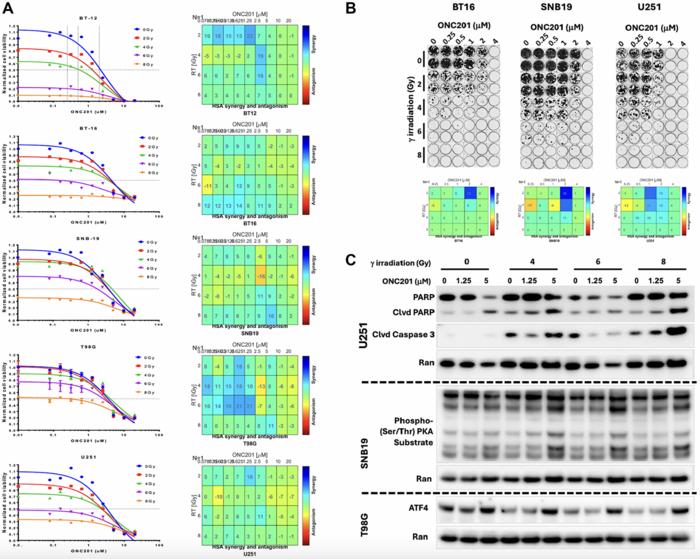
Researchers are continuously on the lookout for innovative treatment strategies for glioblastoma, a notoriously aggressive brain cancer. Recently, an exciting preclinical study published in the esteemed journal Oncotarget explored the combination of imipridones—specifically, ONC201 and its analog ONC206—with traditional therapies like radiation (RT) and temozolomide (TMZ). The research team, led by Brown University’s Lanlan Zhou under the guidance of Wafik S. El-Deiry, focuses on a revolutionary treatment regimen termed IRT—imipridones, radiation, and temozolomide. This therapy has demonstrated a potential breakthrough in reducing tumor burden and prolonging survival in an orthotopic IDH-WT glioblastoma mouse model.
The study’s findings serve as a beacon of hope for patients suffering from glioblastoma, a difficult-to-treat malignancy characterized by rapid progression and a grim prognosis. Standard therapeutic options primarily involve surgical resection followed by regimens incorporating radiation and chemotherapy. However, the survival rates remain abysmally low, underscoring the pressing need for novel treatment approaches that can significantly improve outcomes. The results from the Zhou and El-Deiry study suggest that the IRT regimen could offer a safer and more effective alternative to the existing standard therapies.
Through rigorous in vitro and in vivo experiments, the research team demonstrated that the combination of ONC201 and ONC206 with RT and TMZ not only slowed tumor growth but also exhibited superior efficacy compared to any individual treatment. The IRT therapy impeded the proliferation of glioblastoma cells in cultured environments, marking a crucial step toward translating these findings into clinical settings. Particularly noteworthy was the survival data observed in the mouse model, where subjects receiving IRT lived an average of 123 days, with some animals surviving beyond 200 days. This observation starkly contrasts the average lifespan of those treated with traditional therapeutics, which typically ranges between 44 and 103 days.
Further examinations revealed significant mechanistic insights into why the IRT regimen performed so well. Researchers noted a correlated reduction in levels of MGMT (O-6-methylguanine-DNA methyltransferase), a repair protein notoriously associated with chemotherapy resistance. By reducing MGMT levels, ONC201 and ONC206 lessen the tumor’s ability to withstand the effects of temozolomide, amplifying the latter’s efficacy as a chemotherapeutic agent. This interaction marks a significant advancement in glioblastoma treatment, emphasizing the necessity of overcoming molecular barriers that hinder therapeutic success.
Another striking finding from the research was the therapy’s dual action, which not only directly attacked tumor cells but also reshaped the tumor microenvironment to make it less conducive to cancer growth. The IRT regimen diminished the presence of immunosuppressive factors while enhancing pro-inflammatory signals, strengthening the immune response against the tumor. Thus, aside from the direct cytotoxic effects of the imipridones and traditional therapies on tumor cells, IRT presents an innovative avenue for improving the efficacy of immune-based interventions in glioblastoma treatment.
The implications of this research extend beyond glioblastoma alone, as the IRT approach has the potential to influence the treatment landscape for various brain tumors and possibly other malignancies. Given the limited success rates associated with current treatments for aggressive cancers, the synergistic effects observed in this study create a compelling case for continued exploration and development of combination therapies. This research opens the door to future clinical trials assessing the safety and efficacy of IRT therapy in human patients.
Despite these promising results from preclinical models, several considerations must be addressed before advancing to clinical trials. Researchers need to perform further mechanistic studies to clarify how imipridones interact with the tumor microenvironment and standard therapies. Equally important will be the need for extensive safety assessments to ensure that this new combination approach does not introduce unforeseen complications or adverse effects in human subjects.
As the field of oncology continues to advance, keeping a close watch on new research findings like those presented in this study will be paramount. The promising synergistic effects of ONC201 and ONC206 when paired with conventional therapies provide fresh perspectives on addressing the significant challenges posed by glioblastoma. Should these findings hold true in clinical settings, we could witness a paradigm shift in both the treatment and management of this devastating disease. This potential transformation highlights the importance of innovative research that moves beyond traditional paradigms to explore novel therapeutic avenues.
The strides made in understanding how to harness the collective strengths of different treatment modalities may lay the groundwork for overcoming one of oncology’s most persistent hurdles. Ultimately, the combination therapy strategy could revolutionize how we approach glioblastoma and other formerly untreatable cancers, giving researchers and patients newfound hope in the ongoing battle against these aggressive malignancies.
The current research underscores that substantial advancements in cancer therapy are not only possible—they are on the horizon. With the successful interplay of innovative drug discovery and existing treatment paradigms, this provides a foundation for a future filled with promise for improved cancer therapies. As investigations proceed and the possibility of clinical trials materializes, the findings might well serve to inspire new standards of care for challenging cancer diagnoses.
In closing, understanding the therapeutic potential presented by imipridones like ONC201 and ONC206 in conjunction with established treatment strategies illustrates the dynamic landscape of cancer research. The pathway to more effective therapies is paved with ongoing studies such as this one, signaling a brighter future for those grappling with the harsh realities of glioblastoma and similar malignancies.
Cite Scienmag News
Nathaniel Bowman. (April 4, 2025). Triple Therapy Demonstrates Potential to Inhibit Glioblastoma Progression and Prolong Survival in Preclinical Research. Scienmag. https://scienmag.com/triple-therapy-demonstrates-potential-to-inhibit-glioblastoma-progression-and-prolong-survival-in-preclinical-research/
Nathaniel Bowman. "Triple Therapy Demonstrates Potential to Inhibit Glioblastoma Progression and Prolong Survival in Preclinical Research." Scienmag, 4 April 2025, https://scienmag.com/triple-therapy-demonstrates-potential-to-inhibit-glioblastoma-progression-and-prolong-survival-in-preclinical-research/. Accessed 3 September 2026.
Nathaniel Bowman. "Triple Therapy Demonstrates Potential to Inhibit Glioblastoma Progression and Prolong Survival in Preclinical Research." Scienmag. April 4, 2025. https://scienmag.com/triple-therapy-demonstrates-potential-to-inhibit-glioblastoma-progression-and-prolong-survival-in-preclinical-research/


