


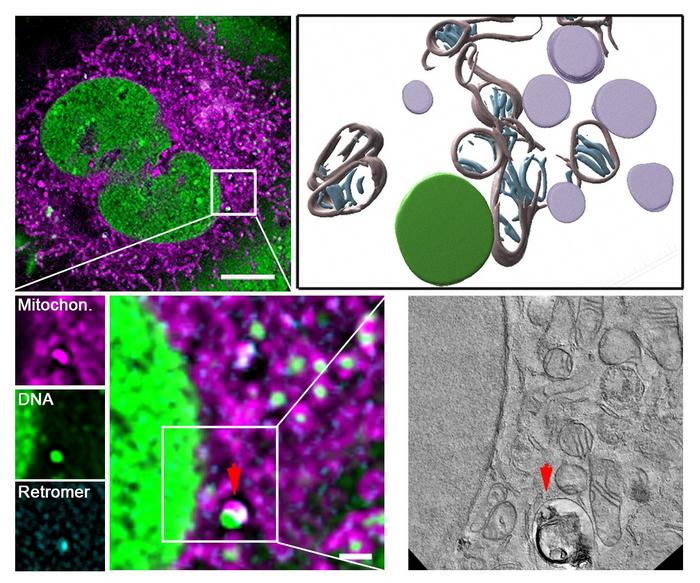
Scientists have discovered a critical mechanism that underpins the health of our mitochondria, which are vital organelles responsible for energy production in human cells. This research sheds light on how our cells combat damage to mitochondrial DNA (mtDNA), which is significant as such damage has been linked to various diseases, including neurodegenerative disorders like Parkinson’s and Alzheimer’s, as well as conditions associated with aging like diabetes and cardiovascular diseases. The findings were reported by a team from University Hospital Düsseldorf and Heinrich-Heine University (HHU) in Düsseldorf, alongside researchers from the University of Cologne and the Center for Molecular Medicine Cologne.
The research highlights the role of a protein complex called retromer, which is crucial when cells detect damage to mtDNA. The retromer works in concert with lysosomes— organelles containing digestive enzymes—to facilitate the recycling of cellular components. These lysosomes operate similarly to recycling centers, effectively eliminating damaged genetic material. This process is essential in maintaining cellular health and preventing the accumulation of faulty mtDNA, which could lead to serious health concerns.
Understanding how cells locate and repair mtDNA damage is a significant find. Professor David Pla-Martín, who led the research team, stated that this newly discovered cellular pathway is vital for mitochondrial health. The implications of this discovery could pave the way for innovative preventive therapies targeting diseases that stem from mitochondrial dysfunction. By learning how mitochondrial damage triggers diseases, researchers are one step closer to developing strategies that could mitigate the risks associated with age-related conditions.
The collaboration with Dr. Parisa Kakanj, a cell biologist from the University of Cologne, allowed the research team to extend their findings. Using the model organism Drosophila, or fruit flies, Dr. Kakanj demonstrated enhanced elimination of damaged mtDNA when the activity of the retromer complex—particularly the protein VPS35—is increased. These findings suggest that boosting the function of this complex may lead to improved mitochondrial health. Hence, there is potential for novel therapeutic strategies focused on mitochondrial diseases.
The project not only underscores the collaborative effort between institutions but also illustrates the journey of scientific inquiry that leads to valuable revelations in cell biology. When mitochondrial DNA is damaged, it can trigger a cascade of harmful consequences for cellular function. Therefore, these findings are pivotal, as they reveal a protective mechanism that our cells can deploy to counteract mtDNA damage.
Moreover, the research published in Science Advances presents a thoroughly investigated methodology that brought forth significant insight into mitochondrial biology. By utilizing advanced techniques including Correlative Light and Electron Microscopy (CLEM), the team was able to visualize the dynamics of mitochondrial DNA under stress. The study, through its compelling evidence and innovative approach, provides a fresh perspective on cellular aging and disease prevention strategies.
The practical applications of this research could be profound. There is potential for developing drugs that enhance the activity of the retromer complex, facilitating more robust cellular maintenance systems. This could revolutionize treatment for mitochondrial disorders, a field that has been difficult to navigate due to the complexity of mitochondrial genetics and function.
In summary, these discoveries not only enhance our understanding of mitochondrial biology but may also lead to breakthroughs in how we approach treatment for diseases that currently lack effective remedies. By focusing on mitochondria, scientists are seeking to counteract aging and associated diseases at their roots.
As we continue to grapple with aging populations and the increase in mitochondrial-related diseases, the discovery of new therapeutic targets becomes ever more urgent. The research led by Professor Pla-Martín and his collaborators is a promising step in fortifying cellular defenses against mtDNA damage. Their findings will undoubtedly lead to further research and exploration in the field, thus holding promise for improving health outcomes in a world where mitochondrial health is becoming increasingly crucial.
This effort emphasizes the dynamic nature of scientific research, where collaboration and innovative technologies unite to address complex biological questions. The future may see a shift in treatment paradigms based on these findings, potentially offering hope to those affected by diseases associated with mitochondrial dysfunction.
In conclusion, the work on the retromer complex presents a significant advancement in our understanding of cellular mechanisms that protect against mitochondrial DNA damage. As the ramifications of such discoveries unfold, the path toward understanding and treating mitochondrial diseases is becoming clearer. It is through such thorough research endeavors that we can anticipate a future where age-associated conditions may be better managed or avoided through informed interventions.
Cite Scienmag News
Diana Fleming. (April 4, 2025). How Cells Restore Their Energy Factories: A Deep Dive into Cellular Repair Mechanisms. Scienmag. https://scienmag.com/how-cells-restore-their-energy-factories-a-deep-dive-into-cellular-repair-mechanisms/
Diana Fleming. "How Cells Restore Their Energy Factories: A Deep Dive into Cellular Repair Mechanisms." Scienmag, 4 April 2025, https://scienmag.com/how-cells-restore-their-energy-factories-a-deep-dive-into-cellular-repair-mechanisms/. Accessed 4 September 2026.
Diana Fleming. "How Cells Restore Their Energy Factories: A Deep Dive into Cellular Repair Mechanisms." Scienmag. April 4, 2025. https://scienmag.com/how-cells-restore-their-energy-factories-a-deep-dive-into-cellular-repair-mechanisms/


