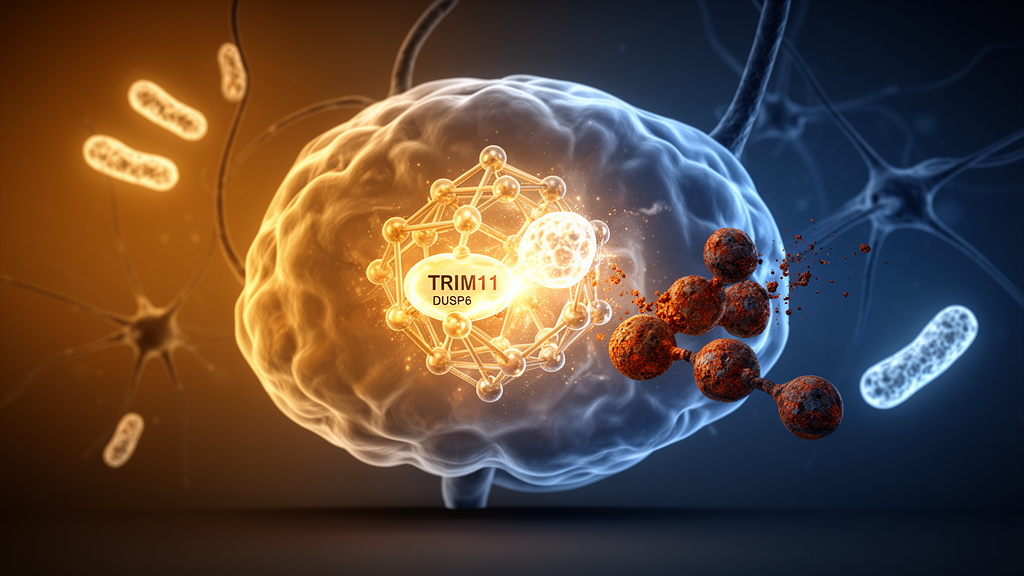
A protein called TRIM11 may help protect brain tissue from a form of iron-driven cell death that follows strokes, according to a study published in Clinical and Experimental Medicine. Researchers report that TRIM11 acts on a second protein, DUSP6, to limit oxidative stress and ferroptosis in microglia, the immune cells of the brain, during cerebral ischemia reperfusion, the damaging cycle in which blood flow to the brain is blocked and then restored.
The team collected clinical samples from patients with cerebral ischemia reperfusion and healthy volunteers at Xinxiang Central Hospital, and also established a mouse model of the condition using the middle cerebral artery occlusion method. In both the clinical samples and the animal model, TRIM11 expression was significantly downregulated. The protein was specifically expressed in microglia of the patients with cerebral ischemia reperfusion.
In the mouse model, lowering TRIM11 made nerve injury worse, promoted oxidative stress and inflammation in microglia, and increased mitochondrial damage. Notably, when the researchers administered a ferroptosis agonist, a compound that promotes ferroptosis, the neuroprotective effect associated with TRIM11 manipulation in the mice was mitigated, linking the protein’s benefit directly to this cell-death pathway.
Mechanistically, the study found that reducing TRIM11 suppressed DUSP6 protein expression in microglia, and a DUSP6 inhibitor impaired the protective role of TRIM11 against microglial ferroptosis. The researchers further showed that TRIM11 physically interacted with DUSP6 and reduced its ubiquitination, the cellular tagging process that normally marks proteins for degradation. By inhibiting DUSP6 ubiquitination, TRIM11 appears to keep the DUSP6 protein available in microglia, and this stabilization underlies its protective effect during ischemia reperfusion.
The authors state that TRIM11 protects against oxidative stress and ferroptosis in microglia during cerebral ischemia reperfusion by inhibiting DUSP6 ubiquitination, and they suggest the findings provide a theoretical rationale for enhancing anti-oxidative stress and anti-ferroptosis therapies for the condition. As with any preclinical and early translational work, the mechanistic conclusions rest on patient samples and a mouse model, and the study does not itself establish a clinical treatment. The article was published open access on 27 October 2026 as peer-reviewed, accepted research shared early for faster access.
Subject of Research: The role of the TRIM11 protein in regulating oxidative stress and ferroptosis in microglia during cerebral ischemia reperfusion.
Article Title: TRIM11 Prevents oxidative stress and Ferroptosis in model of Cerebral ischemia reperfusion by DUSP6
Article References: Li, Z., Gao, C., Zhu, M., Liu, P., Zhou, M., & Zhang, M. (2026). TRIM11 Prevents oxidative stress and Ferroptosis in model of Cerebral ischemia reperfusion by DUSP6. Clinical and Experimental Medicine. https://doi.org/10.1007/s10238-026-02360-8
Image Credits: AI Generated
DOI: 10.1007/s10238-026-02360-8
Keywords: TRIM11, DUSP6, ferroptosis, oxidative stress, cerebral ischemia reperfusion, microglia, ischemic stroke, MCAO mouse model, ubiquitination, neuroprotection, mitochondrial damage, Prevents
Cite Scienmag News
Cassandra Pierce. (October 27, 2026). TRIM11 Shields Brain Cells from Ferroptosis After Stroke by Stabilizing DUSP6. Scienmag. https://scienmag.com/trim11-shields-brain-cells-from-ferroptosis-after-stroke-by-stabilizing-dusp6/
Cassandra Pierce. "TRIM11 Shields Brain Cells from Ferroptosis After Stroke by Stabilizing DUSP6." Scienmag, 27 October 2026, https://scienmag.com/trim11-shields-brain-cells-from-ferroptosis-after-stroke-by-stabilizing-dusp6/. Accessed 30 October 2026.
Cassandra Pierce. "TRIM11 Shields Brain Cells from Ferroptosis After Stroke by Stabilizing DUSP6." Scienmag. October 27, 2026. https://scienmag.com/trim11-shields-brain-cells-from-ferroptosis-after-stroke-by-stabilizing-dusp6/