


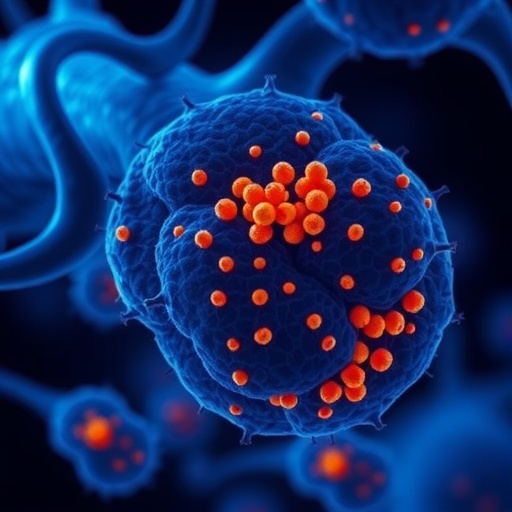
A groundbreaking study led by Professor Yunsheng Liang at Central South University’s Second Xiangya Hospital, in collaboration with Professor Yingping Xu of Southern Medical University and Associate Professor Xiaowen Wang of Peking University First Hospital, has unveiled an unprecedented facet of innate immune defense against oropharyngeal candidiasis (OPC). Published in the prestigious journal Immunity & Inflammation on May 18, 2026, this research illuminates how a specialized subset of macrophages, bearing the TREM2 receptor, detects candidalysin—a virulence factor secreted by the fungal pathogen Candida albicans—to instigate a rapid and protective immune response.
Oropharyngeal candidiasis remains a significant health issue, especially among immunocompromised individuals, affecting mucosal tissues in the oral cavity and impairing quality of life. Despite the clinical importance of macrophages as first responders, the precise mechanisms enabling these cells to sense and counteract Candida infections at the molecular level have remained obscure. This study fills a critical knowledge gap by demonstrating that TREM2, a receptor known for sensing tissue damage in various pathological contexts, directly recognizes the fungal toxin candidalysin and orchestrates an effective antifungal response.
Employing cutting-edge single-cell transcriptomic sequencing, the research team meticulously mapped the immune landscape within the tongues of a murine OPC model. This approach revealed a pronounced infiltration of TREM2-expressing macrophages derived from monocytes localized in the infected lingual epithelium. Genetic ablation models, including global and myeloid lineage-specific knockouts of TREM2 as well as targeted depletion of TREM2-expressing cells via diphtheria toxin receptor approaches, definitively established the indispensable role of these macrophages in conferring resistance to OPC.
A pivotal and longstanding question in fungal immunology—how the host detects candidalysin—was expertly addressed through comprehensive biophysical and computational strategies. Surface plasmon resonance (SPR) and microscale thermophoresis (MST) assays unequivocally confirmed the binding of TREM2 to candidalysin. Further structural insights were gleaned through advanced AlphaFold molecular docking combined with site-directed mutagenesis, identifying key amino acid residues on TREM2 (D131, R136, P169) and candidalysin (G65, N73, N91-K92) that mediate this specific interaction. This discovery reveals how the host immune system cleverly co-opts a pathogen-derived toxin as an alarm signal, enhancing immunosurveillance and rapid response.
The signaling cascade triggered by TREM2 engagement with candidalysin is intricate yet effective. Upon toxin recognition, TREM2 recruits the adaptor protein DAP12 to initiate downstream signaling. This activation proceeds through Syk kinase phosphorylation, followed by phosphorylation of the transcription factor NF-κB p65 and the MAP kinase p38. Consequent to these events, macrophages secrete tumor necrosis factor-alpha (TNF-α), a cytokine that acts both autocrinely and paracrinely within the mucosal milieu.
Functionally, TNF-α promotes macrophage activities such as phagocytosis, microbial killing, and reactive oxygen species (ROS) generation, amplifying fungal clearance. Simultaneously, TNF-α enhances neutrophil extracellular trap (NET) formation and bactericidal functions, crucial defenses against secondary bacterial infections that often complicate fungal diseases. Moreover, TNF-α exerts a modulatory effect on IL-17 signaling pathways in TCRαβ+ T cells, underscoring its role in fine-tuning adaptive immune responses during fungal invasion.
This comprehensive elucidation of the TREM2–candidalysin–TNF-α axis underscores its central importance in early innate immunity against OPC, as it bridges the innate and adaptive arms of host defense. The findings dramatically advance our understanding of host-pathogen interactions and highlight the sophistication of immune sentinel cells in detecting molecular signatures of fungal virulence.
Translationally, the study offers exciting new avenues for therapeutic intervention. Targeting TREM2 with agonists or devising candidalysin mimetics could serve as novel strategies to boost local innate immunity, particularly valuable for patients with compromised immune systems, such as those undergoing CAR-T cell therapies or chemotherapy. Such approaches might potentiate the mucosal barrier’s resilience against opportunistic fungal infections.
Furthermore, the delineated epitope on candidalysin recognized by TREM2 represents a promising candidate for vaccine development, potentially inducing robust immune memory and long-lasting protection against Candida infections. Monitoring TREM2 and candidalysin expression levels in oral mucosa could also be harnessed diagnostically to predict patient susceptibility and guide personalized treatment strategies.
Professor Yunsheng Liang and colleagues’ work not only breaks new ground in fungal immunology but also exemplifies the power of integrative methods encompassing molecular biology, structural bioinformatics, and immunology. Their insights profoundly deepen our grasp of the innate immune system’s capacity to leverage pathogen-derived molecules for host protection and open pathways toward innovative antifungal therapeutics and diagnostics.
As fungal infections increasingly pose a threat globally amidst rising numbers of immunocompromised individuals, such cutting-edge research delivers hope for more effective management and prevention of these debilitating diseases. The TREM2 recognition mechanism of candidalysin establishes an elegant paradigm of immune vigilance, turning a microbial weapon into a trigger for host defense.
This landmark study thereby reframes our conceptual understanding of fungal pathogenesis and immunity, urging further exploration into TREM2’s roles across diverse infectious and inflammatory contexts and driving forward the frontier of translational immunology.
News Publication Date: 18-May-2026
References: DOI: 10.1007/s44466-026-00041-5
Cite Scienmag News
Kristina Jarvis. (May 26, 2026). TREM2+ Macrophages Detect Candidalysin to Trigger Early Antifungal Immune Response. Scienmag. https://scienmag.com/trem2-macrophages-detect-candidalysin-to-trigger-early-antifungal-immune-response/
Kristina Jarvis. "TREM2+ Macrophages Detect Candidalysin to Trigger Early Antifungal Immune Response." Scienmag, 26 May 2026, https://scienmag.com/trem2-macrophages-detect-candidalysin-to-trigger-early-antifungal-immune-response/. Accessed 5 September 2026.
Kristina Jarvis. "TREM2+ Macrophages Detect Candidalysin to Trigger Early Antifungal Immune Response." Scienmag. May 26, 2026. https://scienmag.com/trem2-macrophages-detect-candidalysin-to-trigger-early-antifungal-immune-response/


