

Tuesday, July 28, 2026
Science
No Result
View All Result
  • Login
  • HOME
  • SCIENCE NEWS
  • CONTACT US
  • HOME
  • SCIENCE NEWS
  • CONTACT US
No Result
View All Result
Scienmag
No Result
View All Result
Home Science News Biology

Blocking Axl Protein Shows Promise for Building Stronger Bones

July 28, 2026
in Biology
Reading Time: 2 mins read
0
Blocking Axl Protein Shows Promise for Building Stronger Bones

Blocking Axl Protein Shows Promise for Building Stronger Bones

65
SHARES
587
VIEWS
Share on FacebookShare on Twitter
ADVERTISEMENT

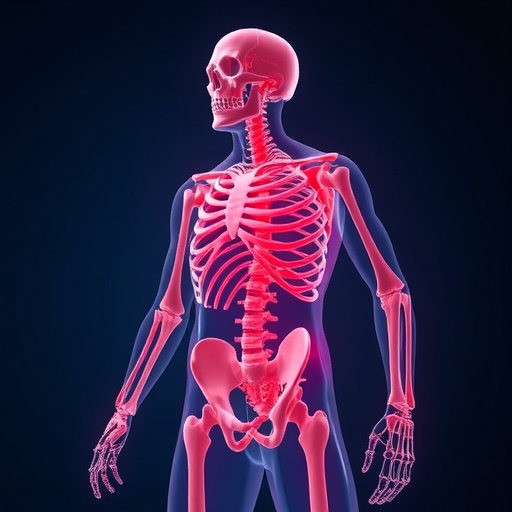
Osteoporosis steals bone strength over time, leaving millions worldwide more vulnerable to fractures and disability. While today’s therapies can slow loss or stimulate growth, many anabolic options are expensive and often require repeated injections—driving interest in safer, more practical ways to boost the body’s own bone-building machinery.

A new study published online on July 6, 2026, in Bone Research points to an unexpected lever for bone formation: blocking the AXL receptor tyrosine kinase (Axl). Researchers report that inhibiting Axl enhances the maturation and activity of osteoblasts, the cells responsible for generating mineralized bone, resulting in increased bone mass in mice.

To find this pathway, the team ran a kinome-wide RNA interference screen, systematically shutting down protein kinase genes to identify regulators of osteoblast differentiation. Among hundreds of candidates, Axl emerged as a previously underappreciated brake on osteoblast function.

The brake was tested with two strategies. First, the researchers reduced Axl activity using genetic approaches. Second, they applied BGB324, a small-molecule Axl inhibitor. Both approaches produced consistent results: osteoblasts differentiated more effectively and formed more mineralized matrix in lab-based experiments and in animal models.

In mice, BGB324 treatment led to measurable gains in bone mass in long bones and vertebrae. The study also showed an increased number of osteocytes—cells integral to maintaining healthy bone structure—suggesting that Axl inhibition supports broader aspects of bone development rather than merely accelerating early-stage differentiation.

Mechanistically, the work links Axl signaling to interferon-stimulating gene 15 (Isg15). Blocking Axl increased Isg15 activity, which the authors interpret as removal of a molecular restraining signal that normally limits osteoblast maturation and downstream bone-forming programs.

Notably, BGB324 is already being explored in cancer-related clinical contexts because Axl can influence tumor growth and immune regulation. Although this osteoporosis research is still preclinical, the existence of a studied inhibitor could streamline future translational efforts.

The findings position Axl as a promising therapeutic target for anabolic osteoporosis strategies, offering a biologically grounded rationale for developing treatments that encourage the skeleton to rebuild. Further studies will be needed to determine whether this mechanism translates into safe, effective benefits in humans.

News Publication Date: 6-Jul-2026
Article Title: Inhibition of AXL receptor tyrosine kinase increases osteoblast function and bone mass
Web References: http://dx.doi.org/10.1038/s41413-026-00554-0
References: DOI: 10.1038/s41413-026-00554-0
Image Credits: Credit: Dr. Mubashir Ahmad, Dr. Anita Ignatius, and Dr. Jan Tuckermann from Ulm University, Germany
Keywords: osteoporosis; AXL; osteoblast differentiation; BGB324; Isg15; Erk1/2; bone mass; osteocytes; osteoimmunology; receptor tyrosine kinase

Tags: AXL inhibitors for osteoporosisAXL receptor tyrosine kinase inhibitionbone formation enhancementbone health and fracture preventionbone mass increase in micegene silencing in bone researchkinase gene regulation of bone cellsmineralized bone matrix developmentosteoblast maturation and activityOsteoporosis Treatmentpotential new osteoporosis therapiessmall-molecule Axl inhibitors
Share26Tweet16
Previous Post

SNU Researchers Develop Nanomace Catalyst, Delivering Up to 14x Better Emission Breakdown

Next Post

Study Finds Limits to Human Compassion in Global Crises, Sussex Neuroscientists Say

Related Posts

Tissue-Resident Immune Cells Protect Human Lungs from Viral, Bacterial, Fungal Infections
Biology

Tissue-Resident Immune Cells Protect Human Lungs from Viral, Bacterial, Fungal Infections

July 28, 2026
Nanotube Links Enable Communication Between Social Amoebae
Biology

Nanotube Links Enable Communication Between Social Amoebae

July 28, 2026
AI Camera System Tracks Bumblebees, Offering Affordable Insect Monitoring
Biology

AI Camera System Tracks Bumblebees, Offering Affordable Insect Monitoring

July 28, 2026
TIE1 suppresses fertilization-independent endosperm development by recruiting PRC2
Biology

TIE1 suppresses fertilization-independent endosperm development by recruiting PRC2

July 28, 2026
Forces of Push and Pull Shape How Blood Flows Through Vessels
Biology

Forces of Push and Pull Shape How Blood Flows Through Vessels

July 28, 2026
How the body’s natural recycling system may reduce inflammation
Biology

How the body’s natural recycling system may reduce inflammation

July 28, 2026
Next Post
Study Finds Limits to Human Compassion in Global Crises, Sussex Neuroscientists Say

Study Finds Limits to Human Compassion in Global Crises, Sussex Neuroscientists Say

  • Mothers who receive childcare support from maternal grandparents show more

    Mothers who receive childcare support from maternal grandparents show more parental warmth, finds NTU Singapore study

    27656 shares
    Share 11059 Tweet 6912
  • University of Seville Breaks 120-Year-Old Mystery, Revises a Key Einstein Concept

    1061 shares
    Share 424 Tweet 265
  • Bee body mass, pathogens and local climate influence heat tolerance

    682 shares
    Share 273 Tweet 171
  • Researchers record first-ever images and data of a shark experiencing a boat strike

    546 shares
    Share 218 Tweet 137
  • Groundbreaking Clinical Trial Reveals Lubiprostone Enhances Kidney Function

    531 shares
    Share 212 Tweet 133
Science

Embark on a thrilling journey of discovery with Scienmag.com—your ultimate source for cutting-edge breakthroughs. Immerse yourself in a world where curiosity knows no limits and tomorrow’s possibilities become today’s reality!

RECENT NEWS

  • Temporal Changes in Hyaluronan Levels in Preterm Human Breast Milk
  • Century-Long Data Shows Complex Ice-Cover Trends in the Laurentian Great Lakes
  • Wang Set to Receive NSF CAREER Award
  • Experimental Immunotherapy Could Help High-Risk Bladder Cancer Patients Skip Cystectomy

Categories

  • Agriculture
  • Anthropology
  • Archaeology
  • Athmospheric
  • Biology
  • Biotechnology
  • Blog
  • Bussines
  • Cancer
  • Chemistry
  • Climate
  • Earth Science
  • Editorial Policy
  • Marine
  • Mathematics
  • Medicine
  • Pediatry
  • Policy
  • Psychology & Psychiatry
  • Science Education
  • Social Science
  • Space
  • Technology and Engineering

Subscribe to Blog via Email

Enter your email address to subscribe to this blog and receive notifications of new posts by email.

Join 5,146 other subscribers

© 2025 Scienmag - Science Magazine

Welcome Back!

Login to your account below

Forgotten Password?

Retrieve your password

Please enter your username or email address to reset your password.

Log In
No Result
View All Result
  • HOME
  • SCIENCE NEWS
  • CONTACT US

© 2025 Scienmag - Science Magazine

Discover more from Science

Subscribe now to keep reading and get access to the full archive.

Continue reading
