


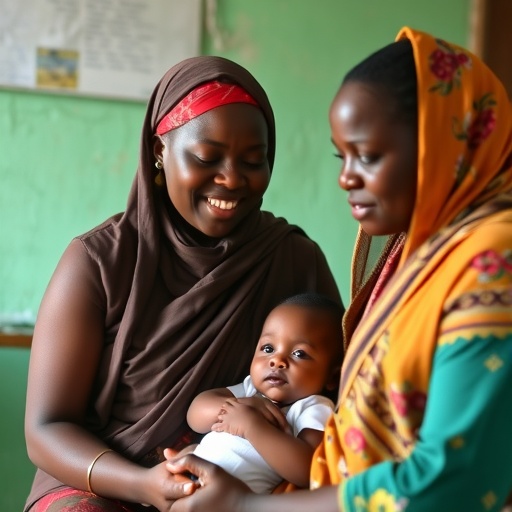
In the rural districts of southwestern Uganda, where regional referral hospitals serve as the final point of contact between many families and formal medicine, a new study has documented what women recovering from maternal mental illness and their family caregivers actually experience as they navigate care — and the picture that emerges is one of quiet resilience, deep stigma, and a health system that often catches these patients only by accident. The research, published in Discover Mental Health, offers one of the most detailed phenomenological accounts to date of maternal mental health care quality in a low-resource African setting, drawing directly on the voices of those who lived it rather than the assessments of clinicians and administrators who more commonly populate studies of this kind.
Maternal mental illness, encompassing conditions that emerge during pregnancy and the postpartum period, is widely recognized as a major contributor to maternal sickness and death worldwide, and the burden is disproportionately concentrated in settings where mental health services are scarce, underfunded, and often physically distant from the communities that need them. Global health policy has for years urged the integration of mental health screening and treatment into routine maternity care, a strategy that makes practical sense because nearly all pregnant women in Uganda come into contact with antenatal and postnatal services at least a few times. Yet the quality of such integrated care has almost always been evaluated from the top down — through facility checklists, health worker surveys, and policy audits. What has been missing, the researchers argue, is the perspective of the women themselves and the informal caregivers, usually family members, who shoulder much of the daily burden of recovery.
To close that gap, a team led by Gladys Nakidde of Soroti University, working with colleagues at Mbarara University of Science and Technology, Bishop Stuart University, and Lira University, carried out a qualitative phenomenological study between November 2022 and February 2023. Nineteen participants were purposively recruited from two regional referral hospitals in southwestern Uganda. The sample included women aged 23 to 37 who had recovered from maternal mental illness, as well as family caregivers aged 28 to 65 — most of them husbands of the affected women. The majority of participants lived in rural areas and were self-employed, a demographic profile that reflects the realities of the region, where subsistence agriculture and small-scale trading dominate household economies and where a day spent traveling to a hospital is a day of lost income.
The methodological approach was deliberately rigorous in the way qualitative studies must be to earn credibility. Participants were contacted by telephone following approval from the Research Ethics Committee of the University of Ibadan in Nigeria, where the lead author was a doctoral student; the Research Ethics Committee of Mbarara University of Science and Technology, which served as the supervising committee in Uganda; and the Uganda National Council for Science and Technology, the national regulator. After providing written informed consent, participants took part in in-depth interviews guided by a structured interview guide, with data collection continuing until thematic saturation was reached — the point at which new interviews ceased to generate new themes. Analysis was performed manually using a hybrid coding approach, combining pre-existing theoretical codes with codes that emerged inductively from the data itself. All participant information was coded and accessible only to the research team, and the study was conducted in accordance with the Declaration of Helsinki.
From this analysis, five interrelated themes emerged, and together they form a kind of anatomy of the care experience in this region. The first theme concerned perceived causes of maternal mental illness — and here sociocultural belief systems loomed large. In communities where explanations for severe distress are frequently framed in spiritual or social terms rather than biomedical ones, the interpretation of a woman’s postpartum psychosis or severe depression shapes everything that follows: whether she is taken to a hospital, whether she is blamed, whether her family seeks traditional healers first, and whether she is treated with compassion or fear within her own household. The second theme captured clinical presentation and healthcare experiences, documenting how symptoms actually manifested and how women were received when they finally reached formal services.
The third theme wove together the challenges participants faced, their recommendations, and their hopes for the future. Medicine availability emerged as a recurring concern — psychotropic medications, even when correctly prescribed, are not always reliably stocked at facilities within easy reach, and interruptions in supply can undo weeks of recovery. The fourth theme examined community perceptions and stigma, which participants described as pervasive and corrosive. Stigma operates on multiple levels: it marks the woman who has experienced a mental health crisis, it taints her family, and it discourages other women in the community from disclosing their own symptoms to health workers, effectively silencing the very patients the system is meant to identify. The fifth theme focused on social support and family dynamics, and it was here that some of the most hopeful findings appeared, because family support — particularly from husbands and caregivers — was repeatedly identified as a decisive factor in whether women recovered and stayed well.
One of the most striking findings of the study concerns how women actually reached mental health care at all. Recovery and satisfaction with services were attributed mainly to hospital-based mental health services, but the route to those services was frequently circuitous: women often accessed them through self-referral after being discharged from maternity care. In other words, the maternity ward — the single point of contact where virtually every pregnant woman in the region passes through, and the logical place for perinatal mental health screening — was not detecting or routing these cases. Women found their own way to help, often after considerable delay and suffering. This finding lands with particular force because it demonstrates that the machinery of integration that policy documents envision is not yet functioning on the ground: the referral pathway from postnatal care to psychiatric assessment simply was not being triggered by the health system itself.
The study’s findings also highlight the asymmetry between what health systems measure and what patients experience. Satisfaction among participants was real but conditional — anchored in the competence and availability of hospital-based mental health practitioners, yet fragile against the backdrop of unreliable medication supply, the financial cost of reaching distant facilities, and the weight of community judgment. The researchers found that perceptions of care quality were shaped by three interacting forces: sociocultural beliefs, health-system responsiveness, and family support. A woman’s recovery journey could be strengthened or sabotaged by any one of these, and the interplay among them means that improving care requires more than clinical training or drug procurement alone.
The authors’ conclusions are pragmatic and specific. They call for interventions focused on community education to correct misconceptions about the causes of maternal mental illness and to erode the stigma that keeps women hidden. They recommend integrating mental health screening and management directly into routine maternity services, so that the postnatal ward becomes a gateway to psychiatric care rather than a dead end. They emphasize improving the availability of psychotropic medicines so that treatment, once begun, can be sustained. And they stress that stigma must be addressed through culturally appropriate approaches — interventions designed with, not merely for, the communities in which they will operate.
The funding note in the paper indicates that the study formed part of a larger doctoral project supported by an African Union scholarship, a reminder of the growing capacity of African researchers to produce locally grounded evidence of international significance. The work was published open access under a Creative Commons Attribution 4.0 license, making the findings freely available to policymakers, clinicians, and advocates across the region where they are most needed.
What makes this study resonate beyond Uganda is its methodological insistence that quality of care is not an abstraction. For the nineteen people who shared their stories, quality meant whether a husband understood that his wife’s postpartum distress was an illness rather than a curse; whether the medicine she needed was on the shelf when she returned for her refill; whether the nurse at the maternity ward asked how she was sleeping, or only whether the baby was feeding. Global estimates suggest that a substantial proportion of women in low- and middle-income countries experience perinatal mental health problems, yet the vast majority go untreated. Studies like this one illuminate the specific, addressable points of failure along the pathway to care — and they make a compelling case that the women closest to the problem have already articulated the solutions. The task now, the researchers suggest, is for health systems to listen.
Cite Scienmag News
Glenn Wilkins. (September 5, 2026). Perinatal women and caregivers assess maternal mental health care quality in Uganda. Scienmag. https://scienmag.com/perinatal-women-and-caregivers-assess-maternal-mental-health-care-quality-in-uganda/
Glenn Wilkins. "Perinatal women and caregivers assess maternal mental health care quality in Uganda." Scienmag, 5 September 2026, https://scienmag.com/perinatal-women-and-caregivers-assess-maternal-mental-health-care-quality-in-uganda/. Accessed 5 September 2026.
Glenn Wilkins. "Perinatal women and caregivers assess maternal mental health care quality in Uganda." Scienmag. September 5, 2026. https://scienmag.com/perinatal-women-and-caregivers-assess-maternal-mental-health-care-quality-in-uganda/


