

Friday, September 4, 2026
Science
No Result
View All Result
  • Login
  • HOME
  • SCIENCE NEWS
  • CONTACT US
  • HOME
  • SCIENCE NEWS
  • CONTACT US
No Result
View All Result
Scienmag
No Result
View All Result
Home Science News Athmospheric

SNU Researchers Develop Nanomace Catalyst, Delivering Up to 14x Better Emission Breakdown

July 28, 2026
in Athmospheric
Bethany Barker
By Bethany Barker Scienmag Editorial Profile - Catalysis
Reading Time: 2 mins read
0
SNU Researchers Develop Nanomace Catalyst, Delivering Up to 14x Better Emission Breakdown

SNU Researchers Develop Nanomace Catalyst, Delivering Up to 14x Better Emission Breakdown

65
SHARES
587
VIEWS
Share on FacebookShare on Twitter
ADVERTISEMENT

Seoul National University engineers have unveiled “nanomace,” a ceria-based nanostructured catalyst designed to break down greenhouse gases far more efficiently than today’s commercial materials. Led by Prof. Jeong Woo Han, the team reports up to 14.4× higher decomposition performance, positioning the approach as a promising path toward cleaner emissions treatment and carbon-neutral energy systems.

The catalyst’s novelty lies in how two different ceria morphologies are chemically joined: cubic nanocubes and rod-shaped nanorods. Rather than treating them as separate additives, the researchers engineered a single hybrid architecture where the boundary between the cube and rod becomes an active reaction hotspot.

Ceria (CeO₂) is valued for its oxygen-storage capability, enabling oxygen to be temporarily released and replenished during catalytic cycles. In this work, the team focuses on lattice oxygen—the oxygen incorporated in ceria’s crystal lattice that directly participates in redox reactions—particularly through the Mars–van Krevelen (MvK) mechanism, where lattice oxygen is consumed and then restored from the surrounding environment.

Why does the interface matter? The researchers show that chemical bonding between nanocubes and nanorods disrupts the interface’s regular atomic arrangement, making lattice oxygen easier to activate and releasing it more readily than in uniform single-morphology ceria. In contrast, merely mixing nanocubes and nanorods fails to recreate the same catalytic gains, underscoring that interface engineering—not composition alone—drives performance.

Notably, the reactive interface occupies only a fraction of the total surface area, yet it accounts for roughly one-third of the overall catalytic activity. This “hidden workhorse” effect allows the nanomace catalyst to initiate reactions at lower temperatures, including performance beyond that of nanorods alone.

To probe the process at the atomic level, the team combined AI-driven graph neural network simulations with large-scale surface modeling and molecular dynamics. The simulations indicate that oxygen vacancies form most easily at the interface—creating the conditions for faster oxygen participation and improved reaction kinetics. Molecular dynamics further supported the reaction pathway by tracking how carbon monoxide interacts with interface lattice oxygen.

The nanomace structure also proved versatile across multiple reaction types. With small quantities of precious-metal supports such as Au, Pd, and Rh, the catalyst delivered large boosts in performance relative to commercial benchmarks. Gold-supported nanomace enabled hydrogen production via the water–gas shift reaction, while Pd- and Rh-supported variants drove methane and nitrous oxide decomposition, respectively.

For practical relevance, gold-supported nanomace removed carbon monoxide at extremely low temperatures (down to –70°C) and maintained stable operation for over 150 hours. The authors argue that reducing precious-metal usage while achieving high activity improves both environmental impact and economic feasibility.

The study appears in Nature Communications and was featured in the journal’s “Editors’ Highlight: Catalysis Focus.” The researchers propose a general design principle—precisely engineered catalyst interfaces—to maximize lattice-oxygen activity across oxidation–reduction technologies.

Subject of Research: Nanostructured ceria catalysts for oxygen-involved catalytic reactions (MvK mechanism)

Article Title: SNU Researchers Develop Nanomace Catalyst, Delivering Up to 14x Better Emission Breakdown

Article References: Original research article

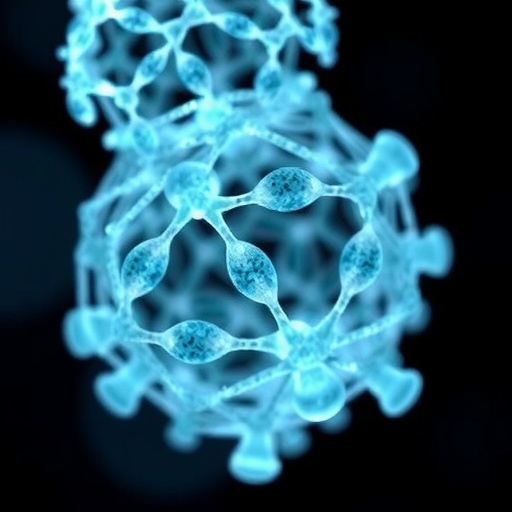
Image Credits: AI Generated

DOI: Not provided

Keywords: ceria-based nanostructures, enhanced catalytic performance for emission control, greenhouse gas emission breakdown, high-performance emission decomposition, hybrid nanomorphology for catalysis, lattice oxygen activation in ceria, Mars–van Krevelen mechanism, nanocube and nanorod interface chemistry, nanomace catalyst, nanomace catalyst design, nanostructured catalysts for cleaner energy, Seoul National University environmental research

Cite Scienmag News

Bethany Barker. (July 28, 2026). SNU Researchers Develop Nanomace Catalyst, Delivering Up to 14x Better Emission Breakdown. Scienmag. https://scienmag.com/snu-researchers-develop-nanomace-catalyst-delivering-up-to-14x-better-emission-breakdown/


Bethany Barker. "SNU Researchers Develop Nanomace Catalyst, Delivering Up to 14x Better Emission Breakdown." Scienmag, 28 July 2026, https://scienmag.com/snu-researchers-develop-nanomace-catalyst-delivering-up-to-14x-better-emission-breakdown/. Accessed 4 September 2026.

Bethany Barker. "SNU Researchers Develop Nanomace Catalyst, Delivering Up to 14x Better Emission Breakdown." Scienmag. July 28, 2026. https://scienmag.com/snu-researchers-develop-nanomace-catalyst-delivering-up-to-14x-better-emission-breakdown/

Tags: ceria-based nanostructuresenhanced catalytic performance for emission controlgreenhouse gas emission breakdownhigh-performance emission decompositionhybrid nanomorphology for catalysislattice oxygen activation in ceriaMars–van Krevelen mechanismnanocube and nanorod interface chemistrynanomace catalystnanomace catalyst designnanostructured catalysts for cleaner energySeoul National University environmental research
Share26Tweet16
Previous Post

Entangled Migration Between Two Sites Driven by Boracycle Rearrangement

Next Post

Blocking Axl Protein Shows Promise for Building Stronger Bones

Related Posts

Vehicle-mounted spectroscopy system detects methane in real time
Athmospheric

Vehicle-mounted spectroscopy system detects methane in real time

September 3, 2026
Extreme temperatures may raise heart failure hospitalization risk
Athmospheric

Extreme temperatures may raise heart failure hospitalization risk

August 29, 2026
Warmer tropical waters briefly slow Antarctic ice melt
Athmospheric

Warmer tropical waters briefly slow Antarctic ice melt

August 29, 2026
New England Team Wins $5.9 Million to Study Snow and Outdoor Economy
Athmospheric

New England Team Wins $5.9 Million to Study Snow and Outdoor Economy

August 28, 2026
El Niño Intensified More in 40 Years Than Any Previous Millennium
Athmospheric

El Niño Intensified More in 40 Years Than Any Previous Millennium

August 28, 2026
Despite growing livestock-climate research, applying science on farms remains challenging
Athmospheric

Despite growing livestock-climate research, applying science on farms remains challenging

August 26, 2026
Next Post
Blocking Axl Protein Shows Promise for Building Stronger Bones

Blocking Axl Protein Shows Promise for Building Stronger Bones

  • Mothers who receive childcare support from maternal grandparents show more optimized

    Mothers who receive childcare support from maternal grandparents show more parental warmth, finds NTU Singapore study

    27656 shares
    Share 11059 Tweet 6912
  • University of Seville Breaks 120-Year-Old Mystery, Revises a Key Einstein Concept

    1061 shares
    Share 424 Tweet 265
  • Bee body mass, pathogens and local climate influence heat tolerance

    682 shares
    Share 273 Tweet 171
  • Researchers record first-ever images and data of a shark experiencing a boat strike

    546 shares
    Share 218 Tweet 137
  • Groundbreaking Clinical Trial Reveals Lubiprostone Enhances Kidney Function

    531 shares
    Share 212 Tweet 133
Science

Embark on a thrilling journey of discovery with Scienmag.com—your ultimate source for cutting-edge breakthroughs. Immerse yourself in a world where curiosity knows no limits and tomorrow’s possibilities become today’s reality!

RECENT NEWS

  • Graph neural networks automate conjecture discovery in number theory research
  • Mesoamerican midsummer drought shows surprising diversity across regions
  • How people in South Sudan’s Sudd wetlands adapt to flood risk
  • Metformin restores mitochondrial quality control in Down syndrome fibroblasts

Categories

  • Agriculture
  • Anthropology
  • Archaeology
  • Athmospheric
  • Biology
  • Biotechnology
  • Blog
  • Bussines
  • Cancer
  • Chemistry
  • Climate
  • Earth Science
  • Editorial Policy
  • Marine
  • Mathematics
  • Medicine
  • Pediatry
  • Policy
  • Psychology & Psychiatry
  • Science Education
  • Social Science
  • Space
  • Technology and Engineering

Subscribe to Blog via Email

Enter your email address to subscribe to this blog and receive notifications of new posts by email.

Join 5,151 other subscribers

© 2025 Scienmag - Science Magazine

Welcome Back!

Login to your account below

Forgotten Password?

Retrieve your password

Please enter your username or email address to reset your password.

Log In
No Result
View All Result
  • HOME
  • SCIENCE NEWS
  • CONTACT US

© 2025 Scienmag - Science Magazine

Discover more from Science

Subscribe now to keep reading and get access to the full archive.

Continue reading