

Tuesday, August 18, 2026
Science
No Result
View All Result
  • Login
  • HOME
  • SCIENCE NEWS
  • CONTACT US
  • HOME
  • SCIENCE NEWS
  • CONTACT US
No Result
View All Result
Scienmag
No Result
View All Result
Home Science News Medicine

EEG Modeling Predicts Conversion and Reveals Diverse Outcomes in Isolated REM Sleep Disorder

July 29, 2026
in Medicine
Reading Time: 2 mins read
0
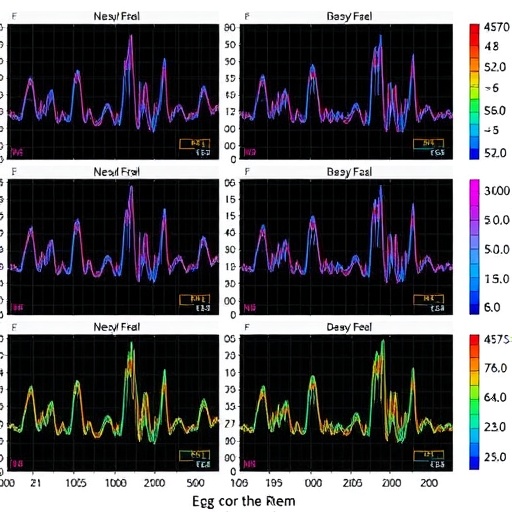
EEG Modeling Predicts Conversion and Reveals Diverse Outcomes in Isolated REM Sleep Disorder

EEG Modeling Predicts Conversion and Reveals Diverse Outcomes in Isolated REM Sleep Disorder

65
SHARES
587
VIEWS
Share on FacebookShare on Twitter
ADVERTISEMENT

A new viral science update highlights how a longitudinal model built from resting-state EEG can forecast who will eventually develop Parkinson’s disease-related phenotypes among people with isolated REM sleep behavior disorder (iRBD). In a study by Yook, Shin, Noh, and colleagues, researchers combine electrophysiology with statistical learning to move beyond one-time risk estimates, aiming instead for time-sensitive prediction.

The work focuses on iRBD, a sleep disorder widely considered a prodromal marker for synucleinopathies. While not all iRBD patients convert to clinical disease, the conversion pathway is heterogeneous—meaning different individuals may evolve along distinct trajectories. Capturing that diversity has been a major challenge for predictive neuroscience.

Using resting-state EEG, the team extracted brain activity signatures without requiring task performance. Resting measurements reduce confounds from attention or learning and can be repeated across visits, which is crucial for longitudinal modeling. The researchers then applied longitudinal EEG-based modeling to track how neural patterns shift over time in relation to later phenoconversion.

Technically, the approach treats EEG dynamics as measurable features that evolve across follow-up, allowing the model to infer which individuals show trajectories consistent with future disease onset. Rather than using a single baseline snapshot, the pipeline leverages temporal structure—an advantage when biological change is gradual.

A key outcome reported in the study is that the model predicts phenoconversion more effectively than static approaches, suggesting that iRBD conversion is reflected in the evolving resting-state electrophysiological landscape. The authors also emphasize that prediction is not uniform: different patterns correspond to distinct subgroups.

By delineating heterogeneity, the framework helps identify iRBD subtypes that may reflect different underlying pathophysiology. This could guide stratification in future clinical trials, improving the chances that interventions are tested in the right patient populations.

Overall, the research positions resting-state EEG as a dynamic biomarker source and demonstrates how longitudinal machine-learning-style analysis can translate neural signals into clinically meaningful forecasting. If validated broadly, such models could accelerate early diagnosis strategies and enable more personalized monitoring for people at risk.

The study appears in npj Parkinson’s Disease (2026) and is accessible via https://doi.org/10.1038/s41531-026-01499-1.

Subject of Research: isolated REM sleep behavior disorder (iRBD) and Parkinson’s disease phenoconversion prediction using longitudinal resting-state EEG modeling.

Article Title: Longitudinal resting-state EEG–based modeling predicts phenoconversion and delineates heterogeneity in isolated REM sleep behavior disorder.

Article References: Yook, S., Shin, JW., Noh, TG. et al. npj Parkinsons Dis. (2026). https://doi.org/10.1038/s41531-026-01499-1

DOI: 10.1038/s41531-026-01499-1

Keywords: isolated REM sleep behavior disorder; resting-state EEG; phenoconversion; heterogeneity; longitudinal modeling; Parkinson’s disease.

Tags: diverse outcomes prediction in isolated REM sleep disorderearly detection of Parkinson’s disease using EEGEEG-based predictive modeling for Parkinson's diseaseelectrophysiology and statistical learning in neurodegenerative disease predictionheterogeneity of iRBD conversion pathwayslongitudinal brain activity analysis in REM sleep behavior disorderlongitudinal neurophysiological modeling in sleep disordersneural signatures of disease conversionnon-invasive EEG biomarkers forresting-state EEG for tracking disease progressiontime-sensitive neural biomarkers for synucleinopathies
Share26Tweet16
Previous Post

Shrub-driven vertical coupling shaped Holocene ecosystem variability and transitions

Next Post

Single-Cell Profiling of NK/T-Cell Lymphoma Uncovers Stratified Immune States

Related Posts

UC San Diego Wins $12.3 Million Grant to Study HIV-Methamphetamine Connection
Medicine

UC San Diego Wins $12.3 Million Grant to Study HIV-Methamphetamine Connection

August 18, 2026
Engineered Gel Cells Carry Artificial DNA Receptors to Detect and Treat Aflatoxin
Medicine

Engineered Gel Cells Carry Artificial DNA Receptors to Detect and Treat Aflatoxin

August 18, 2026
Air pollution linked to distinct changes in Alzheimer’s-vulnerable brain regions
Medicine

Air pollution linked to distinct changes in Alzheimer’s-vulnerable brain regions

August 18, 2026
Anti-CD320 Autoantibodies Linked to CNS Vitamin B12 Deficiency in Myelopathy
Medicine

Anti-CD320 Autoantibodies Linked to CNS Vitamin B12 Deficiency in Myelopathy

August 18, 2026
Mizzou Study Finds Minor Schedule Change Dramatically Improves Night-Shift Physicians’ Health
Medicine

Mizzou Study Finds Minor Schedule Change Dramatically Improves Night-Shift Physicians’ Health

August 18, 2026
Personalized neoantigen vaccine shows promise after surgery for head and neck cancer
Medicine

Personalized neoantigen vaccine shows promise after surgery for head and neck cancer

August 18, 2026
Next Post
Single-Cell Profiling of NK/T-Cell Lymphoma Uncovers Stratified Immune States

Single-Cell Profiling of NK/T-Cell Lymphoma Uncovers Stratified Immune States

  • Mothers who receive childcare support from maternal grandparents show more

    Mothers who receive childcare support from maternal grandparents show more parental warmth, finds NTU Singapore study

    27656 shares
    Share 11059 Tweet 6912
  • University of Seville Breaks 120-Year-Old Mystery, Revises a Key Einstein Concept

    1061 shares
    Share 424 Tweet 265
  • Bee body mass, pathogens and local climate influence heat tolerance

    682 shares
    Share 273 Tweet 171
  • Researchers record first-ever images and data of a shark experiencing a boat strike

    546 shares
    Share 218 Tweet 137
  • Groundbreaking Clinical Trial Reveals Lubiprostone Enhances Kidney Function

    531 shares
    Share 212 Tweet 133
Science

Embark on a thrilling journey of discovery with Scienmag.com—your ultimate source for cutting-edge breakthroughs. Immerse yourself in a world where curiosity knows no limits and tomorrow’s possibilities become today’s reality!

RECENT NEWS

  • Who Benefits from Nature-Based Solutions? Europeanization and Co-optation in Authoritarian Belgrade
  • Freeze-Drying Method Reveals Bacterial Ultrastructure in Scanning Electron Microscopy
  • Fiber-Optic Sensing Uncovers Hidden Crevasses Beneath Glacial Ice
  • Scientists map plant-fungus symbiosis at single-cell resolution

Categories

  • Agriculture
  • Anthropology
  • Archaeology
  • Athmospheric
  • Biology
  • Biotechnology
  • Blog
  • Bussines
  • Cancer
  • Chemistry
  • Climate
  • Earth Science
  • Editorial Policy
  • Marine
  • Mathematics
  • Medicine
  • Pediatry
  • Policy
  • Psychology & Psychiatry
  • Science Education
  • Social Science
  • Space
  • Technology and Engineering

Subscribe to Blog via Email

Enter your email address to subscribe to this blog and receive notifications of new posts by email.

Join 5,150 other subscribers

© 2025 Scienmag - Science Magazine

Welcome Back!

Login to your account below

Forgotten Password?

Retrieve your password

Please enter your username or email address to reset your password.

Log In
No Result
View All Result
  • HOME
  • SCIENCE NEWS
  • CONTACT US

© 2025 Scienmag - Science Magazine

Discover more from Science

Subscribe now to keep reading and get access to the full archive.

Continue reading
