Friday, October 30, 2026
Science
No Result
View All Result
  • Login
  • HOME
  • SCIENCE NEWS
  • CONTACT US
  • HOME
  • SCIENCE NEWS
  • CONTACT US
No Result
View All Result
Scienmag
No Result
View All Result
Home Science News Medicine

Tree Shrews Mirror Human Sperm Development Better Than Mice, Study Finds

October 29, 2026
in Medicine
Juliet Wilcox
By Juliet Wilcox Scienmag Editorial Profile - Human Genetics
Reading Time: 2 mins read
0
Tree Shrews Mirror Human Sperm Development Better Than Mice, Study Finds

Tree Shrews Mirror Human Sperm Development Better Than Mice, Study Finds

65
SHARES
587
VIEWS
Share on FacebookShare on Twitter
ADVERTISEMENT

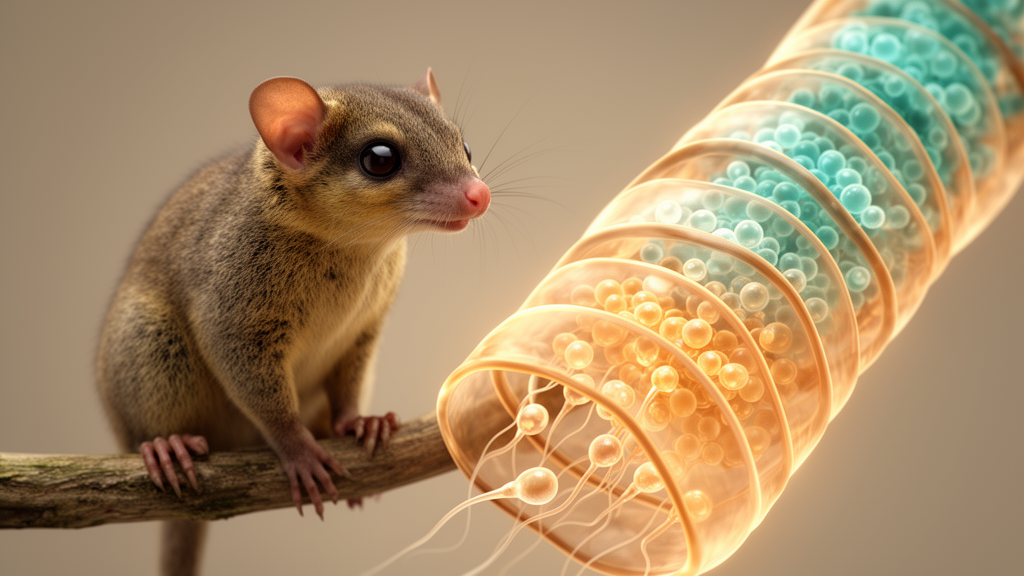
Tree shrews may serve as a better laboratory stand-in for human sperm production than the mouse, according to a cross-species single-cell study published in Nature Communications. Researchers led by Hui-Juan Lin, Wei-Bo Kang and Lan-Ping Xie integrated histology with single-nucleus RNA sequencing data from human, rhesus macaque, mouse and tree shrew testes to evaluate how faithfully each animal’s spermatogenic cells mirror the human transcriptional landscape.

The motivation lies in evolutionary biology: spermatogenesis evolves rapidly, and some genes involved in human sperm development are absent or divergent in mice, limiting the mouse’s utility as a model. Primate models such as macaques are closer to humans biologically but face practical and ethical constraints in laboratory research. Tree shrews, small mammals closely related to primates, are easy to keep and breed in laboratory settings, making them an attractive candidate for comparison.

The analysis showed that transcriptional landscapes in tree shrew spermatogenic cells, particularly late-stage spermatids, more closely resemble those of primates than of mice. Conservation and enrichment analyses identified two core gene modules shared among humans, macaques and tree shrews but distinct in mice, suggesting a primate-like genetic program of sperm cell development that the tree shrew retains.

Gene expression trajectories across the stages of sperm development also aligned between tree shrew and primates, including for genes that lack murine orthologs. This means that even genes with no mouse counterpart follow a similar developmental expression pattern in tree shrews and primates. Immunostaining and RNA-FISH experiments supported the representative expression patterns observed in the sequencing data.

The authors note that these findings define contexts in which tree shrews can complement existing models of human spermatogenesis and male infertility research. The study is an open-access article published on 29 October 2026 and shared early as a citable, peer-reviewed accepted version subject to further edits before the final Version of Record.

Subject of Research: Cross-species single-cell transcriptomic comparison of testis gene expression in humans, macaques, mice and tree shrews

Article Title: Tree shrew more closely recapitulates primate spermatogenesis than the mouse in cross-species single-cell transcriptomic analyses

Article References: Lin, H.-J., Kang, W.-B., Xie, L.-P., Hu, S., Li, Y., Bi, R., Yao, Y.-G., & Zheng, P. (2026). Tree shrew more closely recapitulates primate spermatogenesis than the mouse in cross-species single-cell transcriptomic analyses. Nature Communications. https://doi.org/10.1038/s41467-026-77781-w

Image Credits: AI Generated

DOI: 10.1038/s41467-026-77781-w

Keywords: spermatogenesis, tree shrew, single-nucleus RNA sequencing, testis, primate model, male infertility, transcriptomics, comparative genomics, rhesus macaque, mouse model, Tree, shrew

Cite Scienmag News

Juliet Wilcox. (October 29, 2026). Tree Shrews Mirror Human Sperm Development Better Than Mice, Study Finds. Scienmag. https://scienmag.com/tree-shrews-mirror-human-sperm-development-better-than-mice-study-finds/

Juliet Wilcox. "Tree Shrews Mirror Human Sperm Development Better Than Mice, Study Finds." Scienmag, 29 October 2026, https://scienmag.com/tree-shrews-mirror-human-sperm-development-better-than-mice-study-finds/. Accessed 30 October 2026.

Juliet Wilcox. "Tree Shrews Mirror Human Sperm Development Better Than Mice, Study Finds." Scienmag. October 29, 2026. https://scienmag.com/tree-shrews-mirror-human-sperm-development-better-than-mice-study-finds/


Tags: cell trajectory analysis in spermatogenesiscomparative genomicscomparative spermatogenesis analysiscross-species reproductive biology studiesethical considerations in laboratory animal researchevolutionary biology of sperm genesgenetic conservation in sperm developmenthistology and transcriptomics in testeslimitations of mouse models in fertility researchmale infertilitymouse modelprimate modelprimate models for human reproductionprimate-like sperm developmentrhesus macaqueshrewsingle-cell RNA sequencing in reproductive biologysingle-nucleus RNA sequencingspermatogenesistestisTranscriptomicstreetree shrewtree shrew as model organism
Share26Tweet16
Previous Post

Vitamin D Boost Makes Electrochemotherapy Far More Potent Against Colon Cancer Cells in Lab Study

Next Post

Farms shift toward the tropics and drylands as settlements expand

Related Posts

ZNF207 shields glutamine transporter ASCT2 from degradation to fuel liver cancer growth
Cancer

ZNF207 shields glutamine transporter ASCT2 from degradation to fuel liver cancer growth

October 30, 2026
Most Ethiopian HIV patients on dolutegravir therapy show good knowledge, survey finds
Medicine

Most Ethiopian HIV patients on dolutegravir therapy show good knowledge, survey finds

October 30, 2026
Serum and urine protein biomarkers may sharpen prostate cancer detection beyond PSA
Medicine

Serum and urine protein biomarkers may sharpen prostate cancer detection beyond PSA

October 30, 2026
One gene locus flags atrial fibrillation risk after major surgery, UK Biobank study finds
Medicine

One gene locus flags atrial fibrillation risk after major surgery, UK Biobank study finds

October 30, 2026
Deep-learning CT reconstruction sharpens calcium visibility in phantom tests, but dose evens the score
Medicine

Deep-learning CT reconstruction sharpens calcium visibility in phantom tests, but dose evens the score

October 30, 2026
Pennywort Leaf Extract Lowers Blood Sugar in Diabetic Rats, Study Finds
Medicine

Pennywort Leaf Extract Lowers Blood Sugar in Diabetic Rats, Study Finds

October 30, 2026
Next Post
Farms shift toward the tropics and drylands as settlements expand

Farms shift toward the tropics and drylands as settlements expand

  • Mothers who receive childcare support from maternal grandparents show more optimized

    Mothers who receive childcare support from maternal grandparents show more parental warmth, finds NTU Singapore study

    27656 shares
    Share 11059 Tweet 6912
  • University of Seville Breaks 120-Year-Old Mystery, Revises a Key Einstein Concept

    1061 shares
    Share 424 Tweet 265
  • Bee body mass, pathogens and local climate influence heat tolerance

    682 shares
    Share 273 Tweet 171
  • Researchers record first-ever images and data of a shark experiencing a boat strike

    546 shares
    Share 218 Tweet 137
  • Groundbreaking Clinical Trial Reveals Lubiprostone Enhances Kidney Function

    531 shares
    Share 212 Tweet 133
Science

Embark on a thrilling journey of discovery with Scienmag.com—your ultimate source for cutting-edge breakthroughs. Immerse yourself in a world where curiosity knows no limits and tomorrow’s possibilities become today’s reality!

RECENT NEWS

  • Microbial Sources and Stress Shape the Hidden Endophytes of an Invasive Plant
  • Firebreaks Leave Lasting Scars in Grasslands While Wildfire Heals Fast
  • Regularisation and voluntary return reproduce precarity for irregularised migrants in Spain and the UK
  • ZNF207 shields glutamine transporter ASCT2 from degradation to fuel liver cancer growth

Categories

  • Agriculture
  • Anthropology
  • Archaeology
  • Athmospheric
  • Biology
  • Biotechnology
  • Blog
  • Bussines
  • Cancer
  • Chemistry
  • Climate
  • Earth Science
  • Editorial Policy
  • Marine
  • Mathematics
  • Medicine
  • Pediatry
  • Policy
  • Psychology & Psychiatry
  • Science Education
  • Science News
  • Social Science
  • Space
  • Technology and Engineering

Subscribe to Blog via Email

Enter your email address to subscribe to this blog and receive notifications of new posts by email.

Join 5,150 other subscribers

© 2025 Scienmag - Science Magazine

Welcome Back!

Login to your account below

Forgotten Password?

Retrieve your password

Please enter your username or email address to reset your password.

Log In
No Result
View All Result
  • HOME
  • SCIENCE NEWS
  • CONTACT US

© 2025 Scienmag - Science Magazine

Discover more from Science

Subscribe now to keep reading and get access to the full archive.

Continue reading