


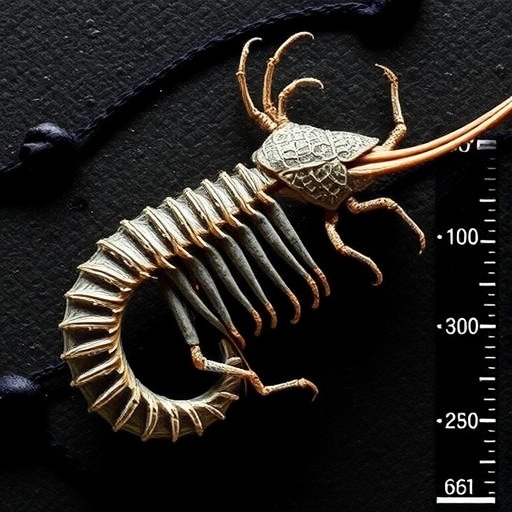
In the depths of British Columbia lies the Burgess Shale, a geological formation famed for its unparalleled preservation of ancient life, offering scientists a stunning glimpse into the distant past. Among the extraordinary fossils unearthed here, the trilobite Olenoides serratus stands out as a remarkable specimen, boasting preserved soft tissues such as limbs and antennae—a rarity in the fossil record dominated by hardened exoskeletons. This exceptional preservation has opened a remarkable window into understanding the morphology and functionality of ancient arthropod appendages from over half a billion years ago.
Trilobites are one of the earliest groups of arthropods, creatures whose evolutionary legacy extends to modern insects, crustaceans, and arachnids. Despite the thousands of trilobite species documented, their soft limbs remain one of the least understood anatomical features due to their poor fossilization potential. In this groundbreaking study led by postdoctoral fellow Dr. Sarah R. Losso at Harvard University’s Department of Organismic and Evolutionary Biology, researchers meticulously examined 156 limbs from 28 Olenoides serratus fossils to reconstruct the biomechanics of these ancient appendages.
Movement and behavior in extinct animals pose significant challenges for paleontologists, as direct observation is impossible. Losso and her team navigated this obstacle by employing an integrative approach that combined detailed morphological studies with comparisons to extant arthropods, utilizing modern analogues to infer the potential function and range of motion of the trilobite limbs. Their work illustrates how intricate fossil morphology can reveal not only anatomical structure but also behavioral ecology.
Arthropod legs are jointed structures consisting of multiple segments capable of flexion and extension. The degree of motion at each joint, along with the shape of segments, informs how limbs facilitate locomotion, feeding, and environmental interaction. Interestingly, the study highlights functional differences between trilobite limbs and those of more familiar arthropods like horseshoe crabs—arthropods superficially similar to trilobites but belonging to distinct evolutionary lineages with differing appendage specialization.
Unlike the alternating joint specialization observed in horseshoe crabs, which allows for simultaneous flexing and extending optimized for both protection and feeding, Olenoides serratus demonstrated a relatively simpler joint design. Their limbs exhibited a more limited extension range, concentrated in the distal segments farthest from the body, indicating a different strategy for movement and environmental engagement, yet one that facilitated key survival behaviors such as walking, burrowing, and food manipulation.
To overcome the challenges posed by the flat and compressed nature of fossilized trilobite limbs, the researchers utilized advanced three-dimensional digital modeling techniques. By compiling hundreds of fossil images captured from varying angles, they reconstructed accurate 3D models that revealed the nuances of limb articulation and range of motion. This pioneering methodology sheds light on the biomechanics of extinct animals where physical specimens alone provide incomplete data.
The team also integrated their findings with trace fossil analysis—indirect evidence left by the creatures’ interaction with the sediment. The burrows and tracks matched the reconstructed limb movements, confirming that Olenoides serratus could elevate its body above the seafloor to negotiate obstacles and move efficiently in sediment-laden currents. Such mobility insight transforms static fossils into dynamic narratives of ancient ecological niches.
One of the more surprising discoveries was the identification of sexually dimorphic appendages in male trilobites, specialized for mating, a feature previously unconfirmed in such ancient arthropods. Moreover, evidence that each leg bore a gill structure pointed to a dual function—in addition to locomotion, limbs facilitated respiration, highlighting evolutionary multitasking in appendage adaptation.
The rarity of preserved legs in trilobites—occurring in less than 0.2% of fossil specimens—illustrates the extraordinary taphonomic conditions of the Burgess Shale. Rapid burial by underwater landslides coupled with oxygen deprivation created an environment conducive to preserving delicate soft tissues, allowing modern scientists to explore details conventionally lost to time and providing a more holistic picture of Cambrian ecosystems.
This study ushers in a more nuanced understanding of the functional morphology of early arthropods, showcasing that Olenoides serratus was far from a simple crawler. Its sophisticated limb mechanics supported diverse ecological roles including locomotion across complex seafloor terrains, burrowing for shelter or hunting, and manipulation of food sources. The interplay between anatomical form and ecological function underscores evolutionary pressures shaping early marine ecosystems.
By pushing the boundaries of paleontological methods, this research bridges millions of years, reconstructing not only the physical structure but behavioral capabilities of one of Earth’s earliest complex animals. The findings challenge the longstanding paradigm that trilobites, due to limited fossil evidence, were simplistic in their limb function, revealing instead a dynamic and ecologically versatile organism adapted to its Cambrian habitat.
As technological advances continue to refine fossil interpretation, similar methodologies promise to illuminate other enigmatic soft-bodied features across the fossil record, reshaping our understanding of evolutionary history. Insights gained from the Burgess Shale trilobites may also inform biomimetic designs by revealing efficient joint design and multifunctional appendage roles developed deep in the evolutionary past.
Through the collaborative efforts of paleontologists, evolutionary biologists, and digital imaging specialists, the legacy of Olenoides serratus now commands attention as a keystone species illustrating early animal innovation and ecosystem complexity during the Cambrian explosion. This research not only enriches the fossil narrative but also inspires a deeper appreciation for the intricacy of life’s ancient origins beneath the waves.
News Publication Date: 4-Aug-2025
Web References: 10.1186/s12915-025-02335-3
Cite Scienmag News
Gavin Prescott. (August 4, 2025). Tracing Ancient Arthropods in Motion: Decoding the Hidden Gaits of Burgess Shale Trilobites. Scienmag. https://scienmag.com/tracing-ancient-arthropods-in-motion-decoding-the-hidden-gaits-of-burgess-shale-trilobites/
Gavin Prescott. "Tracing Ancient Arthropods in Motion: Decoding the Hidden Gaits of Burgess Shale Trilobites." Scienmag, 4 August 2025, https://scienmag.com/tracing-ancient-arthropods-in-motion-decoding-the-hidden-gaits-of-burgess-shale-trilobites/. Accessed 3 September 2026.
Gavin Prescott. "Tracing Ancient Arthropods in Motion: Decoding the Hidden Gaits of Burgess Shale Trilobites." Scienmag. August 4, 2025. https://scienmag.com/tracing-ancient-arthropods-in-motion-decoding-the-hidden-gaits-of-burgess-shale-trilobites/


