


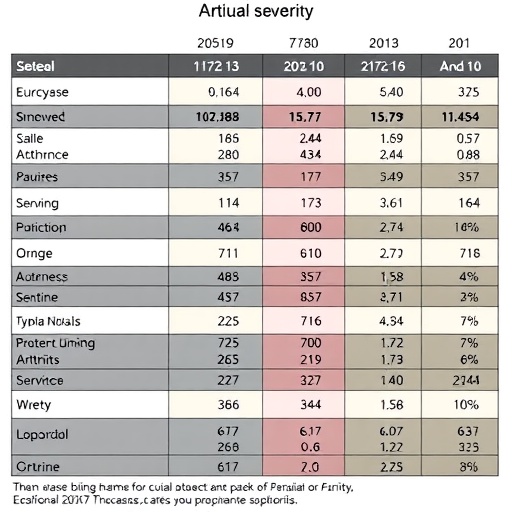
A large European study has found that the economic circumstances of the country in which patients live are associated with when they begin advanced treatment for psoriatic arthritis (PsA) or axial spondyloarthritis (axSpA), how active their disease is at that point, and how long they remain on therapy. The findings suggest that national healthcare resources may shape treatment pathways in ways that are not fully explained by individual patient characteristics.
Published in the Annals of the Rheumatic Diseases, the study analyzed real-world data from the European Spondyloarthritis Research Collaboration Network, known as EuroSpA. Researchers examined 38,911 patients across 13 European countries, including 17,296 people with PsA and 21,615 with axSpA. All participants began treatment with a biologic or targeted synthetic disease-modifying antirheumatic drug, collectively referred to as b/tsDMARDs, between 2015 and 2021.
These medicines are generally used when conventional treatments do not adequately control inflammation or when disease severity warrants a more advanced approach. Biologic drugs target specific immune pathways, such as tumor necrosis factor or interleukin signaling, while targeted synthetic drugs interfere with intracellular molecules involved in inflammatory signaling. Treatment retention—the length of time a patient continues a therapy before stopping or switching—is commonly used as a real-world measure of effectiveness, tolerability, adherence, and clinical satisfaction.
The investigators compared treatment outcomes with country-level socioeconomic indicators, including gross domestic product per capita, gross national income per capita, current health expenditure per capita, out-of-pocket healthcare spending, and the Human Development Index. Rather than measuring only a patient’s personal income or education, this approach evaluated the broader healthcare and economic environment in which treatment decisions were made.
A consistent pattern emerged. Patients living in wealthier European countries were more likely to begin b/tsDMARD treatment sooner in the course of their disease and at lower levels of disease activity than patients in middle- and lower-income countries. The difference was particularly apparent among people with PsA. Patients in wealthier countries also had shorter disease duration when advanced treatment was initiated, suggesting that diagnosis, referral, treatment eligibility, and access to specialists may occur earlier in better-resourced health systems.
However, greater economic resources were also associated with shorter treatment retention. Both men and women with PsA or axSpA from countries with higher socioeconomic indicators were more likely to discontinue or change their b/tsDMARD at six, 12, and 24 months. The result may appear paradoxical: patients in wealthier countries started treatment earlier and with less active disease, yet they were more likely to stop or switch therapy during the two-year observation period.
Several explanations are possible. Earlier access may allow clinicians to intervene before disease activity becomes severe, reducing the tolerance for residual symptoms or modest treatment limitations. In systems with a broad range of available therapies, physicians and patients may also have more opportunities to switch when the initial response is incomplete, side effects arise, or a different mechanism of action is considered preferable. By contrast, patients in countries with fewer resources may remain on a therapy longer because alternative treatments are less accessible, even when disease control is inadequate.
The study also identified differences in the composition of the patient populations. People starting advanced treatment in wealthier countries were more likely to be women and current smokers. These characteristics can influence symptoms, disease perception, treatment response, and clinical decision-making, although the country-level associations remained an important feature of the analysis. The researchers emphasized that the findings describe relationships between national socioeconomic conditions and treatment outcomes; they do not prove that national wealth directly causes treatment discontinuation or switching.
The results highlight a central challenge in interpreting international treatment data. A high rate of treatment retention is not automatically evidence of better care, just as frequent switching does not necessarily indicate poor clinical management. Retention can reflect efficacy and tolerability, but it can also be shaped by reimbursement rules, prescribing restrictions, monitoring systems, patient preferences, physician practice patterns, and the availability of alternative medicines. Similarly, higher disease activity at treatment initiation may reflect delayed diagnosis or restricted access rather than differences in the underlying biology of the disease.
According to lead investigator Brigitte Michelsen of the Copenhagen Center for Arthritis Research and collaborating hospitals in Denmark and Norway, the study was designed to understand why disease activity and treatment outcomes vary between countries. The findings point to different priorities across healthcare systems. Lower-resource countries may need to strengthen early recognition of PsA and axSpA, accelerate specialist referral, and improve access to effective therapies before inflammation becomes prolonged or disabling. Wealthier countries, meanwhile, may need to assess whether repeated treatment changes are clinically justified and whether they produce meaningful benefits for patients.
The researchers argue that country-level inequality should be considered when clinicians, policymakers, and researchers compare treatment outcomes. Differences in health expenditure and access can influence the point at which treatment begins, the severity of disease at that time, and the options available when a therapy does not work as expected. Recognizing these influences could help prevent misleading comparisons between nations and support more equitable standards of care.
The study was financially supported by Novartis, while the authors reported that sponsors had no influence on data collection, statistical analyses, manuscript preparation, or the decision to submit the work. The article, published in the Annals of the Rheumatic Diseases, adds evidence that effective rheumatology care depends not only on the development of advanced drugs, but also on whether health systems can deliver them at the right time and sustain clinically appropriate treatment for the people who need them.
News Publication Date: August 11, 2026
Web References: https://doi.org/10.1016/j.ard.2026.06.021; https://ard.eular.org/
References: Michelsen B et al., “Influence of national socioeconomic status on treatment retention and disease activity in psoriatic arthritis and axial spondyloarthritis: evidence over 2 years in 13 European countries,” Annals of the Rheumatic Diseases, published July 13, 2026. DOI: 10.1016/j.ard.2026.06.021
Cite Scienmag News
Courtney Benton. (August 11, 2026). Socioeconomic status influences initial severity, treatment duration in psoriatic and axial arthritis. Scienmag. https://scienmag.com/socioeconomic-status-influences-initial-severity-treatment-duration-in-psoriatic-and-axial-arthritis/
Courtney Benton. "Socioeconomic status influences initial severity, treatment duration in psoriatic and axial arthritis." Scienmag, 11 August 2026, https://scienmag.com/socioeconomic-status-influences-initial-severity-treatment-duration-in-psoriatic-and-axial-arthritis/. Accessed 4 September 2026.
Courtney Benton. "Socioeconomic status influences initial severity, treatment duration in psoriatic and axial arthritis." Scienmag. August 11, 2026. https://scienmag.com/socioeconomic-status-influences-initial-severity-treatment-duration-in-psoriatic-and-axial-arthritis/


