


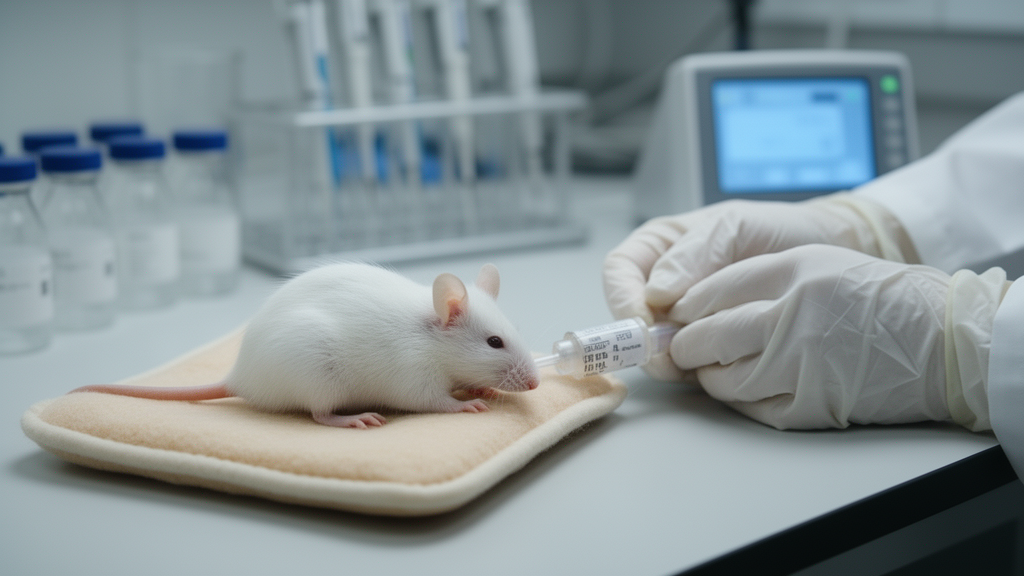
Tofacitinib, one of the most widely prescribed oral JAK inhibitors in modern medicine, has just delivered a preclinical surprise. A new animal study published in the journal Pharmacia reports that 28 days of treatment with the drug produced measurable cardiovascular effects in mice, including dose-dependent reductions in both systolic and diastolic blood pressure, a statistically significant drop in the cardiac biomarker creatine kinase-MB, an unexpected increase in the tone of isolated basilar arteries, and a nonlinear pattern of mortality that appeared only in the low- and medium-dose groups. The findings arrive at a moment when regulators worldwide are still digesting the safety implications of the ORAL Surveillance trial, and they add fresh experimental evidence to a debate that has reshaped how clinicians prescribe this entire drug class.
The story of tofacitinib’s cardiovascular scrutiny begins with its mechanism. Tofacitinib blocks Janus kinases, a family of four cytoplasmic non-receptor tyrosine kinases known as JAK1, JAK2, JAK3, and TYK2. These enzymes activate downstream STAT proteins that switch on the transcription of genes driving inflammation and immunity. By inhibiting these intracellular kinases, the drug silences signaling from multiple pro-inflammatory cytokines, including interleukins and interferons, offering a targeted oral alternative to biologic therapies for conditions such as rheumatoid arthritis, psoriatic arthritis, ulcerative colitis, atopic dermatitis, and alopecia areata. Tofacitinib itself selectively blocks JAK1 and JAK3 and, to a lesser extent, JAK2 and TYK2, giving it pan-JAK activity against multiple cytokine pathways. It was first authorized in the European Union on 22 March 2017 to treat adults with moderate to severe rheumatoid arthritis.
But the drug’s therapeutic value has always been shadowed by cardiovascular questions. During premarketing clinical trials, tofacitinib demonstrated efficacy alongside increases in serum total cholesterol, low-density lipoprotein cholesterol, and high-density lipoprotein cholesterol, which prompted regulatory agencies to require cardiovascular safety evaluations. The ORAL Surveillance trial, a phase IIIb/IV randomized, open-label, non-inferiority study, enrolled 4,362 patients aged 50 years or older with at least one cardiovascular risk factor. The primary outcome showed that the incidence of major adverse cardiovascular events, defined as cardiovascular death, nonfatal myocardial infarction, or nonfatal stroke, was higher with combined tofacitinib doses at 3.4 percent than with tumor necrosis factor inhibitors at 2.5 percent. Non-inferiority was not demonstrated, with a hazard ratio of 1.33 and a 95 percent confidence interval spanning 0.91 to 1.94. In response, the European Medicines Agency’s Pharmacovigilance Risk Assessment Committee started a review of JAK inhibitor safety in 2022, and in 2023 the agency endorsed measures restricting their use in patients aged 65 years or older, those at increased cardiovascular risk, current or past smokers, and those at increased cancer risk when no suitable alternatives exist. A post hoc analysis found that MACE risk was particularly elevated in patients with a history of atherosclerotic cardiovascular disease, with a hazard ratio of 1.98 in that subgroup.
Against this clinical backdrop, the new study sought to bridge the gap between preregistration data and real-world safety observations by characterizing tofacitinib’s cardiovascular endpoints in both in vivo and in vitro models. The researchers used 40 male line H mice housed under standard laboratory conditions at the Faculty of Pharmacy of the Medical University of Sofia, with all procedures approved by the Bulgarian Food Safety Agency. The animals were divided into a control group of eight mice and three tofacitinib groups of 10 mice each, receiving low, medium, and high doses of 2.04, 4.07, and 8.14 mg/kg respectively. The medium dose was calibrated to correspond to the maximal daily dose in adults, while the low and high doses represented half and twice that amount to account for uncertainty in real-world practice. The drug was administered once daily via oral gavage as a 200 µL suspension warmed to room temperature and homogenized in an ultrasonic water bath for 10 minutes before each administration.
Blood pressure and heart rate were measured using the CODA High Throughput Noninvasive Blood Pressure System from Kent Scientific Corporation. Prior to measurement, the rodents entered transparent plastic restraint holders on their own, were placed on a heating plate wrapped in a thermal insulation blanket, and were left for 5 to 10 minutes to achieve an optimal tail temperature of 32 to 35 degrees Celsius. Measurements followed a pre-programmed protocol of 15 cycles of measurement and relaxation for 15 seconds each, totaling 30 seconds per cycle. At the end of the study period, the mice were humanely euthanized and serum levels of creatine kinase and creatine kinase-MB were determined, along with post mortem point-of-care determination of cardiac troponin I.
The results revealed a striking divergence from clinical expectations. Tofacitinib administration led to a dose-dependent decrease in both systolic and diastolic blood pressure, already evident on day 14 and more pronounced by day 28. On day 28, significant decreases were observed in systolic pressure at the high dose with a p value of 0.036, and in diastolic pressure across all doses, with p values of 0.003 at the low dose, 0.013 at the medium dose, and 0.002 at the high dose. This finding appears to align more closely with preclinical data than with the clinical literature, where studies have generally shown stable blood pressure during tofacitinib treatment and where hypertension is actually listed as a common adverse reaction in the current product information. The researchers suggest the effect may be species-specific or more evident under controlled experimental exposure, noting that published animal studies indicate tofacitinib may improve endothelial function through reduced oxidative stress, enhanced nitric oxide synthase activity, increased EDHF production, and reduced COX-2 and arginase activity, though the exact mechanism remains unresolved.
Heart rate showed only minor, non-significant fluctuations throughout the experimental period, broadly consistent with the clinical literature in which tofacitinib has not been associated with a reproducible chronotropic effect. In contrast, body weight told a different story. The control group showed a gradual increase from 33.00 grams to 35.13 grams over the study period, with a statistically significant difference on day 28 at a p value of 0.02. In contrast, weight loss was observed with all three tofacitinib doses, with a statistically significant reduction in the low-dose regimen at a p value of 0.028. The inability of mice in all tofacitinib groups to gain weight corresponds to observations in some preclinical trials conducted in rats at significantly higher doses, suggesting that even short-term administration of relatively low doses can inhibit normal weight gain.
The biochemical findings were equally intriguing. Tofacitinib produced a slight decrease in creatine kinase and a more pronounced, statistically significant decrease in creatine kinase-MB at all three doses, results that have not been reported in either preclinical or clinical trials of the product. The researchers caution that the decrease is difficult to interpret because both markers are influenced by noncardiac factors and are most informative when elevated in the context of myocardial injury. Published data suggest that changes in these markers may reflect skeletal muscle or systemic metabolic effects, so in the absence of cardiac troponin I elevation and histopathological confirmation, these findings should be regarded as exploratory rather than suggestive of myocardial damage. Indeed, the post mortem cardiac troponin I point-of-care assay showed negative results in all animals in both the tofacitinib-treated and control groups, indicating no detectable acute myocardial injury attributable to the drug or the experimental procedures.
Perhaps the most unexpected result came from the ex vivo vascular experiments. Using male Wistar-Kyoto rats, the researchers isolated 18 to 20 mm segments of basilar artery and mounted them on a wire myograph in modified Krebs solution bubbled with carbogen at 37 degrees Celsius. Tofacitinib, applied at increasing concentrations from 10 to the minus 10 to 10 to the minus 7 mol/L, led to a concentration-dependent increase in the tone of the basilar artery wall precontracted with 20 mM potassium chloride and 100 µM serotonin. This finding contrasts sharply with earlier preclinical reports of dose-dependent relaxation of isolated rat aorta and vasoprotective effects in arthritis and lupus models. The researchers suggest that beyond its anti-inflammatory effects, JAK inhibition can directly modulate smooth muscle or endothelial pathways in a way that favors vasoconstriction in certain vascular beds under serotonergic stimulation, hinting that the drug’s vascular effects may be bed-specific and context-dependent.
Mortality in the study was low and did not show a clear dose-dependent pattern, with deaths occurring in the low- and medium-dose groups while no mortality was observed in the control or high-dose groups. The absence of deaths in the control group supports the view that the observed deaths were treatment-associated, though the lack of a consistent dose-response relationship argues against a straightforward acute lethal effect. In the European Medicines Agency assessment report, mortality was reported mainly in monkeys at doses above 50 mg/kg/day and in rats only at very high exposure levels, substantially greater than those used in the present study. The researchers acknowledge that the relatively small number of animals presents a limitation in interpreting these findings. Overall, the study demonstrates that tofacitinib produced measurable cardiovascular and systemic effects in a short-term experimental model, but its effects were not uniformly dose-dependent across all endpoints. While some findings align with preclinical data, others, namely the blood pressure and mortality results, differ from the clinical literature, highlighting the complexity of translating nonclinical results into human safety predictions and supporting the need for careful cardiovascular monitoring and further mechanistic studies.
Subject of Research: Preclinical cardiovascular effects of the JAK inhibitor tofacitinib in a mouse model
Article Title: Animal study of the cardiovascular effects of tofacitinib: Hemodynamic, biochemical, vascular, and mortality outcomes
Article References: Rangelov, A., Parvova, I., Hristov, E., Momekov, G., Kadinov, B., & Marinov, L. (2026). Animal study of the cardiovascular effects of tofacitinib: Hemodynamic, biochemical, vascular, and mortality outcomes. Pharmacia, 73, Article e206503. https://doi.org/10.3897/pharmacia.73.e206503
Image Credits: AI Generated
DOI: 10.3897/pharmacia.73.e206503
Keywords: Animal, cardiovascular, effects, tofacitinib, Hemodynamic, biochemical, vascular, mortality, outcomes, scientific research
Cite Scienmag News
Ophelia Keating. (October 17, 2026). Tofacitinib lowers blood pressure and alters vascular tone in 28-day mouse study. Scienmag. https://scienmag.com/tofacitinib-lowers-blood-pressure-and-alters-vascular-tone-in-28-day-mouse-study/
Ophelia Keating. "Tofacitinib lowers blood pressure and alters vascular tone in 28-day mouse study." Scienmag, 17 October 2026, https://scienmag.com/tofacitinib-lowers-blood-pressure-and-alters-vascular-tone-in-28-day-mouse-study/. Accessed 17 October 2026.
Ophelia Keating. "Tofacitinib lowers blood pressure and alters vascular tone in 28-day mouse study." Scienmag. October 17, 2026. https://scienmag.com/tofacitinib-lowers-blood-pressure-and-alters-vascular-tone-in-28-day-mouse-study/


