


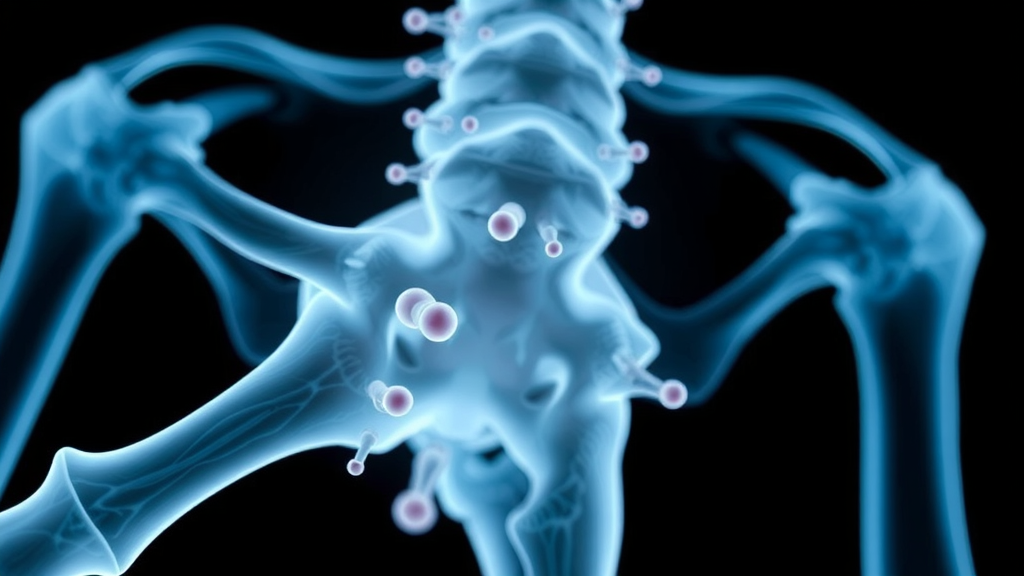
Muscle and bone are far more than neighboring tissues that simply share a mechanical workload. Throughout life, they engage in a continuous molecular conversation, exchanging signals that keep both organs healthy. When that dialogue breaks down, the result can be osteosarcopenia, the simultaneous and mutually reinforcing loss of muscle mass and bone density that disproportionately affects older adults and dramatically raises the risk of falls, fractures, and disability. A new review published in the Journal of Translational Medicine argues that one of the most important languages in this conversation is carried by exosomes, nanoscale vesicles released by cells that ferry proteins and genetic material between tissues. The work, led by Dongpan Chen and Jing Liu of the Affiliated Hospital of Nanjing University of Chinese Medicine, together with colleagues under corresponding author Daoming Xu, synthesizes the current evidence on how these tiny packages shape muscle-bone crosstalk and evaluates whether they can be turned into diagnostic tools and therapies.
Exosomes belong to the broader family of extracellular vesicles, but they have a specific origin story that distinguishes them from other secreted particles. They form inside cells within compartments called multivesicular bodies, which are essentially endosomes studded with internal buds known as intraluminal vesicles. When these multivesicular bodies fuse with the cell’s outer membrane, the intraluminal vesicles are released into the surrounding fluid as exosomes. The process is orchestrated in large part by the endosomal sorting complexes required for transport, or ESCRT, a molecular machinery that decides which proteins are packed into each vesicle. Because the cargo is selected during biogenesis, exosomes are not random debris; they are curated snapshots of the physiological state of the cell that released them. That property is precisely what makes them so interesting to researchers studying tissues that communicate across anatomical boundaries.
The review’s first major theme is the pathway running from skeletal muscle to bone. Muscle-derived exosomes carry a payload rich in microRNAs, short RNA molecules that do not encode proteins but instead regulate gene expression by silencing target messenger RNAs. When muscle-derived exosomes are taken up by bone cells, these myogenic microRNAs can tip the balance of bone remodeling, the perpetual tug-of-war between osteoblasts, the cells that build bone, and osteoclasts, the cells that resorb it. According to the review, specific muscle-derived microRNAs and proteins influence the activity of both osteoblasts and osteoclasts, meaning that a healthy, contracting muscle can actively encourage bone formation while suppressing excessive breakdown. This provides a molecular explanation for a clinical observation that has long puzzled researchers: people who lose muscle mass almost invariably lose bone mass as well, and exercise that strengthens muscle tends to strengthen bone in parallel.
The reverse direction of the conversation is equally consequential. Bone is not a passive recipient of muscle-derived signals; it sends its own exosomal messages back. The review highlights exosomes derived from bone marrow mesenchymal stem cells, the regenerative cells resident in bone marrow, as particularly influential on muscle. These bone-derived vesicles affect myogenesis, the formation of new muscle fibers, and influence the process of muscle atrophy, the wasting that follows disuse, disease, or aging. In other words, the bone marrow appears to function as an endocrine-like organ in its own right, dispatching nanoscale couriers that help determine whether muscle tissue is maintained or lost. This bidirectional loop helps explain why osteosarcopenia behaves as a single coupled syndrome rather than two coincidental conditions, and why treating one tissue in isolation often fails to rescue the other.
Several specific molecular players illustrate how granular this communication can be. The review’s abbreviation list points to factors such as paired-related homeobox 2, a transcriptional regulator implicated in bone cell behavior, and lactate dehydrogenase A, a key enzyme of glycolytic metabolism, as components of the vesicular cargo that has drawn attention. Fluid flow shear stress, the mechanical stimulus that bone cells experience when interstitial fluid is pushed through the bone matrix during loading, also appears in the discussion, underscoring that mechanical forces and vesicular signals are intertwined rather than separate channels. Markers such as procollagen type I N-terminal propeptide and the beta-isomer of C-terminal telopeptide of type I collagen, standard clinical indicators of bone formation and resorption respectively, represent the kind of measurable endpoints that exosome research ultimately hopes to complement or refine. The chemokine receptor CXCR4, known for guiding stem cell migration and homing, hints at how vesicle-mediated signals might direct regenerative cells to where they are needed.
Beyond mechanism, the review devotes substantial attention to translation, and this is where the story becomes genuinely exciting for clinicians. Because exosomal cargo mirrors the state of the source tissue, circulating exosomes could serve as liquid biopsy markers for musculoskeletal health. A blood test that reads the molecular signatures of muscle-derived and bone-derived vesicles might one day detect the earliest shifts toward osteosarcopenia, long before a dual-energy X-ray scan registers meaningful loss of tissue. The review assesses this biomarker potential explicitly, positioning exosomes alongside established biochemical markers of bone turnover as a next generation of diagnostics. Early detection matters enormously in this field, because interventions that preserve muscle and bone are far more effective before irreversible structural damage has accumulated.
The therapeutic possibilities are equally striking. Exosomes are natural delivery vehicles: they are small, stable in circulation, protected by a lipid membrane, and capable of crossing biological barriers that defeat many synthetic drugs. Researchers are exploring two parallel strategies. The first uses naturally occurring exosomes, for example those secreted by mesenchymal stem cells, as ready-made therapeutics whose intrinsic cargo promotes regeneration. The second is engineering: loading exosomes with chosen microRNAs, proteins, or drugs and, ideally, decorating their surface with targeting molecules so that they home to muscle or bone specifically. The review also references work on exosomes from human fetal cartilage-derived progenitor cells, an example of how vesicles from unusual source tissues are being evaluated for regenerative applications. If either strategy matures, a single injectable product could theoretically stimulate osteoblasts, calm osteoclasts, and revive failing muscle fibers at once, addressing both faces of osteosarcopenia with one intervention.
The authors are careful, however, not to oversell the promise, and their discussion of limitations is one of the most valuable parts of the review. Isolation and characterization of exosomes remain inconsistent across laboratories, with different separation techniques yielding vesicle populations of varying purity and potency, which complicates comparisons between studies. Biodistribution is poorly understood: once injected, engineered or native exosomes may accumulate in the liver or spleen rather than reaching the intended tissue, and achieving reliable tissue-specific delivery is still an unsolved problem. Manufacturing at clinical scale under Good Manufacturing Practice conditions poses further hurdles, and the regulatory landscape is still taking shape. The review notes that exosome-based products would likely navigate frameworks developed for advanced therapy medicinal products in Europe and for Investigational New Drug and Biologics License Application pathways at the United States Food and Drug Administration, routes that demand rigorous control of identity, purity, and potency. Safety questions, including the possibility that vesicles could transfer harmful cargo or provoke immune reactions, remain open.
What emerges from the review is a picture of a field in rapid ascent but not yet at the clinic. The authors conclude that exosomes are critical mediators of muscle-bone crosstalk and that their cargo reflects the physiological state of the source cells, a foundation solid enough to justify serious investment in both diagnostics and therapeutics. They also argue that future progress will depend on integrating multi-omics approaches, which profile the full complement of RNAs, proteins, and metabolites in vesicle populations, with artificial intelligence tools capable of finding predictive patterns in those enormous datasets. Such combinations could identify which specific vesicle signatures predict fracture risk or muscle decline, and which cargo molecules are the true therapeutic effectors among thousands of passengers. For the millions of people facing osteosarcopenia, the prospect that the body’s own nanoscale messengers could be read like a lab report and reprogrammed like a drug is no longer science fiction; it is a research agenda with a clear roadmap, published as an open-access article that invites the global research community to build on it.
Subject of Research: Exosome-mediated molecular communication between skeletal muscle and bone and its therapeutic potential for osteosarcopenia
Article Title: Exosome-mediated muscle-bone crosstalk: mechanisms and therapeutic potential
Article References: Chen, D., Liu, J., Liang, X., Zhang, X., Bai, L., Qin, G., Min, T., Xiang, J., Li, K., & Xu, D. (2026). Exosome-mediated muscle-bone crosstalk: mechanisms and therapeutic potential. Journal of Translational Medicine. https://doi.org/10.1186/s12967-026-08994-2
Image Credits: AI Generated
DOI: 10.1186/s12967-026-08994-2
Keywords: exosomes, extracellular vesicles, muscle-bone crosstalk, osteosarcopenia, skeletal muscle, bone metabolism, osteoblasts, osteoclasts, microRNAs, bone marrow mesenchymal stem cells, biomarkers, drug delivery
Cite Scienmag News
Ophelia Keating. (September 25, 2026). Tiny Vesicles Between Muscle and Bone May Unlock New Treatments for Osteosarcopenia. Scienmag. https://scienmag.com/tiny-vesicles-between-muscle-and-bone-may-unlock-new-treatments-for-osteosarcopenia/
Ophelia Keating. "Tiny Vesicles Between Muscle and Bone May Unlock New Treatments for Osteosarcopenia." Scienmag, 25 September 2026, https://scienmag.com/tiny-vesicles-between-muscle-and-bone-may-unlock-new-treatments-for-osteosarcopenia/. Accessed 5 October 2026.
Ophelia Keating. "Tiny Vesicles Between Muscle and Bone May Unlock New Treatments for Osteosarcopenia." Scienmag. September 25, 2026. https://scienmag.com/tiny-vesicles-between-muscle-and-bone-may-unlock-new-treatments-for-osteosarcopenia/


