Wednesday, October 28, 2026
Science
No Result
View All Result
  • Login
  • HOME
  • SCIENCE NEWS
  • CONTACT US
  • HOME
  • SCIENCE NEWS
  • CONTACT US
No Result
View All Result
Scienmag
No Result
View All Result
Home Science News Cancer

Three genes tied to lactylation and lactate metabolism may flag prostate cancer recurrence risk

October 28, 2026
in Cancer, Medicine
Nathaniel Bowman
By Nathaniel Bowman Scienmag Editorial Profile - Precision Oncology
Reading Time: 2 mins read
0
Three genes tied to lactylation and lactate metabolism may flag prostate cancer recurrence risk

Three genes tied to lactylation and lactate metabolism may flag prostate cancer recurrence risk

65
SHARES
587
VIEWS
Share on FacebookShare on Twitter
ADVERTISEMENT

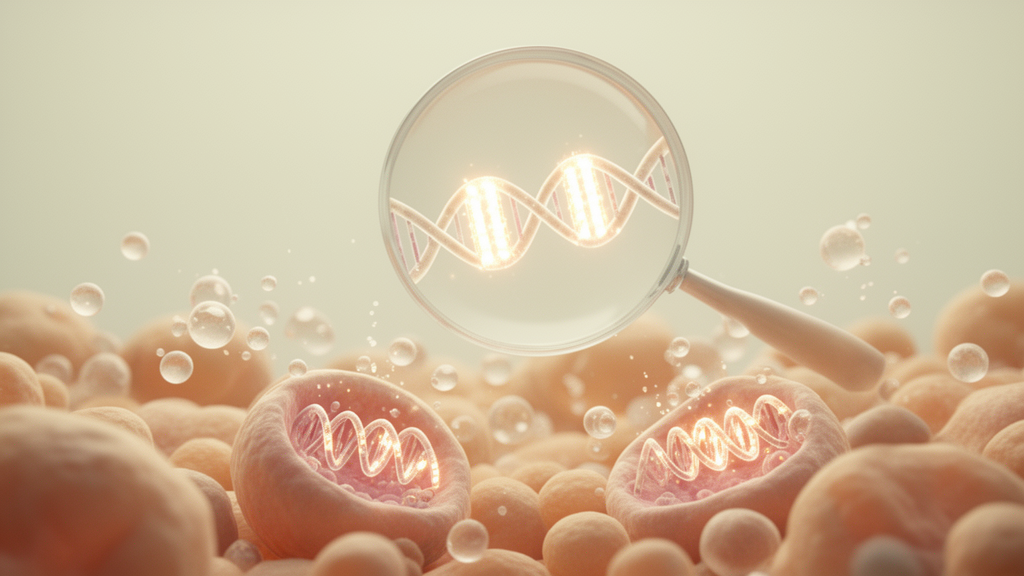
Researchers have built a risk model that uses just three genes — MKI67, MIPEP and CCNA2 — to predict biochemical recurrence in prostate cancer, linking the genes to lactylation and lactate metabolism. The study, published in Discover Oncology on 27 October 2026, combined bulk RNA sequencing data from public databases with single-cell RNA sequencing to identify which of these genes carry prognostic weight.

The team started with a candidate pool of 23 genes, derived by intersecting differentially expressed genes from the TCGA prostate cancer dataset with the union of lactylation-related genes and lactate metabolism-related genes. To narrow this list, they applied univariate Cox analysis, tested the proportional hazards assumption, and used least absolute shrinkage and selection operator regression. Three genes survived this filtering as prognostic markers connected to lactylation or lactate metabolism.

Using these three genes, the researchers constructed a random survival forest model for biochemical recurrence risk prediction and validated it externally in the GSE21034 dataset, where it showed robust predictive performance. An exploratory nomogram integrating the risk score with Gleason score demonstrated favorable calibration and discrimination, suggesting a practical way to combine molecular and clinical information for risk stratification.

Beyond the core model, the analysis connected risk scores to G2M checkpoint activity, immune-cell infiltration patterns, predicted immunotherapy response, and predicted drug sensitivity. In the GSE153892 dataset, single-cell RNA sequencing was used to identify key cell types and expression patterns of the prognostic genes, adding a cellular-level view of where these markers are active within tumors.

The authors also validated gene expression experimentally using reverse transcription-quantitative polymerase chain reaction in a small clinical cohort. MIPEP and CCNA2 were significantly upregulated, while MKI67 showed a non-significant increasing trend. The modest cohort size means these expression findings should be read as preliminary, and the authors note that further multicenter clinical and mechanistic validation is required before any clinical translation.

The study’s conclusion is deliberately measured: MKI67, MIPEP and CCNA2 may serve as lactylation- or lactate metabolism-related biomarkers for biochemical recurrence risk stratification in prostate cancer. As a computational, database-driven analysis with limited experimental validation, it identifies candidate biomarkers rather than establishing clinical utility, and the nomogram remains exploratory until tested in independent patient populations.

Subject of Research: Prognostic genes related to lactylation and lactate metabolism in prostate cancer

Article Title: Integrated analysis of bulk RNA sequencing and single-cell RNA sequencing to identify prognostic genes related to lactylation and lactate metabolism in prostate cancer

Article References: Zhi, Y., Long, X., Zhou, Y., Shi, X., Yang, B., Yang, J., Ou, Y., Zhang, H., Wang, D., & Guo, H. (2026). Integrated analysis of bulk RNA sequencing and single-cell RNA sequencing to identify prognostic genes related to lactylation and lactate metabolism in prostate cancer. Discover Oncology. https://doi.org/10.1007/s12672-026-06001-0

Image Credits: AI Generated

DOI: 10.1007/s12672-026-06001-0

Keywords: prostate cancer, lactylation, lactate metabolism, biochemical recurrence, RNA sequencing, random survival forest, MKI67, MIPEP, CCNA2, biomarkers, nomogram, single-cell RNA sequencing

Cite Scienmag News

Nathaniel Bowman. (October 28, 2026). Three genes tied to lactylation and lactate metabolism may flag prostate cancer recurrence risk. Scienmag. https://scienmag.com/three-genes-tied-to-lactylation-and-lactate-metabolism-may-flag-prostate-cancer-recurrence-risk/

Nathaniel Bowman. "Three genes tied to lactylation and lactate metabolism may flag prostate cancer recurrence risk." Scienmag, 28 October 2026, https://scienmag.com/three-genes-tied-to-lactylation-and-lactate-metabolism-may-flag-prostate-cancer-recurrence-risk/. Accessed 28 October 2026.

Nathaniel Bowman. "Three genes tied to lactylation and lactate metabolism may flag prostate cancer recurrence risk." Scienmag. October 28, 2026. https://scienmag.com/three-genes-tied-to-lactylation-and-lactate-metabolism-may-flag-prostate-cancer-recurrence-risk/
Tags: biochemical recurrencebiochemical recurrence prediction modelsbioinformatics in oncologyBiomarkersCCNA2combined clinical and molecular risk assessmentgene-based prognostic models for prostate cancerlactate metabolismlactylationlactylation and lactate metabolism in cancerlactylation-related gene signaturesMIPEPMKI67MKI67 MIPEP CCNA2 biomarkersnomogramnomogram for prostate cancer prognosisprostate cancerProstate cancer recurrence predictionrandom survival forestrisk stratification in prostate cancerRNA sequencingRNA sequencing in prostate cancerSingle-Cell RNA Sequencingsurvival analysis in prostate cancer
Share26Tweet16
Previous Post

Fluorocellobiose PET tracer shows strongest signal in live Aspergillus fumigatus infection

Next Post

Superconducting Qubits Meet Mechanical Resonators in Hybrid Quantum Systems Review

Related Posts

Research report: Identification of potential breast cancer therapeutics from non-phenolic diarylheptanoids of Curcuma xanthorrhiza using network pharmacology and in silico methods
Medicine

Research report: Identification of potential breast cancer therapeutics from non-phenolic diarylheptanoids of Curcuma xanthorrhiza using network pharmacology and in silico methods

October 28, 2026
Early dialysis tied to higher death risk in sepsis kidney injury study
Medicine

Early dialysis tied to higher death risk in sepsis kidney injury study

October 28, 2026
Rare Balloon-Like Cardiac Myxoma Mimicked a Blood-Filled Cyst
Medicine

Rare Balloon-Like Cardiac Myxoma Mimicked a Blood-Filled Cyst

October 28, 2026
Delayed surgery leaves lasting nerve damage in Tigray war wounded
Medicine

Delayed surgery leaves lasting nerve damage in Tigray war wounded

October 28, 2026
Radioactive iodine therapy leaves measurable DNA damage in thyroid cancer patients
Medicine

Radioactive iodine therapy leaves measurable DNA damage in thyroid cancer patients

October 28, 2026
Cancer-associated fibroblasts rewire tumor metabolism to block immunotherapy
Cancer

Cancer-associated fibroblasts rewire tumor metabolism to block immunotherapy

October 28, 2026
Next Post
Superconducting Qubits Meet Mechanical Resonators in Hybrid Quantum Systems Review

Superconducting Qubits Meet Mechanical Resonators in Hybrid Quantum Systems Review

  • Mothers who receive childcare support from maternal grandparents show more optimized

    Mothers who receive childcare support from maternal grandparents show more parental warmth, finds NTU Singapore study

    27656 shares
    Share 11059 Tweet 6912
  • University of Seville Breaks 120-Year-Old Mystery, Revises a Key Einstein Concept

    1061 shares
    Share 424 Tweet 265
  • Bee body mass, pathogens and local climate influence heat tolerance

    682 shares
    Share 273 Tweet 171
  • Researchers record first-ever images and data of a shark experiencing a boat strike

    546 shares
    Share 218 Tweet 137
  • Groundbreaking Clinical Trial Reveals Lubiprostone Enhances Kidney Function

    531 shares
    Share 212 Tweet 133
Science

Embark on a thrilling journey of discovery with Scienmag.com—your ultimate source for cutting-edge breakthroughs. Immerse yourself in a world where curiosity knows no limits and tomorrow’s possibilities become today’s reality!

RECENT NEWS

  • RAG Transposon Co-Option Reshaped the Jawed Vertebrate Immune System
  • Computational mRNA vaccine design targets Puumala virus glycoprotein and nucleoprotein
  • Italy Maps Its Geothermal Potential Beyond the Volcanic Heartland
  • Research report: Identification of potential breast cancer therapeutics from non-phenolic diarylheptanoids of Curcuma xanthorrhiza using network pharmacology and in silico methods

Categories

  • Agriculture
  • Anthropology
  • Archaeology
  • Athmospheric
  • Biology
  • Biotechnology
  • Blog
  • Bussines
  • Cancer
  • Chemistry
  • Climate
  • Earth Science
  • Editorial Policy
  • Marine
  • Mathematics
  • Medicine
  • Pediatry
  • Policy
  • Psychology & Psychiatry
  • Science Education
  • Science News
  • Social Science
  • Space
  • Technology and Engineering

Subscribe to Blog via Email

Enter your email address to subscribe to this blog and receive notifications of new posts by email.

Join 5,151 other subscribers

© 2025 Scienmag - Science Magazine

Welcome Back!

Login to your account below

Forgotten Password?

Retrieve your password

Please enter your username or email address to reset your password.

Log In
No Result
View All Result
  • HOME
  • SCIENCE NEWS
  • CONTACT US

© 2025 Scienmag - Science Magazine

Discover more from Science

Subscribe now to keep reading and get access to the full archive.

Continue reading