A new review in the journal Immunogenetics, published on 28 October 2026, brings together the current state of comparative immunology and sets out updated hypotheses on how the immune system of jawed vertebrates came to be.
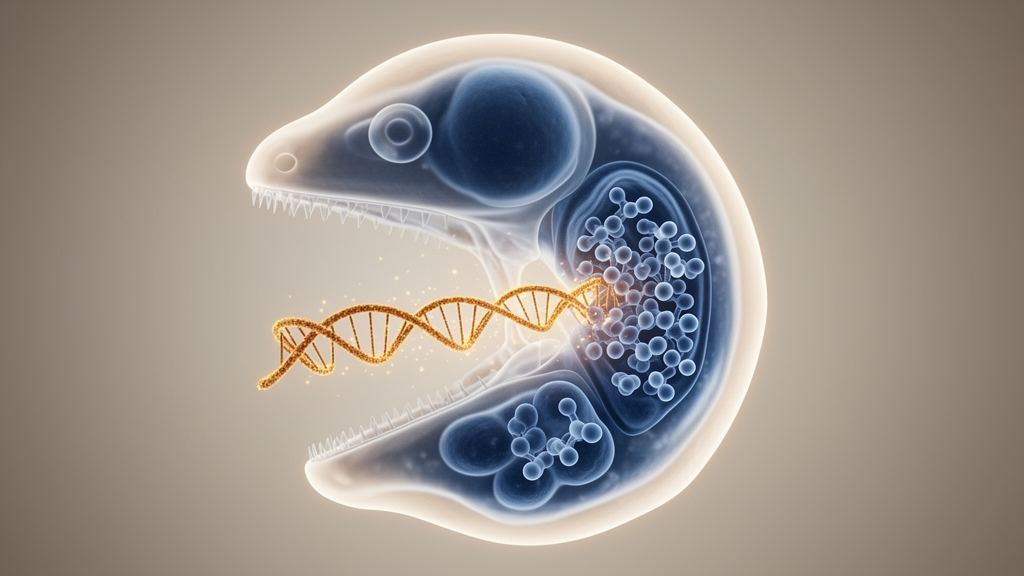
According to the review, this co-option is proposed to have unfolded in two major stages. In the first stage, the RAG transposon, together with other eukaryote-specific transposon families such as HAT, interacted with host genes in early eukaryotic ancestors, leading to the development of a new transposition mechanism. In the second stage, RAG and host genes were specifically incorporated into the V(D)J recombination system, an innovation the authors characterise as a major evolutionary step for jawed vertebrates.
The article then examines the wider consequences of this event for immune system evolution. It also reports that phylogenomic evidence indicates key immune components of jawed vertebrates, including MHC, T-cell receptors of both the alpha-beta and gamma-delta types, and immunoglobulins, existed in ancestors and later expanded through gene duplication, forming multigene families with diverse functions.
Those duplicated genes, the review explains, gave rise to proteins that interact with other immune molecules to regulate immune responses. Some proteins retained their original functions, while others acquired new functions through neo-functionalization. The authors conclude that the co-option of the RAG transposon played a critical role in shaping the immune system of jawed vertebrates by driving innovation in both adaptive and innate immunity. As a review article, the piece synthesises existing literature and presents hypotheses rather than reporting new experimental data, and its full content is available behind Springer’s subscription access.
Subject of Research: The role of RAG transposon co-option in the evolution of the jawed vertebrate immune system
Article Title: Impact of RAG transposon co-option on the evolution of the jawed vertebrate immune system
Article References: Pontarotti, P., & Keshri, V. (2026). Impact of RAG transposon co-option on the evolution of the jawed vertebrate immune system. Immunogenetics, 78(1), Article 22. https://doi.org/10.1007/s00251-026-01414-1
Image Credits: AI Generated
DOI: 10.1007/s00251-026-01414-1
Keywords: RAG transposon, V(D)J recombination, jawed vertebrates, adaptive immunity, MHC polymorphism, T-cell receptors, immunoglobulins, gene duplication, neo-functionalization, comparative immunology, transposons, evolution
Cite Scienmag News
Drew Townsend. (October 28, 2026). RAG Transposon Co-Option Reshaped the Jawed Vertebrate Immune System. Scienmag. https://scienmag.com/rag-transposon-co-option-reshaped-the-jawed-vertebrate-immune-system/
Drew Townsend. "RAG Transposon Co-Option Reshaped the Jawed Vertebrate Immune System." Scienmag, 28 October 2026, https://scienmag.com/rag-transposon-co-option-reshaped-the-jawed-vertebrate-immune-system/. Accessed 29 October 2026.
Drew Townsend. "RAG Transposon Co-Option Reshaped the Jawed Vertebrate Immune System." Scienmag. October 28, 2026. https://scienmag.com/rag-transposon-co-option-reshaped-the-jawed-vertebrate-immune-system/