


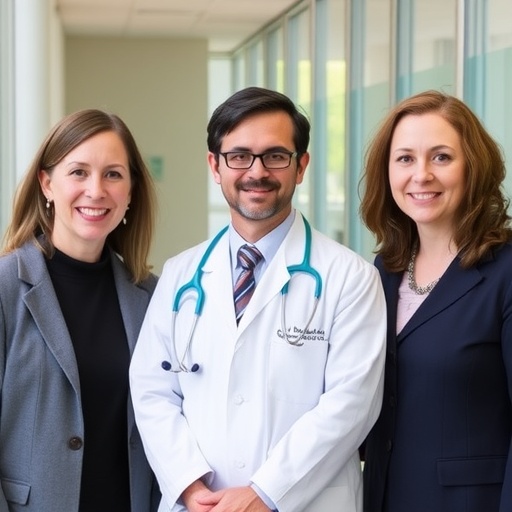
On July 1, 2026, a significant advancement was announced in the realm of clinical cancer research with the appointment of three new Clinical Scholars at the Ludwig Institute for Cancer Research. This esteemed group includes Bernhard Gentner and Caroline Arber at the Institute’s Lausanne Branch, alongside Christian Hinrichs from the Rutgers Cancer Institute, affiliated with the Institute’s Princeton Branch. Their induction signals a reinvigoration of Ludwig’s long-standing mission to translate pioneering scientific discoveries into transformative cancer treatments.
Since its inception, the Ludwig Institute has emphasized the critical role of clinical collaborations for accelerating progress against cancer. This mission, deeply rooted in the vision of the late founder Daniel K. Ludwig, insists on establishing robust partnerships with world-leading clinical centers. These alliances enable cutting-edge science to swiftly transition from bench to bedside, ensuring that innovative therapies reach patients with urgency and efficacy.
The legacy of Ludwig Institute’s physician-scientists is formidable. Early on, the Ludwig Breast Cancer Study Group played a groundbreaking role in shaping postoperative breast cancer management through extensive international clinical trials. These efforts not only galvanized global research networks but also set new standards in cancer care that endure today. This tradition of clinical excellence and innovation continues to define the Institute’s approach.
Perhaps the most transformative contribution from Ludwig clinicians dates back to the 1980s with their identification of the very first cancer antigens. This watershed discovery subverted conventional ideas about tumor biology by highlighting the immune system’s capacity to recognize and attack cancer cells. Their rigorous characterization of antitumor immune responses has been instrumental in founding the discipline of cancer immunotherapy, ultimately revolutionizing treatment paradigms worldwide.
Over the ensuing decades, Ludwig researchers and their alumni have propelled the clinical development of immune checkpoint blockade therapies. These groundbreaking drugs unleash T cells to combat tumors more effectively, drastically improving survival rates in multiple cancer types. Furthermore, they have shaped evidence-based guidelines, ensuring the safe and optimal application of these therapies in diverse clinical settings.
The newly appointed Clinical Scholars are positioned to extend and expand this rich heritage. Bernhard Gentner, an associate professor in immune-oncology and attending physician in the Clinical Cell Therapy program at Lausanne University Hospital (CHUV), brings a unique expertise in genetic engineering. His pioneering work on the genetic manipulation of blood stem cells to correct monogenic diseases has paved the way for novel cancer immunotherapies utilizing engineered myeloid progenitors as therapeutic vectors.
Gentner’s translational endeavors have led to the creation of a biotech company that advances these therapeutic platforms into clinical testing. Specifically, his leadership in a recent trial evaluating a stem cell-derived therapy for glioblastoma—a notoriously aggressive brain cancer—demonstrates the promise of these next-generation immunotherapies. This work exemplifies the interface between sophisticated genetic engineering and clinical innovation.
Caroline Arber, a hematologic oncologist and co-director of the CHUV Clinical Cell Therapy program, complements this agenda with her expertise in adoptive T cell therapies. Since joining CHUV in 2017, she has spearheaded the establishment of a CAR-T cell therapy program, which harnesses chimeric antigen receptor T cells engineered to seek and eradicate malignant cells. Her research extends to co-engineering strategies that enhance the efficacy of TCR-T cell therapies against solid tumors, accelerating their clinical evaluation.
Arber’s laboratory is advancing a novel CAR-T platform designed to overcome immunosuppressive tumor microenvironments—a formidable barrier in solid cancer treatment. This innovative approach, currently poised for first-in-human trials, aims to bolster T cell persistence and activity within hostile tumor niches. Her ongoing exploration of next-generation therapies reflects the dynamic evolution of cancer immunotherapy.
Christian Hinrichs, based at Rutgers Cancer Institute, is renowned for his development of tumor-infiltrating lymphocyte (TIL) therapy targeting HPV-driven epithelial cancers. This therapeutic modality achieves sustained, complete responses by expanding patient-derived tumor-reactive T cells ex vivo before reinfusion, harnessing the specificity and potency of the immune system. His work extends to engineered T cell therapies and detailed investigations into tumor metabolism.
Hinrichs collaborates extensively with Princeton Branch researchers, leaders in metabolomics and immunometabolism, to understand how metabolic pathways influence antitumor immunity and therapeutic outcomes. This interdisciplinary approach is vital for designing metabolism-aware immunotherapies that can overcome resistance mechanisms and optimize T cell function within tumors.
Jedd Wolchok, a Ludwig Distinguished Clinical Scholar and co-director of the Ludwig Collaborative Laboratory at Weill Cornell, expressed enthusiasm about the new appointments. He emphasized that these clinical experts will find myriad opportunities within Ludwig’s vibrant research ecosystem to drive cross-branch collaborations. Their integration promises to accelerate translational research initiatives, ultimately benefiting cancer patients through the rapid development of innovative therapies.
The Ludwig Institute’s strategy of leveraging clinical expertise to inform basic research and vice versa builds a robust pipeline for therapeutic breakthroughs. The seamless integration of scientific discovery, technology development, and clinical evaluation exemplifies how collaborative cancer research can transform patient care. The designation of these scholars reaffirms the Institute’s commitment to this model.
Over the past five decades, Ludwig Cancer Research has invested nearly $3 billion to fuel groundbreaking cancer science and its translation. The combined efforts of internationally recognized scientists and clinicians have propelled the field into new frontiers, such as immune modulation, cellular therapies, and precision oncology. Through its Centers and Branches, the Institute remains at the forefront of evolving cancer therapeutics.
In summary, the appointment of Bernhard Gentner, Caroline Arber, and Christian Hinrichs as Clinical Scholars underscores a strategic infusion of talent and innovation within the Ludwig Institute. Their diverse expertise in genetic engineering, adoptive cell therapy, and tumor metabolism complements and strengthens ongoing efforts to conquer cancer through immunological approaches. As they advance their research and clinical programs, the Institute’s vision of translating science into life-changing cancer interventions moves closer to fulfillment.
News Publication Date: July 1, 2026
Web References:
- Ludwig Institute for Cancer Research: www.ludwigcancerresearch.org
- Daniel K. Ludwig’s Vision (2025): https://www.ludwigcancerresearch.org/wp-content/uploads/2025/06/A-Vision-Realized.pdf
- Identification of First Cancer Antigens (Nature): https://www.nature.com/articles/nrc3670
- Global Development of Cancer Immunotherapy (PMC): https://pmc.ncbi.nlm.nih.gov/articles/PMC3380350/
Cite Scienmag News
Nathaniel Bowman. (July 2, 2026). Three Clinical Scholars Join Ludwig Institute for Cancer Research. Scienmag. https://scienmag.com/three-clinical-scholars-join-ludwig-institute-for-cancer-research/
Nathaniel Bowman. "Three Clinical Scholars Join Ludwig Institute for Cancer Research." Scienmag, 2 July 2026, https://scienmag.com/three-clinical-scholars-join-ludwig-institute-for-cancer-research/. Accessed 3 September 2026.
Nathaniel Bowman. "Three Clinical Scholars Join Ludwig Institute for Cancer Research." Scienmag. July 2, 2026. https://scienmag.com/three-clinical-scholars-join-ludwig-institute-for-cancer-research/


