


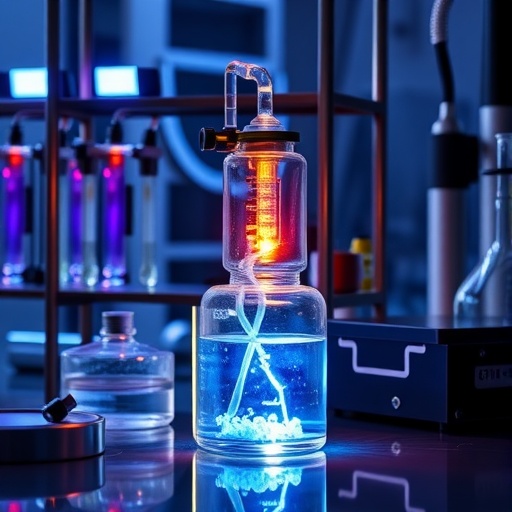
In the race to secure sustainable energy for the future, lithium remains an irreplaceable element, vital for powering everything from smartphones to electric vehicles and grid-scale renewable energy storage. Yet, the looming supply challenges of this critical battery material threaten to stall the global energy transition. According to projections, by 2040, the demand for lithium is expected to at least double current supply levels, with existing production methods falling drastically short of meeting this growing need. Conventional mining techniques, ranging from acid-intensive processing of spodumene ores to the evaporation of vast brine ponds, present severe environmental concerns, including habitat disruption, pollution, and heightened water scarcity in already vulnerable regions. This has spurred researchers worldwide to pioneer revolutionary methods for lithium extraction that circumvent the drawbacks of traditional approaches.
At the forefront of this innovative movement is a breakthrough emerging from the University of Chicago’s Pritzker School of Molecular Engineering. Researchers led by Associate Professor Chong Liu, alongside former graduate student Grant Hill, have unveiled a novel electrochemical technique that promises nearly pure lithium extraction from aqueous solutions even when heavily outnumbered by competing ions such as sodium. Electrochemical intercalation, a principle well-known in battery and supercapacitor technology, is ingeniously adapted here for selective lithium capture. This process involves driving an electric current that forces lithium ions to insert themselves between the layers of a host material, effectively filtering lithium from saline water sources with remarkable precision.
The principal challenge in implementing this method lies in the chemical mimicry between lithium and sodium ions. Given their similar charge and ionic radii—sodium’s ion is only marginally larger than lithium’s—distinguishing between them during extraction is inherently difficult. Sodium is vastly more abundant in natural waters, often exceeding lithium concentrations by a factor of 1,000 or more, making effective separation a formidable hurdle. This work, published in Nature Communications in May 2026, represents a fundamental advance in understanding how layered materials respond when simultaneously exposed to different ionic species, a phenomenon known as co-intercalation. By unraveling these complex interactions, the researchers were able to engineer a system that extracts lithium with 99% purity even in the presence of overwhelming sodium.
Central to this achievement is the use of lithium cobalt oxide, a layered material whose interstitial spaces serve as conduits for lithium ion transport. The team discovered that the ion transport pathways are dynamic battlegrounds where lithium and sodium ions compete for occupancy. Sodium ions tend to crowd and distort the channel, effectively relegating lithium ions to more stable “parking spots” within the material’s structure. Grant Hill likened this behavior to a highway filled with parked cars—where every lithium-friendly spot is quickly occupied by incoming sodium ions, forcing lithium ions to cluster tightly together. Understanding this spatial competition was crucial for devising strategies that optimize lithium’s selective insertion and retrieval.
The researchers emphasized that the kinetics of two concurrent processes govern the efficiency of lithium extraction: the electrically driven intercalation reaction and the natural thermodynamic equilibrium seeking ion exchange. By finely tuning the rate at which electric current is applied, they found they could harmonize these competing reactions. Intercalating lithium ions too quickly leads to irreversible material states, while too slow operations reduce throughput. Striking an optimal balance allows reversible cycling, where lithium ions can be repeatedly inserted and removed without degradation, sustaining extraction performance over multiple cycles. This delicate interplay between kinetic control and material design marks a novel conceptual paradigm in selective ion separation.
Material size also proved critical. Smaller lithium cobalt oxide particles responded more rapidly to changes in ionic environments and electrochemical potentials, fostering the reversibility essential for repeated lithium capture. This reversibility not only enhances lithium selectivity but also maximizes lithium recovery efficiency by minimizing degradation and ion trapping within the host matrix. While cobalt oxide serves as a near-ideal proof-of-concept, its limited availability and ethical concerns tied to cobalt mining prompt the search for alternative layered materials incorporating more abundant and cost-effective transition metals such as manganese. Expanding this research into manganese-rich compounds promises to create scalable, economically viable extraction platforms for real-world applications.
Beyond technical innovation, this research carries profound implications for sustainable resource management amid escalating lithium demand. Current lithium extraction from spodumene ores or salar brines involves environmentally taxing processes—utilizing hazardous acids or massive water evaporation over years—that are incompatible with responsible stewardship and equitable resource distribution. Electrochemical intercalation offers a cleaner, faster, and more adaptable route to lithium recovery directly from diverse aqueous sources, including recycled battery leachates and saltwater deposits. Such technology could reduce reliance on environmentally sensitive mining regions, alleviate supply chain bottlenecks, and mitigate the socio-political conflicts often associated with critical mineral sourcing.
Moreover, the insights gained from this study deepen fundamental understanding of phase equilibria and ion transport phenomena in layered oxides, contributing to the broader scientific quest for advanced materials with tailored ion-selectivities. By dissecting the dualistic reaction regimes—electrochemically driven intercalation versus spontaneous ion exchange—the team revealed the intrinsic complexity of multi-ion systems under applied electric fields. These findings open avenues for designing next-generation membranes and electrodes capable of selectively sieving specific ions from multi-component electrolytes, with potential applications spanning beyond lithium recovery to water purification, desalination, and selective nutrient harvesting.
In sum, this pioneering work not only surmounts a longstanding chemical challenge but also exemplifies how interdisciplinary science—merging electrochemistry, materials science, and chemical engineering—can converge to devise transformative solutions addressing the lithium supply crunch. As electrification accelerates globally, innovations like electrochemical intercalation-based lithium extraction will be indispensable for powering a sustainable and equitable energy future. The challenge ahead lies in scaling these laboratory successes, developing manganese-based analogs, and integrating such systems into decentralized extraction units that can be deployed near diverse lithium sources to create a resilient, circular lithium economy.
News Publication Date: May 8, 2026.
Web References:
- https://www.nature.com/articles/s41467-026-72755-4
- https://pme.uchicago.edu/
- https://www.iea.org/reports/lithium
References: Hill, G., Liu, C., et al. (2026). Asymmetric pathways for lithium extraction and recovery based on the two-phase equilibrium of layered oxides. Nature Communications, May 8. DOI: 10.1038/s41467-026-72755-4.
Keywords
Lithium extraction, electrochemical intercalation, layered oxides, battery materials, selective ion separation, cobalt oxide, sodium interference, sustainability, materials science, energy storage, lithium recovery, environmental technology.
Cite Scienmag News
Andrew Miller. (July 2, 2026). Harnessing Electrochemistry for Advanced Lithium Extraction. Scienmag. https://scienmag.com/harnessing-electrochemistry-for-advanced-lithium-extraction/
Andrew Miller. "Harnessing Electrochemistry for Advanced Lithium Extraction." Scienmag, 2 July 2026, https://scienmag.com/harnessing-electrochemistry-for-advanced-lithium-extraction/. Accessed 4 September 2026.
Andrew Miller. "Harnessing Electrochemistry for Advanced Lithium Extraction." Scienmag. July 2, 2026. https://scienmag.com/harnessing-electrochemistry-for-advanced-lithium-extraction/


