

Sunday, August 9, 2026
Science
No Result
View All Result
  • Login
  • HOME
  • SCIENCE NEWS
  • CONTACT US
  • HOME
  • SCIENCE NEWS
  • CONTACT US
No Result
View All Result
Scienmag
No Result
View All Result
Home Science News Medicine

Thalamic spindle dyscoordination links to social memory deficits in autism models

July 29, 2026
in Medicine
Reading Time: 2 mins read
0
Thalamic spindle dyscoordination links to social memory deficits in autism models

Thalamic spindle dyscoordination links to social memory deficits in autism models

65
SHARES
587
VIEWS
Share on FacebookShare on Twitter
ADVERTISEMENT

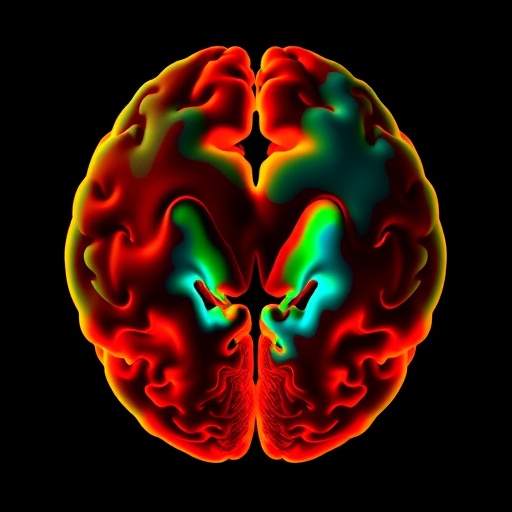
A new study reports that autism spectrum disorder (ASD) may involve a subtle breakdown in brain timing: thalamic reticular nucleus (TRN) spindles fail to coordinate properly, undermining social memory. Published in Nature Communications (2026), the work links disrupted sleep-associated spindle synchrony to impaired recall of socially relevant cues in both mice and humans.

In mammals, TRN spindles—brief bursts of rhythmic activity that occur during non-rapid eye movement sleep—help organize information flow between thalamus and cortex. To test whether these micro-events matter for social learning, the researchers combined behavioral assays with electrophysiology and translational analyses across species.

Using mouse models relevant to ASD, the team measured spindle timing and assessed performance on tasks requiring memory for social interactions. Animals with ASD-like phenotypes showed reduced coordination among TRN spindles, alongside clear deficits in remembering social partners compared with control mice.

The investigators then examined how spindle dyscoordination maps onto neural connectivity patterns. They report that improperly synchronized spindle events weaken the temporal “windows” through which thalamocortical circuits communicate, potentially impairing the consolidation of social experiences during sleep.

To strengthen the human connection, the study also analyzed human data associated with ASD. Individuals with ASD demonstrated altered spindle-related synchrony, suggesting that the same coordinating mechanism observed in mice may operate in the human brain.

Notably, the findings emphasize that it is not simply the presence or absence of spindles that matters, but their precise coordination across the thalamic reticular network. When that coordination is disrupted, social memory appears particularly vulnerable.

The study frames TRN spindle synchrony as a potential biomarker and offers a mechanistic target for future interventions. If sleep-dependent coordination can be restored, therapies might improve how social memories are stabilized after learning.

Together, the results position thalamic reticular spindle coordination as a shared neurophysiological signature connecting mouse models and human ASD. By tying a sleep rhythm to social recall, the work advances a viral-science narrative: tuning brain timing during sleep could influence who we remember as “social” and when.

Subject of Research: Thalamic reticular nucleus spindle coordination; social memory deficits in autism spectrum disorder
Article Title: Dyscoordination of thalamic reticular spindles is associated with social memory deficits in mice and humans with autism spectrum disorder.
Article References: Cui, D., Wang, X., Ai, R. et al. Dyscoordination of thalamic reticular spindles is associated with social memory deficits in mice and humans with autism spectrum disorder. Nat Commun (2026). https://doi.org/10.1038/s41467-026-75162-x
Image Credits: AI Generated
DOI: 10.1038/s41467-026-75162-x

Tags: autism spectrum disorderCross-species analysis of sleep rhythmsElectrophysiology in autism modelsMicro-events in brain timingNeural connectivity in ASDNeural mechanisms of social impairmentsSleep and social cognitionSleep spindle dyscoordinationSleep-dependent social learningSocial memory deficitsThalamic reticular nucleusThalamocortical communication
Share26Tweet16
Previous Post

Study Finds Pediatric Residents Lacking Core Bag-Mask Ventilation Skills

Next Post

Continental Inorganic Halogens Shape Global Air Quality Evolution

Related Posts

Calreticulin-targeted L-asparaginase–flagellin conjugate boosts Salmonella’s antitumor effectiveness
Medicine

Calreticulin-targeted L-asparaginase–flagellin conjugate boosts Salmonella’s antitumor effectiveness

August 9, 2026
Short-Term Animal-Product Restriction Rapidly Alters Human Proteogenomic Profiles
Medicine

Short-Term Animal-Product Restriction Rapidly Alters Human Proteogenomic Profiles

August 8, 2026
UVA-Induced Hyperploidization Causes Fibrosis in Post-Mitotic Fuchs Dystrophy Corneal Cells
Medicine

UVA-Induced Hyperploidization Causes Fibrosis in Post-Mitotic Fuchs Dystrophy Corneal Cells

August 8, 2026
Healthy Vaccinee Effect Shapes Evaluation of Updated COVID-19 Vaccines in Older Adults
Medicine

Healthy Vaccinee Effect Shapes Evaluation of Updated COVID-19 Vaccines in Older Adults

August 8, 2026
Nanoparticle pan-Ebolavirus vaccine protects rodents against lethal Zaire and Sudan virus infections
Medicine

Nanoparticle pan-Ebolavirus vaccine protects rodents against lethal Zaire and Sudan virus infections

August 8, 2026
AI Framework Unifies MRI Tumor Segmentation, Grading, Staging, and Malignancy Detection
Medicine

AI Framework Unifies MRI Tumor Segmentation, Grading, Staging, and Malignancy Detection

August 8, 2026
Next Post
Continental Inorganic Halogens Shape Global Air Quality Evolution

Continental Inorganic Halogens Shape Global Air Quality Evolution

  • Mothers who receive childcare support from maternal grandparents show more

    Mothers who receive childcare support from maternal grandparents show more parental warmth, finds NTU Singapore study

    27656 shares
    Share 11059 Tweet 6912
  • University of Seville Breaks 120-Year-Old Mystery, Revises a Key Einstein Concept

    1061 shares
    Share 424 Tweet 265
  • Bee body mass, pathogens and local climate influence heat tolerance

    682 shares
    Share 273 Tweet 171
  • Researchers record first-ever images and data of a shark experiencing a boat strike

    546 shares
    Share 218 Tweet 137
  • Groundbreaking Clinical Trial Reveals Lubiprostone Enhances Kidney Function

    531 shares
    Share 212 Tweet 133
Science

Embark on a thrilling journey of discovery with Scienmag.com—your ultimate source for cutting-edge breakthroughs. Immerse yourself in a world where curiosity knows no limits and tomorrow’s possibilities become today’s reality!

RECENT NEWS

  • How Neuroblastoma Balances Replication Stress and Genome Stability Across Chromosome 17q
  • Cigar, Cigarillo, and Pipe Smoking: Lung Cancer Risk and Screening Eligibility
  • How Low Gravity and Pressure Affect Space Manufacturing of Carbon-Fiber Structures
  • Calreticulin-targeted L-asparaginase–flagellin conjugate boosts Salmonella’s antitumor effectiveness

Categories

  • Agriculture
  • Anthropology
  • Archaeology
  • Athmospheric
  • Biology
  • Biotechnology
  • Blog
  • Bussines
  • Cancer
  • Chemistry
  • Climate
  • Earth Science
  • Editorial Policy
  • Marine
  • Mathematics
  • Medicine
  • Pediatry
  • Policy
  • Psychology & Psychiatry
  • Science Education
  • Social Science
  • Space
  • Technology and Engineering

Subscribe to Blog via Email

Success! An email was just sent to confirm your subscription. Please find the email now and click 'Confirm Follow' to start subscribing.

Join 5,149 other subscribers

© 2025 Scienmag - Science Magazine

Welcome Back!

Login to your account below

Forgotten Password?

Retrieve your password

Please enter your username or email address to reset your password.

Log In
No Result
View All Result
  • HOME
  • SCIENCE NEWS
  • CONTACT US

© 2025 Scienmag - Science Magazine
