

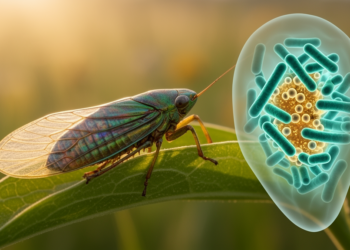
Hidden Insect Species May Owe Their Origins to the Microbes Living Inside Them
A new synthesis in the Journal of Systematics and Evolution outlines how endosymbionts drive cryptic speciation in insects through ecological ...
A new synthesis in the Journal of Systematics and Evolution outlines how endosymbionts drive cryptic speciation in insects through ecological ...

A field study in Rio de Janeiro State found that Wolbachia DNA persisted in six of 31 heartworm-positive dogs 90 ...
A survey of cave-associated sand flies in Northern Thailand reveals extensive genetic diversity of Wolbachia and Cardinium endosymbionts and suggests ...
A molecular survey of tsetse flies in Mozambique's national parks and farm buffer zones reveals seven trypanosome species, 17 blood ...
A survey of nearly 400 Asian tiger mosquitoes in Hawaiʻi reveals that nearly all carry the Wolbachia strain wAlbB while ...
A new review in Crop Health outlines how insect symbiotic microorganisms can be deployed, engineered, or disrupted to control agricultural ...
Liverpool School of Tropical Medicine has launched a £4.5 million UK aid-funded partnership, ENDPOINT, to develop new diagnostics and treatments ...
A Monash University review in Science Advances finds that prevention through vector control, vaccines and emissions cuts is critical as ...
A three-year survey of sand flies in Northern Italy found that nearly 40 percent carry a single Wolbachia Supergroup B ...
A new review reveals how the endosymbiotic bacterium Wolbachia manipulates reproduction in three major rice planthopper pests through cytoplasmic incompatibility ...

Embark on a thrilling journey of discovery with Scienmag.com—your ultimate source for cutting-edge breakthroughs. Immerse yourself in a world where curiosity knows no limits and tomorrow’s possibilities become today’s reality!