

Tuesday, October 27, 2026
Science
No Result
View All Result
  • Login
  • HOME
  • SCIENCE NEWS
  • CONTACT US
  • HOME
  • SCIENCE NEWS
  • CONTACT US
No Result
View All Result
Scienmag
No Result
View All Result
Home Science News

Mosquito Microbes That Block Malaria Parasites Reviewed in New Systematic Analysis

October 27, 2026
in Science News
Morgan Morrow
By Morgan Morrow Scienmag Editorial Profile - Bacteriology
Reading Time: 2 mins read
0
Mosquito Microbes That Block Malaria Parasites Reviewed in New Systematic Analysis

Mosquito Microbes That Block Malaria Parasites Reviewed in New Systematic Analysis

65
SHARES
587
VIEWS
Share on FacebookShare on Twitter
ADVERTISEMENT

A systematic review published in Frontiers in Insect Science examines how the bacteria and other microbes that live inside Anopheles mosquitoes interfere with the development of Plasmodium falciparum sporozoites, the parasite stage that makes mosquitoes capable of transmitting malaria.

The authors searched PubMed, Scopus and Google Scholar for studies published between 2000 and 2026, and 41 studies met their inclusion criteria. Data were extracted and synthesized as a narrative following the PRISMA guidelines, and the risk of bias in the included animal studies was assessed with SYRCLE’s tool. The review is currently listed as an accepted manuscript, with the final formatted version to be published by the journal.

Across the synthesized evidence, the effect of the microbiota on sporozoite development emerged as strongly dependent on the specific microbial strain, the mosquito species involved and the experimental context. Rather than a single uniform mechanism, the review found a patchwork of interactions, some of which dramatically suppress the parasite while others show no measurable effect at all.

According to the review, the wAlbB strain caused a 3.4- to 3.7-fold decrease in sporozoite numbers, while wAnga-Mali showed a negative correlation with sporozoite presence in 95% of the examined cases. By contrast, the wAnmo strain in Anopheles moucheti showed no correlation with sporozoite outcomes, underscoring that even closely related bacterial strains can differ sharply in their impact on parasite development.

Microsporidia MB was reported across African settings, with prevalence ranging from 1% to 57% and no fitness costs for the mosquito host, according to the review.

Among bacterial candidates, the review highlighted Serratia ureilytica strain Su_YN1, which inhibited approximately 98% of parasites. The reported mechanism involves outer membrane vesicles loaded with AmLip, which target the parasite via the phosphatidylcholine scavenging pathway.

Engineered symbionts combining transgenesis and paratransgenesis achieved 93% transmission blocking in mouse models, according to the review.

The authors conclude that the mosquito microbiota plays a significant but strain-, species- and context-dependent role in P. falciparum sporozoite development. They identify Microsporidia and Serratia species as promising candidates for field deployment, positioning them as sustainable, environmentally friendly complements to chemical insecticides for malaria vector control.

As with any systematic review, the findings synthesize existing research rather than presenting new experimental results, and the reported effects derive from studies of varying designs, mosquito species and laboratory or field conditions. The authors’ assessment of risk of bias using SYRCLE’s tool reflects the fact that much of the underlying evidence comes from animal studies, and the review’s conclusions about field deployment remain forward-looking statements about candidate microbes rather than demonstrated outcomes of large-scale interventions.

Subject of Research: The role of mosquito microbiota in blocking Plasmodium falciparum sporozoite development in Anopheles mosquitoes

Article Title: Microbiota-mediated blocking of plasmodium falciparum sporozoites in Anopheles: a systematic review

Article References: Olafusi, C. O., Tebamifor, M. E., Bejapade, T. I., Afolabi, I. S., & Ogunlana, O. O. (2026). Microbiota-mediated blocking of plasmodium falciparum sporozoites in Anopheles: a systematic review. Frontiers in Insect Science, 6, Article 1958166. https://doi.org/10.3389/finsc.2026.1958166

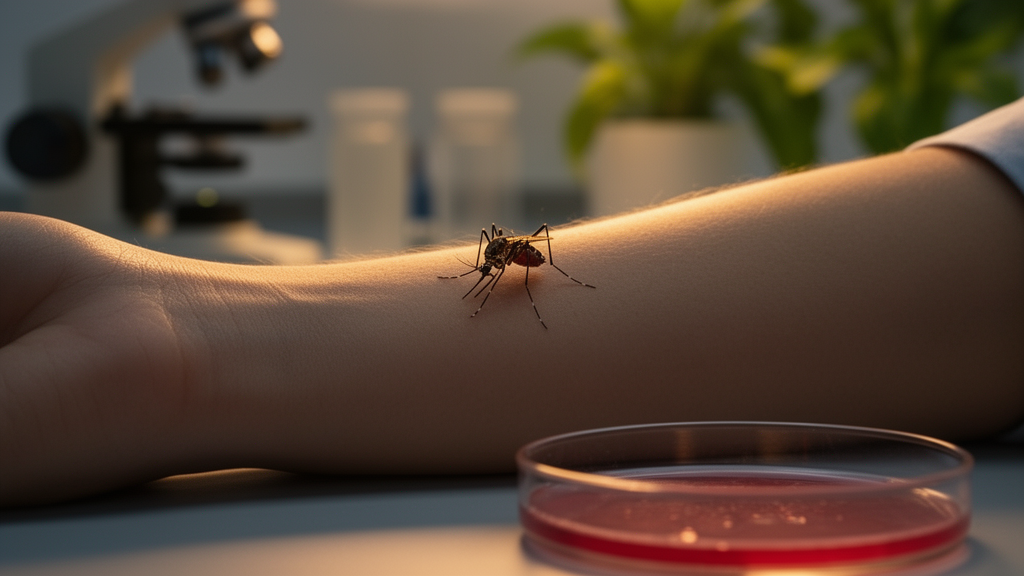
Image Credits: AI Generated

DOI: 10.3389/finsc.2026.1958166

Keywords: malaria, Anopheles, Plasmodium falciparum, sporozoites, microbiome, Wolbachia, Microsporidia MB, Serratia, paratransgenesis, systematic review, vector control, salivary gland

Cite Scienmag News

Morgan Morrow. (October 27, 2026). Mosquito Microbes That Block Malaria Parasites Reviewed in New Systematic Analysis. Scienmag. https://scienmag.com/mosquito-microbes-that-block-malaria-parasites-reviewed-in-new-systematic-analysis/


Morgan Morrow. "Mosquito Microbes That Block Malaria Parasites Reviewed in New Systematic Analysis." Scienmag, 27 October 2026, https://scienmag.com/mosquito-microbes-that-block-malaria-parasites-reviewed-in-new-systematic-analysis/. Accessed 27 October 2026.

Morgan Morrow. "Mosquito Microbes That Block Malaria Parasites Reviewed in New Systematic Analysis." Scienmag. October 27, 2026. https://scienmag.com/mosquito-microbes-that-block-malaria-parasites-reviewed-in-new-systematic-analysis/

Tags: AnophelesAnopheles mosquito gut bacteriaBacterial strains reducing mosquito infectivityEffectiveness of microbial strains in blocking malariaImpact of microbiota on malaria parasite lifecyclemalariaMicrobes suppressing malaria sporozoite formationMicrobial interactions in malaria vector controlMicrobial interference with Plasmodium falciparumMicrobial strains affecting malaria transmissionmicrobiomeMicrosporidia MBMosquito microbiota and malaria parasite developmentparatransgenesisPlasmodium falciparumPRISMA guidelines in systematic reviews of vector microbiotasalivary glandSerratiasporozoitessystematic reviewSystematic review of mosquito microbiomesvector controlWolbachia
Share26Tweet16
Previous Post

One-Pot Avidin Functionalization of Reduced Graphene Oxide Yields Label-Free Electrochemical Biosensor

Next Post

Neonates With Early-Onset Sepsis in South Ethiopia Face High Death Risk, Study Finds

Related Posts

Co-designed mindfulness program for aged care staff fails at implementation stage
Medicine

Co-designed mindfulness program for aged care staff fails at implementation stage

October 27, 2026
Neonates With Early-Onset Sepsis in South Ethiopia Face High Death Risk, Study Finds
Medicine

Neonates With Early-Onset Sepsis in South Ethiopia Face High Death Risk, Study Finds

October 27, 2026
One-Pot Avidin Functionalization of Reduced Graphene Oxide Yields Label-Free Electrochemical Biosensor
Science News

One-Pot Avidin Functionalization of Reduced Graphene Oxide Yields Label-Free Electrochemical Biosensor

October 27, 2026
Molecular Markers May Predict Pituitary Tumor Invasion
Science News

Molecular Markers May Predict Pituitary Tumor Invasion

October 27, 2026
Soft tick microbiomes in Mexico reveal contrasting bacterial diversity patterns
Science News

Soft tick microbiomes in Mexico reveal contrasting bacterial diversity patterns

October 27, 2026
Spider Mite Genus Demoted as New Species Joins Saudi Arabia’s Grass Fauna
Biology

Spider Mite Genus Demoted as New Species Joins Saudi Arabia’s Grass Fauna

October 27, 2026
Next Post
Neonates With Early-Onset Sepsis in South Ethiopia Face High Death Risk, Study Finds

Neonates With Early-Onset Sepsis in South Ethiopia Face High Death Risk, Study Finds

  • Mothers who receive childcare support from maternal grandparents show more optimized

    Mothers who receive childcare support from maternal grandparents show more parental warmth, finds NTU Singapore study

    27656 shares
    Share 11059 Tweet 6912
  • University of Seville Breaks 120-Year-Old Mystery, Revises a Key Einstein Concept

    1061 shares
    Share 424 Tweet 265
  • Bee body mass, pathogens and local climate influence heat tolerance

    682 shares
    Share 273 Tweet 171
  • Researchers record first-ever images and data of a shark experiencing a boat strike

    546 shares
    Share 218 Tweet 137
  • Groundbreaking Clinical Trial Reveals Lubiprostone Enhances Kidney Function

    531 shares
    Share 212 Tweet 133
Science

Embark on a thrilling journey of discovery with Scienmag.com—your ultimate source for cutting-edge breakthroughs. Immerse yourself in a world where curiosity knows no limits and tomorrow’s possibilities become today’s reality!

RECENT NEWS

  • Co-designed mindfulness program for aged care staff fails at implementation stage
  • Neonates With Early-Onset Sepsis in South Ethiopia Face High Death Risk, Study Finds
  • Mosquito Microbes That Block Malaria Parasites Reviewed in New Systematic Analysis
  • One-Pot Avidin Functionalization of Reduced Graphene Oxide Yields Label-Free Electrochemical Biosensor

Categories

  • Agriculture
  • Anthropology
  • Archaeology
  • Athmospheric
  • Biology
  • Biotechnology
  • Blog
  • Bussines
  • Cancer
  • Chemistry
  • Climate
  • Earth Science
  • Editorial Policy
  • Marine
  • Mathematics
  • Medicine
  • Pediatry
  • Policy
  • Psychology & Psychiatry
  • Science Education
  • Science News
  • Social Science
  • Space
  • Technology and Engineering

Subscribe to Blog via Email

Enter your email address to subscribe to this blog and receive notifications of new posts by email.

Join 5,151 other subscribers

© 2025 Scienmag - Science Magazine

Welcome Back!

Login to your account below

Forgotten Password?

Retrieve your password

Please enter your username or email address to reset your password.

Log In
No Result
View All Result
  • HOME
  • SCIENCE NEWS
  • CONTACT US

© 2025 Scienmag - Science Magazine

Discover more from Science

Subscribe now to keep reading and get access to the full archive.

Continue reading