


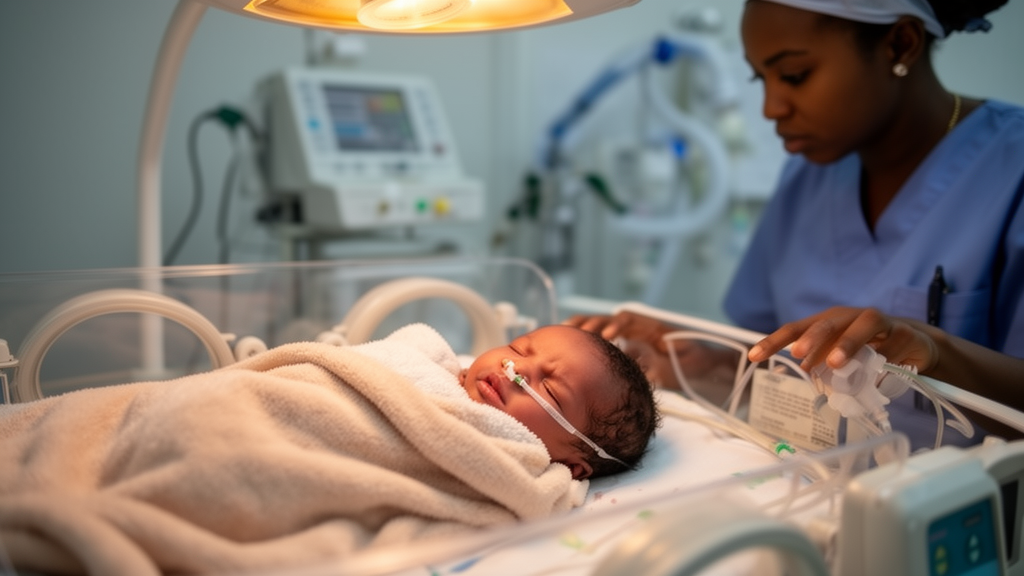
Neonates treated for early-onset sepsis in public hospitals across South Ethiopia died at a rate of 12.2 per 1,000 neonate-days of observation, according to a retrospective cohort study published in BMC Pediatrics. The finding, drawn from 391 newborns admitted with the condition, quantifies a burden the authors describe as a significant public health problem in the study setting, where early-onset sepsis is already blamed for more than a third of neonatal deaths in intensive care units nationwide.
The study was conducted between December 13, 2024, and January 13, 2025, in public hospitals in southern Ethiopia. Researchers identified neonates with early-onset neonatal sepsis using a simple random sampling technique and extracted clinical information from patient medical cards with a pre-tested data extraction checklist. Because the design was retrospective and institution-based, the results reflect the experiences of newborns who reached and were treated at these facilities rather than the full population of affected neonates in the region.
To characterize survival, the team used Kaplan-Meier curves to estimate survival time over the observation period and log-rank tests to compare survival experiences between groups. A Cox proportional hazards model was then fitted to identify which factors independently predicted death. Associations were reported as adjusted hazard ratios with 95% confidence intervals, and a p-value below 0.05 was treated as the threshold for statistical significance.
Five predictors emerged from the analysis. Pregnancy-induced hypertension in the mother was associated with a hazard ratio of 4.24 (95% CI: 1.76 to 10.18), meaning the instantaneous risk of death was roughly four times higher among neonates whose mothers had this condition, after adjustment for other variables in the model.
Antepartum hemorrhage, bleeding before delivery, carried an adjusted hazard ratio of 3.11 (95% CI: 1.10 to 8.80). On the neonatal side of the ledger, the strongest single predictor was admission to invasive mechanical ventilation, with a hazard ratio of 5.37 (95% CI: 1.82 to 15.81), followed by neonatal septic shock at 4.75 (95% CI: 1.79 to 12.61) and cyanosis, the bluish discoloration that signals inadequate oxygenation, at 3.82 (95% CI: 1.30 to 11.23).
The confidence intervals deserve attention when weighing these estimates. Several are wide, particularly for mechanical ventilation and cyanosis, which indicates considerable statistical uncertainty around the precise magnitude of those effects even though each interval excludes the null value of 1.0. Hazard ratios from a Cox model describe relative risk over follow-up time among the studied cohort; they do not by themselves prove that a factor causes death, and some predictors, such as ventilation and septic shock, may partly mark severity of illness rather than act as independent mechanisms.
The authors frame the results as a call for earlier action on the maternal side. Their conclusion states that early identification and treatment of pregnancy danger signs, including hypertension and antepartum hemorrhage, should be prioritized, and that special attention should be given to neonates admitted to invasive mechanical ventilation, those with septic shock, and those showing cyanosis. In practical terms, the findings suggest that risk is concentrated in a recognizable set of maternal complications and neonatal warning signs that clinicians in the study setting could monitor more closely.
Context matters for interpreting the mortality figure. The authors note that early-onset neonatal sepsis accounts for over one-third of neonatal mortality in Ethiopian neonatal intensive care units despite the expansion of modern treatment and interventions, and that evidence on neonatal death and its responsible factors has been limited in Ethiopia generally and in South Ethiopia specifically. This study is presented as an attempt to fill that regional gap with locally generated estimates.
Several limitations follow from the design. Data came from medical records collected after the fact, so the completeness and accuracy of documentation constrain the analysis. The cohort covered a single month of sampling at public hospitals in one region, and generalization to other settings, private facilities, or community births is not established. As an observational study, it identifies associations that persisted after adjustment, not randomized evidence about interventions.
Even with those caveats, the study offers a quantified baseline for a region where such data have been scarce: an incidence density of 12.2 deaths per 1,000 neonate-days among septic newborns, and a short list of maternal and neonatal factors, each with an effect size and confidence interval, that health systems in South Ethiopia can use to target surveillance and care for their most vulnerable patients.
Subject of Research: Survival and predictors of death among neonates with early-onset sepsis in South Ethiopian public hospitals
Article Title: Survival and predictors of death among neonates with early-onset neonatal sepsis: a multicenter study in South Ethiopia
Article References: Guyo, T. G., Sapo, A. A., Mengesha, A. A., Wada, H. W., Kelecha, Y. T., & Toma, T. M. (2026). Survival and predictors of death among neonates with early-onset neonatal sepsis: a multicenter study in South Ethiopia. BMC Pediatrics. https://doi.org/10.1186/s12887-026-07929-6
Image Credits: AI Generated
DOI: 10.1186/s12887-026-07929-6
Keywords: neonatal sepsis, early-onset sepsis, neonatal mortality, South Ethiopia, retrospective cohort, Cox proportional hazards, pregnancy-induced hypertension, antepartum hemorrhage, septic shock, mechanical ventilation, Kaplan-Meier, BMC Pediatrics
Cite Scienmag News
Ophelia Keating. (October 27, 2026). Neonates With Early-Onset Sepsis in South Ethiopia Face High Death Risk, Study Finds. Scienmag. https://scienmag.com/neonates-with-early-onset-sepsis-in-south-ethiopia-face-high-death-risk-study-finds/
Ophelia Keating. "Neonates With Early-Onset Sepsis in South Ethiopia Face High Death Risk, Study Finds." Scienmag, 27 October 2026, https://scienmag.com/neonates-with-early-onset-sepsis-in-south-ethiopia-face-high-death-risk-study-finds/. Accessed 27 October 2026.
Ophelia Keating. "Neonates With Early-Onset Sepsis in South Ethiopia Face High Death Risk, Study Finds." Scienmag. October 27, 2026. https://scienmag.com/neonates-with-early-onset-sepsis-in-south-ethiopia-face-high-death-risk-study-finds/


