

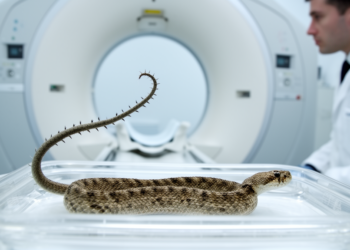
CT scan finds spider-tailed viper’s bird-luring tail has typical vertebrae
A computed tomography study of one preserved spider-tailed horned viper found that the vertebrae supporting its bird-luring tail tip are ...
A computed tomography study of one preserved spider-tailed horned viper found that the vertebrae supporting its bird-luring tail tip are ...
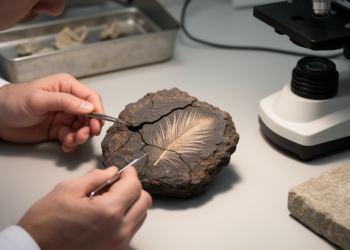
A peer-reviewed analysis of a 66-million-year-old dinosaur coprolite identified the first known hesperornithiform feathers and proposed that their primitive body ...
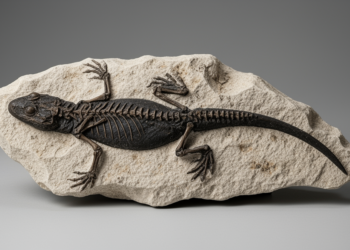
Two nearly complete 237-million-year-old skeletons from Guizhou, China, reveal Gerrothorax maritimus, an armored, giant salamander-sized amphibian that geochemical and sedimentary ...
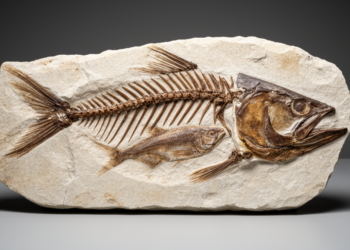
A re-examination of Late Jurassic fossils found juvenile fish in four isolated Aspidorhynchus gastrointestinal tracts and a small crustacean in ...
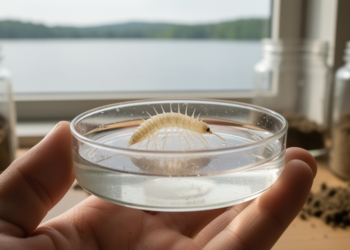
A taxonomic study describes Limnocythere curvispinosa sp. nov. from living specimens in Fuxian Lake and Holocene fossil valves in Yangzong ...
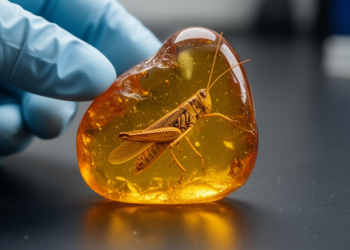
A taxonomic study describes Burmeumastax lexiae, the first reported Cretaceous Eumastacoidea from Burmese amber, based on an almost completely preserved ...
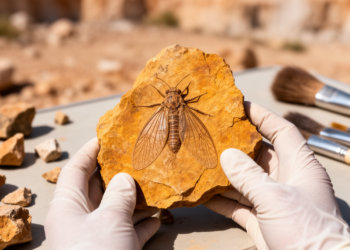
A descriptive paleontology study reports the first known Permian insects from Catalonia, including a new Probnidae species and an incomplete ...
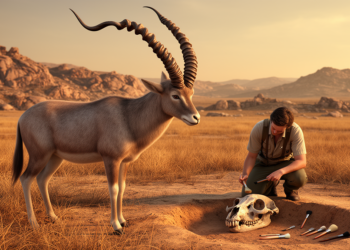
A 17.2-million-year-old horn core from Gansu was identified as Hypsodontus sinensis, providing the first definitive Chinese record and the earliest ...
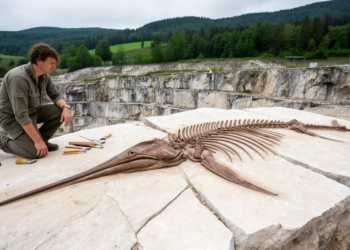
A comparative paleontology study of three Upper Toarcian fossils from Mistelgau, Germany, supports the establishment of Eurhinosaurus mistelgauensis as a ...
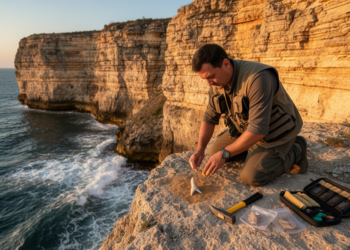
A bulk-sampling study of a continuous Bulgarian marine succession identified at least 18 shark genera and documented survivor lineages and ...


Embark on a thrilling journey of discovery with Scienmag.com—your ultimate source for cutting-edge breakthroughs. Immerse yourself in a world where curiosity knows no limits and tomorrow’s possibilities become today’s reality!