

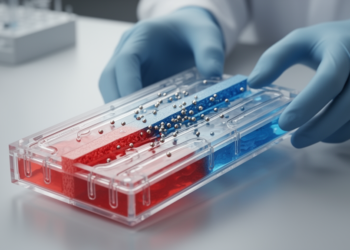
Placenta-on-a-chip reveals how toxic metals cross from mother to fetus
A microfluidic model built from primary human placental cells shows how cadmium undermines placental function at doses that cause no ...
A microfluidic model built from primary human placental cells shows how cadmium undermines placental function at doses that cause no ...

A new special issue in Environmental Science and Pollution Research shows how biofuels from invasive plants, AI-driven toxicity prediction, nanomaterials, ...
A new soil health sensitivity distribution framework suggests conventional species-based methods substantially overestimate the ecological risk of lead, copper, and ...
New research shows that low-dose exposure to the forever chemical PFNA worsens intestinal inflammation by activating a caspase-11-dependent NLRP3 inflammasome ...
A new study in Discover Chemistry shows how artificial intelligence, machine learning, and computational chemistry can predict the toxicity of ...
An integrated study combining NHANES epidemiology, machine learning, single-cell transcriptomics, molecular docking, and mouse experiments links background-level PFOS exposure to ...
A new mouse study shows that the timing of early-life arsenic exposure produces lasting, sex-specific changes in body weight, arsenic ...
In the forested borderlands of northeast China, where Amur tigers prowl the same valleys as farmers and foresters, scientists have ...

Embark on a thrilling journey of discovery with Scienmag.com—your ultimate source for cutting-edge breakthroughs. Immerse yourself in a world where curiosity knows no limits and tomorrow’s possibilities become today’s reality!