

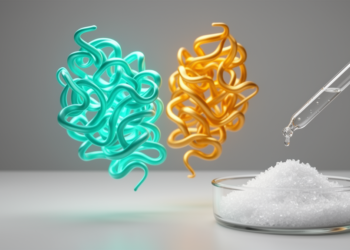
AI-designed proteins could unlock a new generation of sweetness
Researchers used RFdiffusion, ProteinMPNN, and molecular dynamics to design novel protein binders against the human sweet taste receptor TAS1R2, creating ...
Researchers used RFdiffusion, ProteinMPNN, and molecular dynamics to design novel protein binders against the human sweet taste receptor TAS1R2, creating ...
A new Frontiers in Bioinformatics editorial and seven accompanying studies reveal how different tools, workflows and training data can produce ...
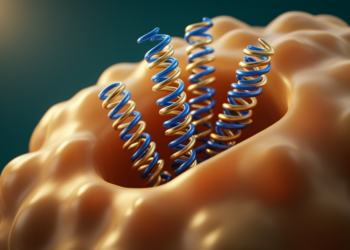
Using an AI-driven computational pipeline, researchers have designed and prioritized five peptide candidates that target the glypican-3 protein found on ...
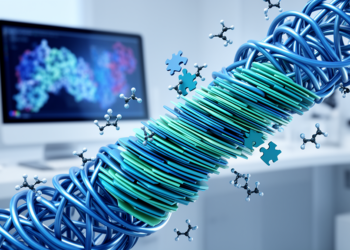
A new multiscale web server called InRegPep generates ensembles of amyloid protofilament models that matched experimental structures within 5 angstroms ...
A new two-step machine-learning framework called CLIMB and CLIFF computationally deconvolves bulk RNA-seq and drug sensitivity data into cell-type and ...
A new Frontiers in Aging collection argues that biological aging must be measured through combinations of epigenetic, proteomic and physiological ...
A new framework proposes translating natural-language prompts into machine-checkable constraints and a six-layer validator stack to make AI-driven genome design ...
Researchers introduced TAKO, a fast and interpretable method that ranks likely targets of a single-gene knockout using only wild-type single-cell ...
Researchers propose a closed-loop framework that unites AI-driven sequence design, molecular dynamics simulation, and experimental validation to rationally engineer high-affinity, ...
A new study of immunized mice shows that compartment size and clonal proliferation, rather than T cell receptor sequence features, ...


Embark on a thrilling journey of discovery with Scienmag.com—your ultimate source for cutting-edge breakthroughs. Immerse yourself in a world where curiosity knows no limits and tomorrow’s possibilities become today’s reality!