


PROBE benchmark exposes gaps in AI protein-function annotation
A 1,000-protein, five-organism benchmark found that leading open-source language models showed biological semantic alignment but achieved a best macro-F1 of ...
A 1,000-protein, five-organism benchmark found that leading open-source language models showed biological semantic alignment but achieved a best macro-F1 of ...

An interpretable deep learning model called SPACER reads spatial transcriptomics data to reveal the molecular and spatial rules that govern ...

A systematic reusability study of the CORNETO framework reveals that multi-sample biological network inference operates in distinct robustness regimes governed ...

A new reproducible benchmark called REACH evaluates ten computational methods for detecting rare malignant cells in single-cell RNA sequencing data, ...
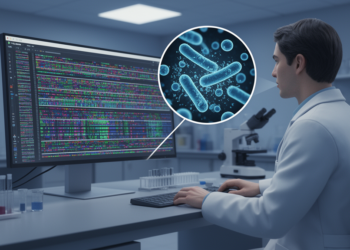
A new open-source tool called ampliconaudit detects silent failures in amplicon taxonomic pipelines by auditing post-hoc artifacts, ensuring that computational ...

A new multi-evidence framework resolves coding-noncoding ambiguity in the Arrhenatherum elatius transcriptome, identifying 31.71% of transcripts as part of a ...

Researchers used RFdiffusion, ProteinMPNN, and molecular dynamics to design novel protein binders against the human sweet taste receptor TAS1R2, creating ...

A new Frontiers in Bioinformatics editorial and seven accompanying studies reveal how different tools, workflows and training data can produce ...

Using an AI-driven computational pipeline, researchers have designed and prioritized five peptide candidates that target the glypican-3 protein found on ...

A new multiscale web server called InRegPep generates ensembles of amyloid protofilament models that matched experimental structures within 5 angstroms ...


Embark on a thrilling journey of discovery with Scienmag.com—your ultimate source for cutting-edge breakthroughs. Immerse yourself in a world where curiosity knows no limits and tomorrow’s possibilities become today’s reality!