

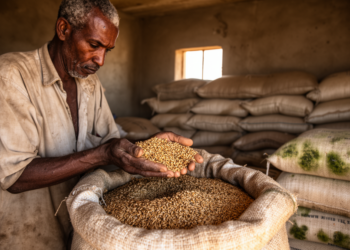
Mold-Contaminated Grain Silently Threatens Eritrean Farmers and Consumers
In the highlands and semi-arid lowlands of Eritrea, small-scale farmers grow maize and groundnuts that anchor local diets and household ...
In the highlands and semi-arid lowlands of Eritrea, small-scale farmers grow maize and groundnuts that anchor local diets and household ...

A new review in Frontiers in Industrial Microbiology charts the shift from single-strain bacterial inoculants to engineered synthetic microbial communities ...
A Nepali laboratory trial found that lemongrass essential oil at 200 ppm preserved tomato firmness, vitamin C, and flavor chemistry ...
A survey of 399 households around Rwanda's Rweru-Mugesera wetland complex shows how invasive water hyacinth has collapsed fish harvests, cut ...
A comprehensive 40-year review of Brazilian soil fauna reveals that tillage can reduce earthworm densities by at least 67 percent ...
A new IIASA-led study finds that fully implementing current national methane plans would cut global emissions by only 11 percent ...
A comprehensive review from Frontiers in Bee Science maps the techniques, challenges, and opportunities that could transform African beekeeping from ...
A 65-year analysis of all 33 districts of Chhattisgarh links monsoon rainfall, drought, and onset timing to ENSO and the ...
A new study of smallholder farmers in northwestern Ethiopia reveals who adapts to climate change and who is left behind.
The Danube River, Europe's second-longest waterway after the Volga, drains an extraordinary 801,463 square kilometers across nineteen countries and touches ...

Embark on a thrilling journey of discovery with Scienmag.com—your ultimate source for cutting-edge breakthroughs. Immerse yourself in a world where curiosity knows no limits and tomorrow’s possibilities become today’s reality!