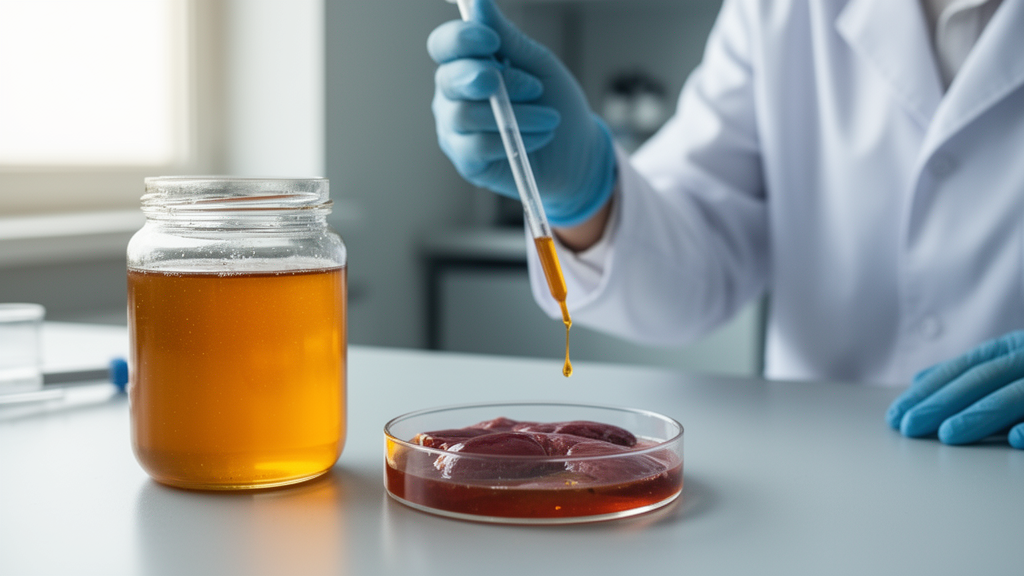
Honey, long valued as a folk remedy, is now being examined under the molecular microscope as a possible complementary agent against hepatocellular carcinoma, the most common form of primary liver cancer. A systematic review published in Clinical Phytoscience pulls together laboratory and animal studies conducted between 2017 and 2025, arguing that honey and its flavonoid constituents act on several of the same signaling pathways that drive liver tumor growth. The authors are careful, however, to note that no large, well-designed clinical trials of honey for liver cancer have been performed, and that it would be inappropriate to recommend it as a treatment on the current evidence.
The stakes are considerable. Hepatocellular carcinoma accounted for roughly 905,700 new diagnoses worldwide in 2020, making it the sixth most prevalent cancer globally, and around 830,000 deaths in the same year placed it second among the deadliest cancers. Because the disease often progresses silently in its early phases, many patients are diagnosed too late for curative surgical resection or liver transplantation, leaving systemic and targeted therapies as the main options and motivating the search for adjunctive approaches.
The review, reported according to PRISMA 2020 guidelines, searched databases including Scopus, PubMed, Web of Science and ScienceDirect for peer-reviewed English-language studies published from 2017 to 2025. Because the included studies varied widely in design, models and outcomes, the authors performed no quantitative meta-analysis, instead synthesizing the findings narratively. They also did not apply a formal risk-of-bias tool or GRADE assessment, acknowledging that the evidence base is dominated by heterogeneous preclinical work with limited clinical data.
At the mechanistic level, the review frames oxidative stress as a central thread linking the major risk factors for hepatocellular carcinoma, including hepatitis B and C infection, alcohol consumption, aflatoxin exposure, smoking, obesity and diabetes. Excessive reactive oxygen species damage membranes, activate oncogenes, silence tumor suppressor genes and fuel inflammatory pathways such as NF-κB and the NLRP3 inflammasome. Around these damaged cells, the tumor microenvironment becomes immunosuppressive: tumor-associated macrophages, myeloid-derived suppressor cells, regulatory T cells and tumor-associated neutrophils collectively blunt antitumor immunity, while cancer-associated fibroblasts deposit extracellular matrix that blocks drug penetration and immune cell infiltration.
Against this backdrop, the review describes honey as a complex natural matrix rich in flavonoids and polyphenols whose composition varies with floral origin, geography, season and processing. In cell and animal models, honey preparations and their constituents reportedly scavenge reactive oxygen species, restore redox homeostasis and elevate endogenous antioxidants such as SOD, CAT, GPx and GST. Suppression of ROS-driven inflammatory signaling follows, with quercetin inhibiting NF-κB-dependent NLRP3 activation and chrysin dampening cytokine production through Nrf2-regulated antioxidant responses.
The reported anticancer effects extend beyond antioxidant activity. Honey constituents are described as suppressing tumor-promoting pathways including PI3K/Akt/mTOR and Wnt/β-catenin signaling, and as promoting mitochondrial-mediated apoptosis. Quercetin raised pro-apoptotic Bax levels and induced autophagy-associated cell death in LM3 liver cancer cells, while jujube honey triggered dose-dependent apoptosis in HepG2 cells by disrupting mitochondrial membrane potential and causing DNA double-strand lesions that activate ATR, ATM and p53. Galangin suppressed collagen I and alpha-SMA production in hepatic stellate cells, pointing to a possible antifibrotic remodeling of the tumor microenvironment.
Some of the most detailed findings involve quercetin’s effects on the tumor microenvironment in early hepatocellular carcinoma models, where it reduced fibrotic collagen accumulation, lowered cancer stem cell markers such as EpCAM and OV6, and inhibited angiogenesis through the Akt-mTOR-S6K-VEGFR2 axis. Combined with a PD-1 antibody, quercetin increased infiltration of CD4-positive and CD8-positive T cells, suppressed PD-L1 expression on liver tumor cells and even appeared to reshape gut microbiota in ways that could support immunotherapy response. The authors caution, though, that mechanisms proposed for apigenin, galangin and naringin rest mainly on studies in other cancers and need confirmation in liver cancer models.
The review also highlights chemosensitization, the idea that honey compounds might make tumors more responsive to existing drugs while protecting normal liver tissue. Reported synergies include hesperetin with 5-fluorouracil, apigenin with sorafenib, manuka honey with doxorubicin, and chrysin with cisplatin, where combined treatment downregulated the biomarkers GPC3, SULF2 and lncRNA-AF085935 in HepG2 cells. Chrysin also reversed doxorubicin resistance in BEL-7402/ADM cells by suppressing Akt- and ERK-driven NRF2 signaling. All of these results come from in vitro or animal research.
Substantial barriers stand between these findings and the clinic. Honey’s chemical composition is inherently variable, undermining standardization and regulatory approval. Flavonoids such as quercetin, chrysin and apigenin show poor solubility, low oral bioavailability and rapid clearance, making it difficult to reach in patients the concentrations used in laboratory studies. Common cell lines like HepG2 and Huh7 lack key features of human liver cancer, and chemically induced animal models do not capture the full spectrum of human disease. Patients with cirrhosis may also be unusually sensitive to herbal compounds, raising concerns about drug interactions and hepatosafety.
The authors conclude that honey and its flavonoids hold promising preclinical potential as affordable, accessible co-interventions, particularly in settings where advanced targeted therapies are unavailable, but that clinical translation depends on standardized formulations, improved delivery systems such as nanocarriers, pharmacokinetic studies and rigorously designed randomized trials. Until such trials establish safety, dosing and efficacy in humans, honey remains a subject of laboratory investigation rather than a validated complement to hepatocellular carcinoma treatment.
Subject of Research: Honey-derived compounds as complementary therapy in hepatocellular carcinoma
Article Title: Molecular and immunological insights into honey as a complementary approach in hepatocellular carcinoma: a systematic review
Article References: Kundu, S., & Kumar, R. (2026). Molecular and immunological insights into honey as a complementary approach in hepatocellular carcinoma: a systematic review. Clinical Phytoscience, 12(1), Article 19. https://doi.org/10.1186/s40816-026-00434-4
Image Credits: AI Generated
DOI: 10.1186/s40816-026-00434-4
Keywords: hepatocellular carcinoma, honey, flavonoids, systematic review, tumor microenvironment, chemosensitization, oxidative stress, preclinical studies, quercetin, chrysin, liver cancer, immunomodulation
Cite Scienmag News
Nathaniel Bowman. (October 29, 2026). Systematic Review Maps How Honey Compounds Might Complement Liver Cancer Therapy. Scienmag. https://scienmag.com/systematic-review-maps-how-honey-compounds-might-complement-liver-cancer-therapy/
Nathaniel Bowman. "Systematic Review Maps How Honey Compounds Might Complement Liver Cancer Therapy." Scienmag, 29 October 2026, https://scienmag.com/systematic-review-maps-how-honey-compounds-might-complement-liver-cancer-therapy/. Accessed 30 October 2026.
Nathaniel Bowman. "Systematic Review Maps How Honey Compounds Might Complement Liver Cancer Therapy." Scienmag. October 29, 2026. https://scienmag.com/systematic-review-maps-how-honey-compounds-might-complement-liver-cancer-therapy/