


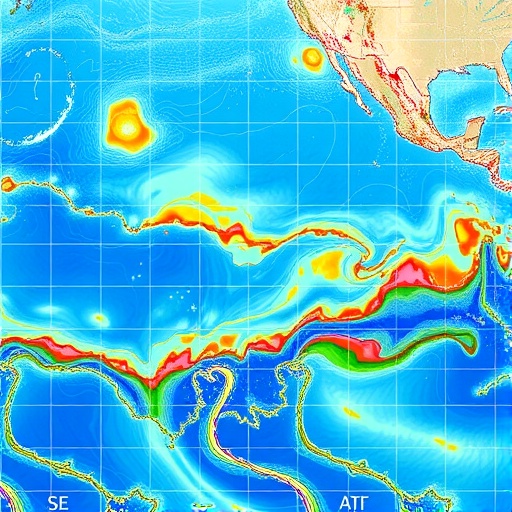
A new study overturns a long-standing expectation that the Southern Ocean should become less salty as freshwater inputs increase. Reporting in Nature Communications, researchers led by L. Yu and J. M. Toole find that the expansion of subtropical ocean circulation can instead drive salinity upward—an outcome that matters for climate forecasts and for how scientists interpret seawater chemistry across the Antarctic margins.
The team links the shift to changes in the subtropical gyres, the large-scale rotating currents that redistribute heat and salt. As these gyres spread poleward, they alter the pathways by which water masses move between subtropical regions and the Southern Ocean, reshaping both the composition and residence time of the water that eventually reaches high latitudes.
Using a combination of oceanographic analysis and model-based diagnostics, the study shows that the key mechanism is not simply the balance of rainfall, melting, and runoff. Rather, it is the salt transport delivered by gyre-driven circulation, which can overpower “freshening” signals expected from increased freshwater sources.
The authors emphasize that salinification does not require a net increase in evaporation over the Southern Ocean itself. Instead, the relevant salt is effectively imported: water exported from lower latitudes, modified by regional processes, is transported and mixed into Southern Ocean layers as circulation patterns shift.
Importantly, the research frames the finding as “contrary to freshening predictions,” suggesting that some earlier assessments may have focused too narrowly on local hydrological forcing. By highlighting how circulation reconfigures the delivery of salt, the work provides a pathway to reconcile discrepancies between projected freshwater effects and observed salinity trends.
The study further explores how mixing and stratification influence the outcome. When altered flow strengthens or deepens exchange between upper and intermediate ocean layers, salinity anomalies can be maintained rather than rapidly diluted, allowing the subtropical signal to propagate over broader regions.
These results raise the stakes for interpreting seawater measurements used in climate monitoring. Salinity is a sensitive tracer of ocean circulation and of freshwater fluxes, and the new mechanism implies that salinity changes may reflect dynamic redistribution as much as surface forcing.
Overall, the findings suggest that future Southern Ocean salinity may be controlled by evolving circulation geometry, not just by where freshwater is added. As subtropical gyres continue to respond to a warming climate, the Southern Ocean could experience unexpected salinification—altering density, affecting stratification, and influencing how the ocean absorbs heat and carbon.
Cite Scienmag News
Violet Maxwell. (July 29, 2026). Subtropical Gyre Expansion Drives Southern Ocean Salinity Up, Defying Predictions. Scienmag. https://scienmag.com/subtropical-gyre-expansion-drives-southern-ocean-salinity-up-defying-predictions/
Violet Maxwell. "Subtropical Gyre Expansion Drives Southern Ocean Salinity Up, Defying Predictions." Scienmag, 29 July 2026, https://scienmag.com/subtropical-gyre-expansion-drives-southern-ocean-salinity-up-defying-predictions/. Accessed 3 September 2026.
Violet Maxwell. "Subtropical Gyre Expansion Drives Southern Ocean Salinity Up, Defying Predictions." Scienmag. July 29, 2026. https://scienmag.com/subtropical-gyre-expansion-drives-southern-ocean-salinity-up-defying-predictions/


