


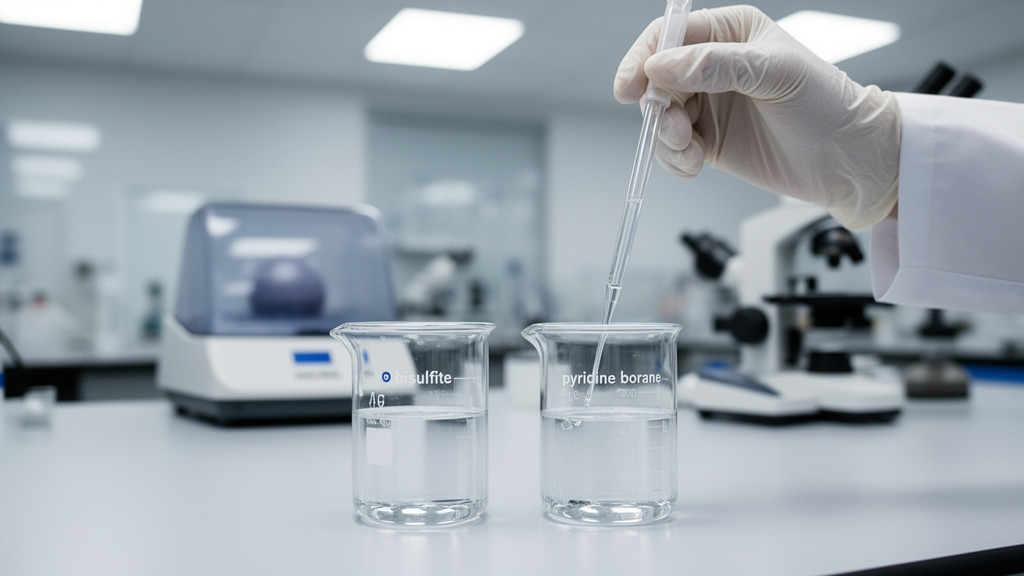
A comparative validation study evaluating quantitative DNA conversion methods has determined that bisulfite-based and bisulfite-free approaches possess distinct analytical trade-offs when measuring 5-hydroxymethylcytosine at single-CpG resolution. Researchers systematically examined conventional bisulfite conversion, oxidative bisulfite sequencing, chemical-assisted pyridine borane sequencing, and related hybrid variations using pyrosequencing across targeted enhancer regions. The findings demonstrate that while chemical-assisted pyridine borane sequencing delivers the highest quantitative accuracy under controlled conditions with synthetic DNA models, it generates background noise that impairs low-level detection. Conversely, optimized oxidative bisulfite sequencing protocols proved substantially more capable of resolving low-abundance modifications in complex genomic DNA samples, challenging the presumption that newer bisulfite-free techniques universally outperform traditional chemical pathways.
Epigenetic regulation in mammalian genomes relies extensively on chemical alterations of cytosine bases, predominantly occurring as 5-methylcytosine within CpG dinucleotides. Ten-eleven translocation enzymes can iteratively oxidize 5-methylcytosine into 5-hydroxymethylcytosine as part of active demethylation pathways. Beyond serving as a reaction intermediate, 5-hydroxymethylcytosine functions as a biologically distinct and stable epigenetic mark implicated in gene regulation, cell differentiation, and higher-order chromatin structure. Aberrant distributions of this modified base correlate with human malignancies and neurodegenerative conditions. However, differentiating 5-hydroxymethylcytosine from unmodified cytosine and 5-methylcytosine at precise genomic loci remains analytically demanding due to its scarce occurrence and the biochemical limitations inherent to routine diagnostic workflows.
To evaluate these sequencing methodologies under rigorous laboratory conditions, the research team targeted a ninety-seven-nucleotide segment of an intergenic MGMT enhancer containing two specific CpG dinucleotides, designated CpG 20 and CpG 21. Synthetic ninety-seven-mer oligonucleotides were generated to represent three absolute modification states: a completely unmodified sequence, a variant carrying 5-methylcytosine at both sites, and a variant carrying 5-hydroxymethylcytosine at both sites. In parallel, investigators extracted genomic DNA from post-mortem human hippocampal tissue, taking advantage of the relatively high physiological abundance of 5-hydroxymethylcytosine within the central nervous system. These matched template systems allowed direct evaluation of analytical accuracy, repeatability, background signal generation, and physical DNA preservation across diverse experimental setups.
Conventional bisulfite protocols historically differentiate cytosine states by deaminating unmodified cytosine to uracil while leaving both 5-methylcytosine and 5-hydroxymethylcytosine unchanged. To resolve 5-hydroxymethylcytosine individually, oxidative bisulfite sequencing introduces a preceding oxidation step converting 5-hydroxymethylcytosine into 5-formylcytosine, which subsequently deaminates to uracil during bisulfite treatment. Net 5-hydroxymethylcytosine abundance is then mathematically derived by subtracting the residual cytosine signal of the oxidized sample from the signal of a standard bisulfite-treated aliquot. Because prolonged bisulfite incubation is typically recommended to drive formylcytosine conversion, the researchers tested six distinct thermal programs ranging in total incubation duration from twenty minutes to five hundred and seventy minutes, testing both potassium perruthenate and potassium ruthenate as oxidizing reagents.
The evaluation of synthetic standards demonstrated that the total duration of bisulfite incubation directly dictates the quantitative fidelity of bisulfite-based measurements. While unmethylated cytosines were efficiently converted across all thermal programs, longer incubation intervals induced undesirable conversion of both 5-methylcytosine and 5-hydroxymethylcytosine, producing lower cytosine ratios. For the 5-hydroxymethylcytosine oligonucleotide, calculated levels rose as incubation time increased up to an optimized duration of one hundred and forty minutes, reaching 83.3 percent at the first CpG site and 82.5 percent at the second, before declining under extended protocols. Reagent choice also altered data quality: oxidation with potassium ruthenate produced significantly more repeatable cytosine ratios and preserved higher sample fidelity than potassium perruthenate.
In contrast to dual-reaction subtractive frameworks, chemical-assisted pyridine borane sequencing operates as a direct bisulfite-free conversion technique. In this protocol, selective ruthenium-mediated oxidation turns 5-hydroxymethylcytosine into 5-formylcytosine, which is subsequently reduced by picoline borane to dihydrouracil and amplified during sequencing as thymine. For the 5-hydroxymethylcytosine synthetic standard, this direct approach achieved exceptional conversion, recording thymine ratios of 95.0 percent and 94.4 percent at the two target CpG sites. However, the technique also induced false-positive conversions in control templates containing only unmethylated cytosine or 5-methylcytosine, displaying background signals between 2.3 percent and 4.3 percent. An adapted variation known as CAPS+, which oxidizes 5-hydroxymethylcytosine to 5-carboxylcytosine prior to borane reduction, registered lower conversion efficiency and produced background false positives exceeding ten percent when reduction times were extended.
The accumulation of background signals directly influenced the lowest detectable levels and lowest quantifiable levels across each workflow. Assessed using unmethylated oligonucleotide standards, bisulfite-free techniques registered elevated detection thresholds because chemical side reactions during oxidation or reduction caused unmodified bases to mimic converted targets. Picoline borane reduction over six hours yielded the highest baseline noise, whereas bisulfite-based conversion yielded negligible false positives due to near-complete cytosine deamination. Among all tested protocols, oxidative bisulfite sequencing paired with a one-hundred-and-forty-minute thermal program established the lowest detection thresholds, verifying that controlled bisulfite conversion limits spurious signals more effectively than current borane-mediated chemistry.
When applied to human hippocampal genomic DNA, the practical consequences of these detection thresholds became apparent. Brain tissue possesses physiological levels of 5-hydroxymethylcytosine that proved too modest for reliable quantification via chemical-assisted pyridine borane sequencing, as sample measurements fell beneath the lowest quantifiable limit of the bisulfite-free methods. In contrast, the optimized oxidative bisulfite protocol reliably quantified 5-hydroxymethylcytosine levels at 25.6 percent and 20.2 percent across the two enhancer CpG positions. Although theoretical reference values for these specific hippocampal loci were unavailable, the oxidative bisulfite data produced consistent measurements where bisulfite-free workflows struggled against their intrinsic background limits.
The researchers also investigated DNA recovery and structural integrity, recognizing that severe chemical exposure induces chain breakage and sample loss. While bisulfite treatment is recognized for causing thermal depyrimidination and material loss, the multi-step handling involved in bisulfite-free protocols also degraded sample yields. Quantitative cycle threshold measurements revealed that standard bisulfite treatment and potassium ruthenate-assisted pyridine borane sequencing retained the greatest amplifiable template material, whereas CAPS+ caused higher cycle threshold values indicative of cumulative operational loss. An experimental hybrid strategy replacing picoline borane reduction with bisulfite deamination suffered extreme DNA degradation, dropping sample concentrations below fluorometric detection limits and yielding poor measurement repeatability.
Reflecting on these findings, the study authors emphasize that analytical validation conducted on single-stranded synthetic targets does not fully replicate the molecular behavior of native double-stranded genomic DNA, where base accessibility and secondary structures alter reaction dynamics. Nonetheless, the investigation highlights that neither bisulfite-based nor bisulfite-free methodologies represent an uncompromised gold standard. For targets characterized by low modification frequency or constrained sample volumes, optimized oxidative bisulfite conversion provides the background suppression and sensitivity necessary for dependable locus-specific profiling, whereas chemical-assisted pyridine borane sequencing provides superior quantitative accuracy when measuring abundant target marks under defined conditions.
Methodological details in the experimental design shed further light on why the various conversion pathways differed so widely in analytical performance and template preservation. To isolate and benchmark the individual chemical steps, the investigators systematically tracked degradation and oxidation conditions, observing that reagent purity played a decisive role in reaction outcomes. For instance, commercial nuclease-free water introduced sufficient chemical impurities to compromise oxidation efficiency, compelling the authors to substitute ultrapure water prepared via specialized purification systems. Furthermore, while potassium perruthenate demonstrated noticeable batch variability and produced cycle threshold values averaging 32.6 during subsequent PCR amplification of treated hippocampal material, potassium ruthenate limited operational damage, recording an improved cycle threshold average of 24.9 under identical thermal settings.
The study also documented the precise behavior of intermediate chemical states across extended reaction intervals. In conventional and oxidative bisulfite treatments, the authors identified that excessive incubation driven by harsher thermal routines promoted unintended over-conversion. Under prolonged exposure lasting up to 570 minutes, stable marks including 5-methylcytosine and residual modified intermediates underwent progressive deamination to uracil, generating false-negative readings and causing mathematically subtracted 5-hydroxymethylcytosine values to drop into negative percentages. Conversely, the bisulfite-free CAPS+ strategy utilized Bobbitt’s salt to achieve oxidation directly on double-stranded DNA targets before proceeding to Pinnick oxidation and borane-mediated reduction. Despite bypassing the heat denaturation required by ruthenium treatments, this multi-step route resulted in elevated sample loss across iterative spin-column cleanup procedures, illustrating the cumulative cost of repeated physical handling.
These technical trade-offs hold direct practical implications for epigenetic diagnostics and academic research laboratories seeking to characterize regulatory genomic loci. Because standard bisulfite conversion is already widely implemented across diagnostic infrastructure and reagent kits, adapting protocols to an optimized 140-minute window offers a straightforward transition without requiring specialized single-molecule instrumentation. The authors noted that emergent single-molecule platforms like nanopore sequencing offer chemical-free profiling across entire genomes, yet such approaches still demand large amounts of high-input DNA and complex computational processing while lacking locus-specific precision. Consequently, laboratory selection between bisulfite-based and bisulfite-free workflows must balance sample abundance against tolerable error rates, ensuring that target loci with scarce modifications are not obscured by background conversion artifacts.
Subject of Research: Comparative validation of DNA sequencing protocols for locus-specific 5-hydroxymethylcytosine quantification
Article Title: Comparative validation of oxidative bisulfite sequencing (oxBS) and chemical-assisted pyridine borane sequencing (CAPS) protocols for locus-specific 5-hydroxymethylcytosine quantification
Article References: Pühringer, K., Czarda, P., Iluca, S., Fehringer, B., Sherovski, P., Ohindovschi, A., Hainfellner, A., Reissig, L., Weninger, W. J., & Cichna-Markl, M. (2026). Comparative validation of oxidative bisulfite sequencing (oxBS) and chemical-assisted pyridine borane sequencing (CAPS) protocols for locus-specific 5-hydroxymethylcytosine quantification. Epigenetics & Chromatin, 19(1), Article 29. https://doi.org/10.1186/s13072-026-00672-3
Image Credits: AI Generated
DOI: 10.1186/s13072-026-00672-3
Keywords: Epigenetics, DNA Methylation, 5-Hydroxymethylcytosine, Bisulfite Sequencing, Pyrosequencing, Oxidative Bisulfite Sequencing, CAPS, Molecular Biology, Comparative, validation, oxidative, bisulfite
Cite Scienmag News
Drew Townsend. (November 10, 2026). Study Validates Bisulfite and Pyridine Borane Methods for Epigenetic Quantification. Scienmag. https://scienmag.com/study-validates-bisulfite-and-pyridine-borane-methods-for-epigenetic-quantification/
Drew Townsend. "Study Validates Bisulfite and Pyridine Borane Methods for Epigenetic Quantification." Scienmag, 10 November 2026, https://scienmag.com/study-validates-bisulfite-and-pyridine-borane-methods-for-epigenetic-quantification/. Accessed 10 November 2026.
Drew Townsend. "Study Validates Bisulfite and Pyridine Borane Methods for Epigenetic Quantification." Scienmag. November 10, 2026. https://scienmag.com/study-validates-bisulfite-and-pyridine-borane-methods-for-epigenetic-quantification/




