


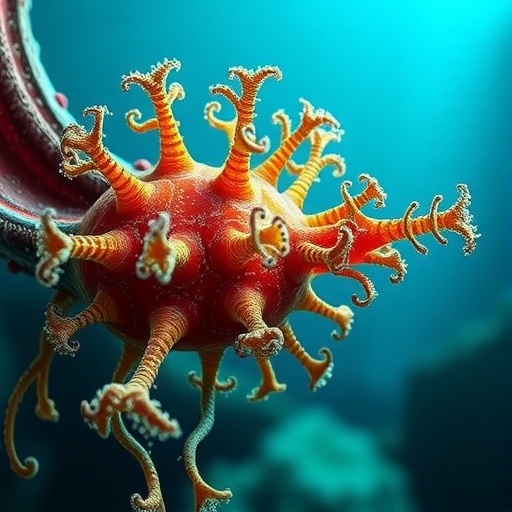
A groundbreaking study by a team of geochemists at the Massachusetts Institute of Technology (MIT) has unveiled compelling new evidence indicating that some of Earth’s earliest animals were likely ancient ancestors of today’s sea sponges. This revelation comes through the identification of unique chemical fossils embedded within sedimentary rocks that are astonishingly over 541 million years old. These chemical fossils, essentially molecular remnants from long-extinct organisms, not only expand our understanding of early animal life but also push back the timeline of animal evolution within the Precambrian era.
In this study, published recently in the prestigious journal Proceedings of the National Academy of Sciences, researchers detail their discovery and characterization of specialized steranes, which are geologically stable derivatives of sterols — complex organic molecules integral to cell membranes in eukaryotic organisms. The remarkable aspect of this research lies in isolating particular steranes traceable to a subgroup of sea sponges known as demosponges, which are the most diverse and widespread class of sponges today. Demosponges today exist in a variety of shapes, sizes, and colors, functioning primarily as soft-bodied filter feeders; their primordial ancestors likely shared these basic biological traits.
Demosponges inhabit the world’s oceans as soft-bodied, non-siliceous organisms lacking mineralized skeletons, although exactly what form they took during the Ediacaran remains uncertain. Roger Summons, Professor Emeritus of Geobiology at MIT, highlights the significance of this discovery by emphasizing the soft-bodied nature of these early sponges and their evolutionary primacy. The identification of these molecular fossils provides persuasive evidence that demosponges were among the first animals to evolve, emerging well before the diversification events traditionally associated with the Cambrian explosion.
This research builds on a pivotal 2009 discovery by the same team, when they first reported the presence of a distinctive class of 30-carbon (C30) steranes in sedimentary rocks from Oman. These steranes were inferred to be ancient biochemical signatures indicative of demosponge ancestors. The 2009 findings suggested that the earliest multicellular life forms appeared significantly earlier than previously believed, during the Ediacaran Period—a geological window spanning roughly from 635 to 541 million years ago, immediately preceding the Cambrian period.
Nevertheless, skeptics questioned whether the C30 sterane data might have alternative origins, proposing possibilities ranging from contamination to abiotic synthesis via geological processes. To counter these hypotheses, the current study advances several novel lines of evidence that reinforce the biological origin of these molecular fossils. Central to their approach was the identification of a rarer and chemically even more revealing class of sterols comprising 31 carbon atoms (C31 sterols), produced through enzymatic pathways unique to demosponges.
By analyzing rock samples from geographically and geologically diverse sites — including Oman, western India, and Siberia — the researchers detected an unexpected abundance of these C31 steranes alongside the previously reported C30 steranes. The presence of both steranes in Ediacaran rocks strongly supports the notion that these molecules did not originate through random chemical processes, but rather through biosynthesis by an organism possessing particular genes encoding enzymes necessary for producing these distinctive sterols.
To validate their conclusions, the team conducted parallel analyses on contemporary demosponge species, confirming that some extant demosponges continue to biosynthesize C31 sterols. Taking this a step further, the researchers chemically synthesized eight variant C31 sterols under laboratory conditions to establish reference standards. By subjecting these synthetic compounds to simulated geological transformations mimicking burial and diagenetic processes over hundreds of millions of years, they identified that only two specific molecular configurations precisely matched the fossilized C31 steranes recovered from ancient sediments.
This multi-faceted methodology—integrating geological sample analysis, comparative biochemistry of living organisms, and laboratory-based organic synthesis—provides robust, mutually corroborative evidence supporting the biological provenance of these sterane fossils. It strongly implicates early demosponges as primordial animals, revealing a biochemical continuity extending back to the Precambrian. Such findings mark a significant advancement in the quest to pinpoint the origins of animal life and ascertain early evolutionary trajectories with molecular precision.
Importantly, this work introduces and exemplifies rigorous criteria for biomarker authentication. By demonstrating how to conclusively distinguish true biological signals from contamination or abiotic chemical analogs, this study sets a new standard for validating molecular fossils in ancient sedimentary contexts. This capability is instrumental for refining the molecular fossil record and resolving contentious debates over the timing and nature of early animal evolution.
Looking forward, the research team plans to broaden their survey of ancient sedimentary rocks from different global localities, aiming to unearth further molecular fossils and more precisely constrain the emergence and diversification timeline of early animals. Expanding this molecular fossil dataset will enable deeper insights into the environmental and ecological conditions fostering early animal evolution, contributing crucial data to evolutionary biology and Earth history.
This insightful study was supported through funding from the MIT Crosby Fund, the Distinguished Postdoctoral Fellowship program, the Simons Foundation Collaboration on the Origins of Life, and NASA’s Exobiology Program. It exemplifies interdisciplinary collaboration spanning geobiology, organic geochemistry, evolutionary biology, and synthetic chemistry, highlighting the complex yet rewarding pursuit of understanding ancient life’s molecular remnants preserved deep within the Earth’s sedimentary archives.
As we delve further into Earth’s deep past through such molecular detective work, findings like these highlight how ancient lifeforms—once barely more than soft microbial mats or simple multicellular organisms—have shaped the biological world we inhabit today. The discovery that modern-day demosponges retain molecular relics of their ancient ancestors not only bridges millions of years of evolutionary history but also illuminates the earliest chapters in the animal kingdom’s expansive narrative.
News Publication Date: 29-Sep-2025
Web References: http://dx.doi.org/10.1073/pnas.2503009122
Cite Scienmag News
Violet Maxwell. (September 29, 2025). Study Suggests Sea Sponges Could Be Earth’s Earliest Animals. Scienmag. https://scienmag.com/study-suggests-sea-sponges-could-be-earths-earliest-animals/
Violet Maxwell. "Study Suggests Sea Sponges Could Be Earth’s Earliest Animals." Scienmag, 29 September 2025, https://scienmag.com/study-suggests-sea-sponges-could-be-earths-earliest-animals/. Accessed 4 September 2026.
Violet Maxwell. "Study Suggests Sea Sponges Could Be Earth’s Earliest Animals." Scienmag. September 29, 2025. https://scienmag.com/study-suggests-sea-sponges-could-be-earths-earliest-animals/


