


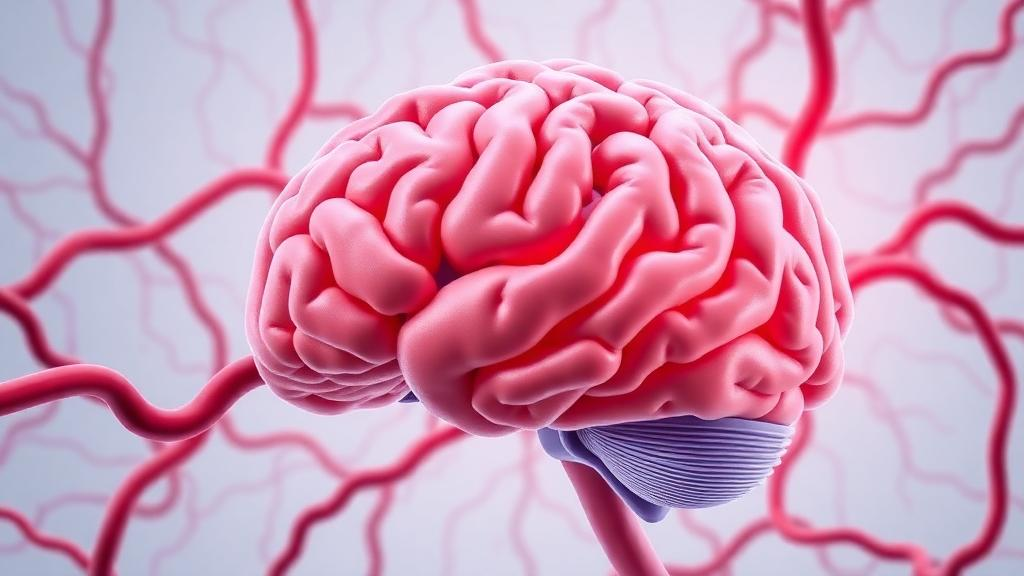
An experimental drug designed to shield the brain from stroke damage appears to work only in animals whose brains are plumbed with a rich network of backup blood vessels, according to a new preclinical study from Duke University researchers. The finding, published in the journal Ferroptosis and Oxidative Stress, suggests that the architecture of the brain’s collateral circulation — the web of small connecting arteries that can reroute blood when a major vessel is blocked — may be as important to a therapy’s success as the drug molecule itself. If confirmed, the result could reshape how experimental stroke treatments are evaluated, tested, and ultimately matched to the patients most likely to benefit from them.
The drug at the center of the study, AZD1390, is an orally available, brain-penetrant inhibitor of ATM kinase, a protein best known to biologists for its role in sensing and repairing damaged DNA. The Duke team, however, was interested in a different job for the molecule: blocking ferroptosis, an iron-dependent form of regulated cell death driven by the oxidative destruction of the fatty membranes that surround cells. Ferroptosis has attracted intense interest in stroke research because the brain is exceptionally rich in lipids and vulnerable to lipid peroxidation, the chain reaction in which reactive oxygen species strip electrons from cell membranes until they rupture. When blood flow to part of the brain is interrupted, the resulting shortage of oxygen and glucose sets off several forms of cellular injury, and ferroptosis is thought to be one of the important contributors to the growing zone of dead and dying tissue known as the infarct.
The researchers began their investigation far from the living brain, in cell culture and in organotypic brain slices — thin sections of brain tissue kept alive in the laboratory. When the slices were deprived of oxygen and glucose, a standard experimental model of ischemic injury, treatment with ATM inhibitors protected neurons from cell death. AZD1390, the most clinically advanced of the compounds tested, reduced measurements associated with lipid peroxidation and dampened the induction of ferroptosis-associated transcripts, the molecular signatures that cells display when this particular death program is activated. In cultured MDA-MB-231 cells exposed to erastin, a chemical that reliably triggers ferroptosis, AZD1390 reduced lipid peroxidation in a dose-dependent manner, an effect quantified with C11-BODIPY staining and confirmed across six independent biological replicates with rigorous statistical testing.
With those cellular results in hand, the team moved to mouse models of ischemic stroke using permanent middle cerebral artery occlusion, a surgical technique that blocks one of the major arteries supplying the brain and closely mimics the vascular catastrophe of a human ischemic stroke. The outcome was striking — but only in some of the animals. When AZD1390 was given orally two hours after the vessel was occluded, infarct volume measured 72 hours later was reduced by 55.6 percent in B6/J mice and by 37.1 percent in B6/NJ mice compared with vehicle-treated controls. Yet in BALB mice, a strain with a different vascular makeup, the same drug at the same dose produced no significant reduction in infarct volume at all.
The explanation, the researchers found, lay in the anatomy of the brain’s collateral circulation. B6/J and B6/NJ mice possess relatively dense connections between their major cerebral arterial territories, meaning that when the middle cerebral artery is blocked, smaller vessels can still deliver blood to the threatened tissue from neighboring vascular territories. BALB mice have far fewer of these backup connections, leaving larger swaths of brain effectively cut off from any alternative blood supply. The pattern was reinforced in a second genetic experiment: mice lacking Rabep2, a gene associated with reduced collateral vessel density, showed no infarct reduction from oral AZD1390, while wild-type and heterozygous littermates with more intact collateral networks did benefit from the treatment.
To test whether restricted vascular access was truly the limiting factor, the researchers changed the delivery strategy. Instead of giving the drug orally and relying on the bloodstream to carry it into the damaged region, they applied AZD1390 directly to the exposed cortical surface just 15 minutes after stroke induction. Under those conditions, the drug’s protective effect reappeared even in the low-collateral animals: infarct volume fell by 28.8 percent in BALB mice and by 35.2 percent in Rabep2 knockout mice. The drug, in other words, was not intrinsically powerless in these animals — it simply could not reach the tissue it was meant to protect when the vascular routes into that tissue were sparse.
The implications reach well beyond a single experimental compound. Variation in collateral blood vessels is a well-recognized feature of human neuroanatomy, and patients differ substantially in how well their brains are equipped to withstand a major arterial blockage. If vascular access to threatened brain tissue is a key determinant of therapeutic response, as the Duke findings suggest, then collateral status could become an important stratification variable in preclinical research and, eventually, in clinical trials of therapies intended to reach ischemic tissue. Treatments that look disappointing when tested across an unselected population might prove highly effective in patients with robust collateral circulation, while patients with sparse collaterals might need alternative delivery strategies or combination approaches altogether.
The authors are careful, however, to delineate the limits of what their experiments establish. The study does not prove that collateral circulation alone explains the treatment response, because the topical and oral treatment experiments differed not only in delivery route but also in timing — the topical application came earlier, at 15 minutes rather than two hours, so the earlier intervention may itself have contributed to the apparent benefit. The molecular findings likewise require further testing: although the results are consistent with reduced ferroptosis-associated lipid oxidative injury, the measurements used are not specific enough to prove that ATM-dependent ferroptosis is the sole mechanism at work. The researchers note that direct ATM target-engagement studies, genetic experiments, ferroptosis-specific rescue studies, and analyses of oxidized phospholipids will all be needed to nail down the mechanism. The study also assessed infarct volume only at the 72-hour mark and did not measure neurological function, behavioral recovery, long-term outcomes, or safety.
AZD1390 itself is an investigational agent that has previously been studied for its ability to reach the brain in other clinical contexts, which made it an attractive candidate for a stroke application. But the present findings were obtained entirely in cells, brain slices, and mice, and they do not demonstrate safety or effectiveness for people with stroke. What the study does offer is a conceptual advance: a concrete, experimentally supported reason why the same stroke therapy can produce dramatically different results across biological settings. As researchers continue the long effort to translate laboratory neuroprotection into bedside benefit, the Duke team’s work adds collateral vascular anatomy to the list of factors that must be considered — a reminder that in the brain, the road a drug must travel to reach endangered neurons may matter as much as the drug’s molecular target. The work also underscores the value of genetically diverse animal models, since a treatment evaluated only in a single high-collateral strain might have appeared uniformly effective and masked the vascular dependency entirely.
Subject of Research: The role of collateral circulation in the protective effect of ATM inhibition against ferroptosis in experimental ischemic stroke
Article Title: Study links experimental stroke protection to the brain’s backup blood vessels
Article References: Study links experimental stroke protection to the brain’s backup blood vessels. (n.d.). Original publication
Image Credits: AI Generated
DOI: Not provided
Keywords: ischemic stroke, collateral circulation, AZD1390, ATM kinase, ferroptosis, lipid peroxidation, infarct volume, middle cerebral artery occlusion, Rabep2, neuroprotection, preclinical study, brain vasculature
Cite Scienmag News
Cassandra Pierce. (October 12, 2026). Stroke Drug’s Success May Hinge on the Brain’s Hidden Backup Blood Vessels. Scienmag. https://scienmag.com/stroke-drugs-success-may-hinge-on-the-brains-hidden-backup-blood-vessels/
Cassandra Pierce. "Stroke Drug’s Success May Hinge on the Brain’s Hidden Backup Blood Vessels." Scienmag, 12 October 2026, https://scienmag.com/stroke-drugs-success-may-hinge-on-the-brains-hidden-backup-blood-vessels/. Accessed 12 October 2026.
Cassandra Pierce. "Stroke Drug’s Success May Hinge on the Brain’s Hidden Backup Blood Vessels." Scienmag. October 12, 2026. https://scienmag.com/stroke-drugs-success-may-hinge-on-the-brains-hidden-backup-blood-vessels/


