


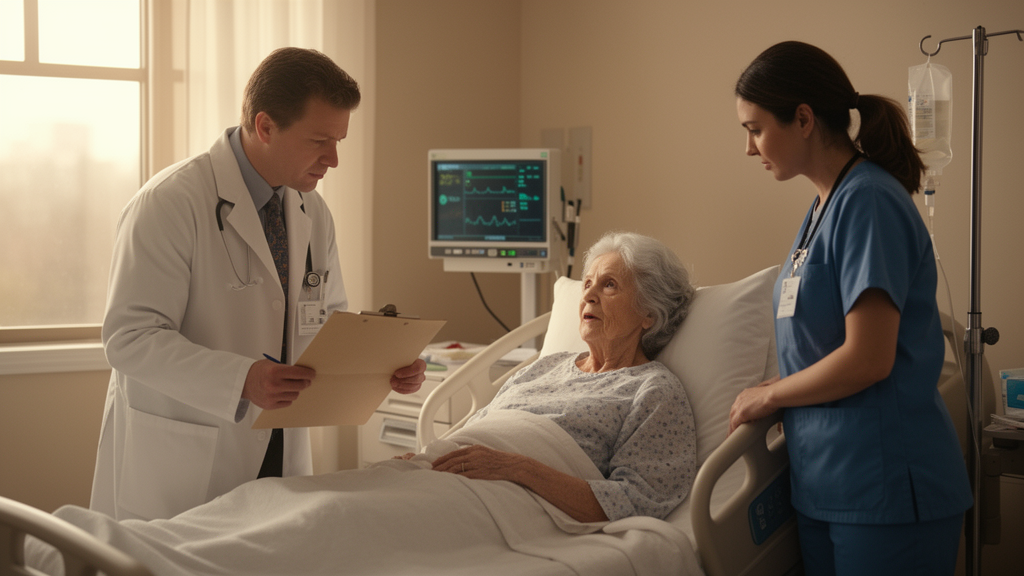
Nearly one-third of all strokes occur in people over the age of 80, yet the evidence base guiding how these patients should be treated remains strikingly thin. A new collection of studies published in Frontiers in Stroke argues that this gap is not merely a scientific oversight but a form of ageism embedded in stroke medicine itself, and it offers a wave of new data on risk prediction, prognostication, and treatment outcomes specifically in older and very old adults.
The editorial, led by Hipólito Nzwalo of the University of Algarve together with Miguel Barboza of Hospital Rafael Angel Calderon Guardia in Costa Rica and Nicola Logallo of Haukeland University Hospital in Norway, frames a persistent structural problem: most stroke trials and risk models have been built on younger, healthier cohorts. When clinicians apply those tools to patients with reduced physiological reserve, heavier comorbidity burdens, and different goals of care, accuracy degrades. In very old patients with intracerebral hemorrhage, for example, the main mortality scores retain acceptable overall discrimination but lose the ability to pinpoint which specific subgroups face the highest risk of death.
The consequences of this extrapolation are visible in everyday care. Evidence shows that older stroke survivors receive less guideline-compliant treatment than younger patients, regardless of how functionally independent they were on admission or at discharge. The editorial’s authors argue that treatment decisions should rest on biological rather than chronological age, a principle that several studies in the collection put to the test.
On the prevention side, several papers focused on risk stratification using readily available clinical data. One study examined the Weight-Adjusted Waist Index, an innovative obesity metric, as a predictor of first stroke in the elderly. Another found that combined levels of C-reactive protein and LDL cholesterol carried prognostic information, while a third investigated the glucose disposal rate, a surrogate marker of insulin resistance, in relation to stroke incidence. The appeal of these measures lies in their simplicity: they can be calculated from routine blood tests and anthropometric measurements without specialized equipment.
Two studies probed intermediate risk factors that sit upstream of stroke itself. Obesity, hypertension, triglycerides, glycosylated hemoglobin, sex, and fasting blood glucose were identified as predictors of arteriosclerosis, the arterial stiffening that underlies many cerebrovascular events. Separately, higher plasma levels of trimethylamine N-oxide, a metabolite produced by gut microbiota, were associated with a greater burden of cerebral white matter hyperintensities, the bright lesions on MRI that signal accumulating small-vessel damage. Importantly, the presence of these white matter changes was linked to early progression of stroke, particularly in older patients with anterior choroidal artery infarction, suggesting that brain imaging findings could sharpen acute risk assessment in the elderly.
Psychological factors emerged as another modifiable dimension of risk. Researchers found that an ascending trajectory of cognitive-affective symptoms, alongside unstable and persistently elevated trajectories of somatic depressive symptoms, were associated with increased stroke risk in older adults. The finding adds to growing recognition that depression and anxiety are not merely consequences of cerebrovascular disease but may actively contribute to its onset.
For prognostication after stroke has occurred, a series of studies highlighted the value of inflammatory and metabolic biomarkers calculated from standard blood counts. The neutrophil-percentage-to-albumin ratio, the triglyceride-glucose-body mass index, and the neutrophil-to-lymphocyte ratio all emerged as promising predictors of mortality in older stroke patients. In acute settings, the picture was similarly detailed: a risk model integrating cerebral circulation time and collateral status improved prediction of futile recanalization following mechanical thrombectomy, while distinct trajectories of the neutrophil-to-albumin ratio were associated with functional outcomes after endovascular treatment. The triglyceride-glucose-body mass index also predicted long-term all-cause mortality in elderly patients treated with intravenous thrombolysis, and the platelet-to-lymphocyte ratio proved an independent predictor of death in patients with severe acute ischemic stroke requiring intensive care.
Beyond biomarkers, the collection included a comprehensive review of deubiquitinases, enzymes that regulate the ubiquitin-proteasome system, a cellular machinery deeply implicated in cerebral ischemia-reperfusion injury, the cascade of damage that unfolds when blood flow is restored to oxygen-starved brain tissue. The review discusses the potential of deubiquitinase-targeted interventions as novel neuroprotective strategies, pointing toward therapies that could one day limit brain injury during reperfusion, a critical window in acute stroke care.
Several contributions directly challenged ageist assumptions by demonstrating that evidence-based interventions remain beneficial in the elderly. Extracranial vertebral artery stenting was shown to be both safe and effective in older individuals, as was intravenous thrombolysis for minor ischemic stroke. These findings carry practical weight: they support offering older patients the same reperfusion and endovascular options considered standard in younger populations, provided decisions are grounded in each patient’s biological status rather than an arbitrary age threshold.
Long-term cognitive outcomes received dedicated attention as well. One study identified three distinct post-stroke cognitive trajectories among elderly patients, characterized as high cognitive function with slow decline, low cognitive function with intermediate decline, and low cognitive function with rapid decline. Another found that the hemoglobin-to-red cell distribution width ratio, a simple calculation from a complete blood count, was associated with the risk of post-stroke cognitive impairment, offering clinicians an accessible biomarker for flagging patients at greater risk of cognitive deterioration. Taken together, the editors conclude that evidence for very old stroke patients remains weak, fragmented, and incomplete, and that tools derived from younger, less comorbid populations cannot simply be extrapolated upward. By spanning risk prediction, prognostication, acute management, and long-term outcomes, the research topic represents a concerted effort to close one of stroke medicine’s most persistent and consequential gaps.
Subject of Research: Stroke risk prediction, prognostication, and treatment in elderly and very old adults
Article Title: Editorial: Stroke research in the elderly: addressing ageism and prognostication
Article References: Editorial: Stroke research in the elderly: addressing ageism and prognostication. (n.d.). https://doi.org/10.3389/fstro.2026.1978900
Image Credits: AI Generated
DOI: 10.3389/fstro.2026.1978900
Keywords: stroke, elderly, ageism, prognostication, biomarkers, intracerebral hemorrhage, thrombolysis, thrombectomy, white matter hyperintensities, cognitive decline, inflammation, insulin resistance
Cite Scienmag News
Cassandra Pierce. (October 15, 2026). Stroke Care for the Very Old: New Research Confronts Ageism in Prognosis and Treatment. Scienmag. https://scienmag.com/stroke-care-for-the-very-old-new-research-confronts-ageism-in-prognosis-and-treatment/
Cassandra Pierce. "Stroke Care for the Very Old: New Research Confronts Ageism in Prognosis and Treatment." Scienmag, 15 October 2026, https://scienmag.com/stroke-care-for-the-very-old-new-research-confronts-ageism-in-prognosis-and-treatment/. Accessed 15 October 2026.
Cassandra Pierce. "Stroke Care for the Very Old: New Research Confronts Ageism in Prognosis and Treatment." Scienmag. October 15, 2026. https://scienmag.com/stroke-care-for-the-very-old-new-research-confronts-ageism-in-prognosis-and-treatment/


