


Latent tuberculosis infection remains one of the most stubborn reservoirs of disease on the planet. Roughly a quarter of the world’s population carries viable, metabolically sluggish Mycobacterium tuberculosis bacilli that sit quietly inside host tissues, held in check by the immune system but never fully eliminated. Because these dormant organisms tolerate many conventional anti-tuberculosis drugs, which are designed to kill rapidly dividing bacteria, preventive therapy for latent infection is long, toxic, and often poorly adhered to. Now, researchers at Kwame Nkrumah University of Science and Technology in Kumasi, Ghana, report that an ethanolic extract of the pink variety of onion, Allium cepa, may offer a surprising adjunctive weapon against this hidden burden.
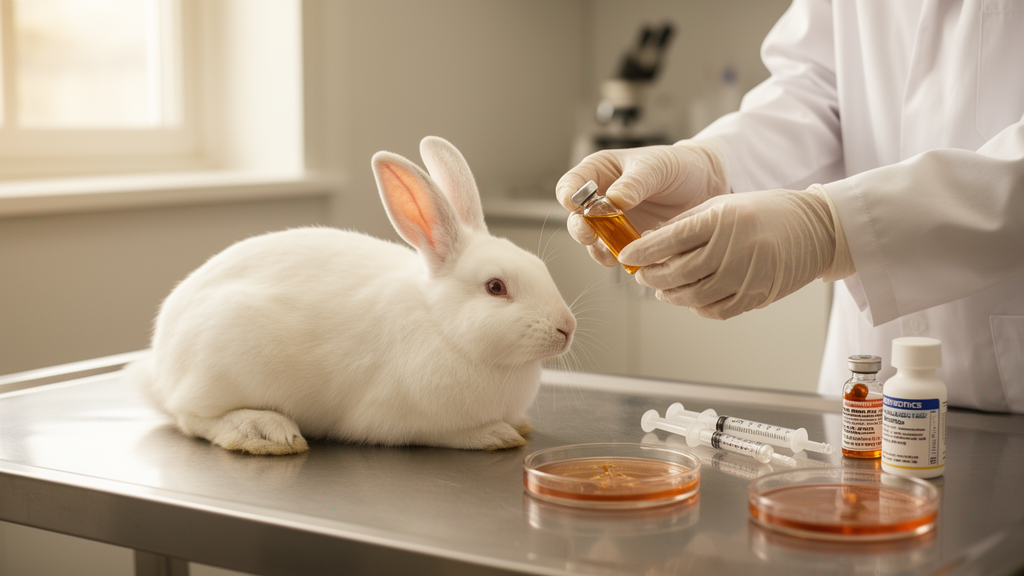
The study, published in Frontiers in Tuberculosis, set out to test whether onion extract could act both as an antimycobacterial agent and as an immunomodulator in a rabbit model of latent-like mycobacterial infection. The team, led by Theophilus Kwesi Ninkyi and colleagues in the Department of Pharmacology, used aerosolized Mycobacterium aurum, a non-tuberculous mycobacterial species frequently employed as a surrogate organism in tuberculosis research, to establish pulmonary infection in healthy adult New Zealand White rabbits. The animals were then treated with standard preventive therapy combining isoniazid and rifapentine, with the onion extract alone, or with both interventions together, over a four-week treatment period.
Establishing a credible model of latent infection was the first technical hurdle. The researchers aerosolized rabbits with an inoculum of 2.0 million colony-forming units per millilitre and then left the animals untreated for five weeks to allow immune-mediated containment of the infection. Colony-forming unit counts in lung tissue rose significantly within 24 hours of exposure and remained elevated compared with uninfected controls, confirming successful infection. Crucially, however, bacterial loads stabilized and even declined slightly over the five-week induction period without any therapeutic intervention, indicating that the rabbits’ immune systems were keeping the infection in check rather than allowing progressive disease.
To validate the latent-like state further, the team obtained chest radiographs at the end of the induction phase. Animals included in the latent-like cohort showed no evidence of extensive pulmonary infiltrates, cavitary lesions, diffuse consolidation, or severe lung destruction that would signal active tuberculosis. Rabbits demonstrating marked radiographic abnormalities were excluded from the latent-like cohort and reassigned to an active disease model. This multimodal validation, combining bacteriological stabilization, radiographic assessment, and the absence of clinical deterioration, addresses a common criticism of models that rely solely on colony counts to define latency.
Haematological monitoring during the induction phase revealed the immunological fingerprint of the model. Total white blood cell counts rose progressively after infection, becoming significantly elevated by five weeks compared with uninfected controls. Neutrophil counts, reflecting innate immune activation, also climbed significantly by the end of the induction period, while lymphocyte counts showed a more gradual increase consistent with adaptive immune engagement. Statistical analysis using two-way repeated measures analysis of variance demonstrated significant interactions between infection status and time for all three cell populations, indicating that the temporal patterns of immune response were driven by infection rather than by the passage of time alone.
The treatment phase produced the study’s most striking findings. When rabbits received isoniazid and rifapentine, onion extract at doses of 250, 500, or 1,000 milligrams per kilogram, or combinations of the two, all treated groups showed significant reductions in pulmonary bacterial burden compared with untreated infected controls, with a treatment effect of p less than 0.0001. The greatest reduction came from the combination of standard therapy with the highest dose of onion extract. The mean difference in bacterial counts between the combination group and untreated controls, 480 colony-forming units, was closest to the difference between uninfected animals and untreated controls, 495 units, suggesting near-complete bacterial clearance. Standard therapy alone produced a mean difference of 472 units, while the high-dose extract alone achieved 467 units, indicating that the combination outperformed either intervention used separately.
This adjunctive effect is particularly significant in the context of latent infection, where persistent bacilli exhibit phenotypic tolerance to drugs that primarily target actively replicating organisms. The authors suggest that plant-derived compounds may enhance therapeutic efficacy through several mechanisms, including improved drug uptake, inhibition of resistance mechanisms such as bacterial efflux pumps, and targeting of complementary metabolic pathways. Previous in vitro work by the same research group demonstrated anti-efflux and antibiofilm activities of Allium cepa extracts, which could increase intracellular drug concentrations and disrupt protective bacterial niches that shelter dormant organisms.
The immunomodulatory profile of the extract proved equally compelling. During treatment, white blood cell counts declined significantly in treated groups, approaching baseline levels seen in uninfected animals. Neutrophil counts fell in parallel, indicating attenuation of excessive innate immune activation. This matters because overactive neutrophils release proteolytic enzymes and reactive oxygen species that can damage host tissue and worsen tuberculosis outcomes. Lymphocyte counts gradually normalized as well, reflecting a return to immune balance as antigenic stimulation diminished with bacterial clearance. Together, these haematological shifts suggest that onion extract helped resolve the chronic inflammatory state that characterizes mycobacterial infection while preserving the adaptive responses needed for long-term control.
The dual action of the extract aligns closely with the concept of host-directed therapy, an emerging strategy that seeks to improve treatment outcomes by modulating the host immune response rather than targeting the pathogen alone. The biological activity of Allium cepa is attributed to its rich phytochemical composition, including flavonoids such as quercetin and kaempferol and sulfur-containing compounds such as thiosulfinates. These molecules have been shown to disrupt microbial cell membranes, inhibit enzyme systems, and interfere with nucleic acid synthesis, while also exerting anti-inflammatory effects that may temper damaging immune responses.
Important caveats remain. Mycobacterium aurum does not fully replicate the pathogenicity of Mycobacterium tuberculosis, and the study did not include molecular analyses such as cytokine profiling that would provide deeper mechanistic insight. The researchers acknowledge that future work must identify the bioactive constituents, characterize their pharmacokinetics and toxicity, and confirm efficacy and safety against the actual tuberculosis bacillus in advanced preclinical and clinical studies. Nevertheless, the findings represent a meaningful step from laboratory observation toward physiological relevance, demonstrating in a living animal model that a humble kitchen staple can reduce bacterial burden, enhance the efficacy of standard preventive therapy, and restore immune equilibrium. If subsequent studies validate these results against Mycobacterium tuberculosis itself, onion extract could eventually join the growing arsenal of plant-derived adjunctive therapies aimed at shrinking the vast latent reservoir that fuels the global tuberculosis epidemic.
Subject of Research: Adjunctive antimycobacterial and immunomodulatory effects of Allium cepa extract in a rabbit model of latent-like mycobacterial infection
Article Title: Adjunctive antimycobacterial and immunomodulatory effects of Allium cepa (pink variety) in a rabbit model of latent-like mycobacterial infection
Article References: Adjunctive antimycobacterial and immunomodulatory effects of Allium cepa (pink variety) in a rabbit model of latent-like mycobacterial infection. (n.d.). https://doi.org/10.3389/ftubr.2026.1874315
Image Credits: AI Generated
DOI: 10.3389/ftubr.2026.1874315
Keywords: Allium cepa, latent tuberculosis infection, Mycobacterium aurum, rabbit model, isoniazid, rifapentine, immunomodulation, host-directed therapy, quercetin, thiosulfinates, colony-forming units, plant-derived antimicrobials
Cite Scienmag News
Kristina Jarvis. (October 15, 2026). Onion Extract Boosts Standard Therapy Against Latent Tuberculosis in Rabbit Study. Scienmag. https://scienmag.com/onion-extract-boosts-standard-therapy-against-latent-tuberculosis-in-rabbit-study/
Kristina Jarvis. "Onion Extract Boosts Standard Therapy Against Latent Tuberculosis in Rabbit Study." Scienmag, 15 October 2026, https://scienmag.com/onion-extract-boosts-standard-therapy-against-latent-tuberculosis-in-rabbit-study/. Accessed 15 October 2026.
Kristina Jarvis. "Onion Extract Boosts Standard Therapy Against Latent Tuberculosis in Rabbit Study." Scienmag. October 15, 2026. https://scienmag.com/onion-extract-boosts-standard-therapy-against-latent-tuberculosis-in-rabbit-study/


