


Excited about the Summer Olympics, but unsure how to spend the days leading up to the big event on July 26? Us, too! Here are four sports-related articles published in ACS journals to keep you engaged while waiting for your favorite race to start. Reporters can request free access to these papers by emailing newsroom@acs.org.

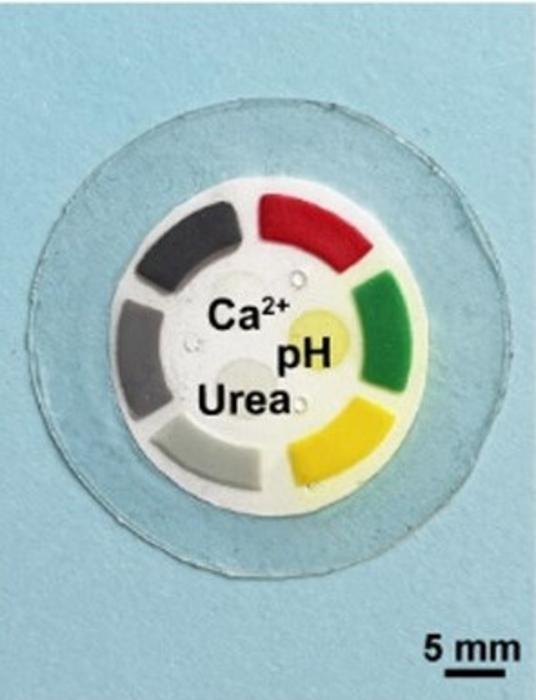
Credit: Adapted from ACS Sensors 2024, DOI: 10.1021/acssensors.3c02673
Excited about the Summer Olympics, but unsure how to spend the days leading up to the big event on July 26? Us, too! Here are four sports-related articles published in ACS journals to keep you engaged while waiting for your favorite race to start. Reporters can request free access to these papers by emailing newsroom@acs.org.
- Self-powered fitness tracker. Research published in ACS Sensors outlines a fabric-based prototype that can detect movement. The sensor, which could one day be used in personal devices, like fitness trackers, is powered by the friction generated by the wearer’s movement. The team says the sensor — a triboelectric nanogenerator — doesn’t contain the toxic materials found inside traditional rechargeable batteries and can be integrated into different equipment, like a badminton racket to monitor hitting force or a yoga mat to track whether poses are performed correctly.
- Mouthguards that are less of a mouthful. While these dental devices are effective at preventing injury, some athletes may forgo wearing them because the material is uncomfortably thick. So, to create thinner sports mouthguards, a team investigated a shear-stiffening material that becomes harder when hit. The authors explain in ACS Applied Biomaterials that their slimmer mouthguards provide enhanced shock absorption with less material than traditional mouthguards and can be made with existing fabrication methods.
- A stick-on sweat analyzer. Using moisture-wicking membranes, a low-tech sensor can simultaneously measure pH, urea and calcium in the wearer’s sweat by changing color. Researchers completed successful demonstrations of the sensor with human subjects running for 20 minutes in different temperatures and humidities. The stick-on, stretchable sweat sensor could be used for health and fitness monitoring, say the researchers in ACS Sensors.
- Machine learning could find sports supplements. Traditionally, high-throughput testing is used to screen for compounds that might work well in sports supplements, but the process can be time-consuming and expensive. Now, researchers report in ACS Omega how computer algorithms efficiently screened herbal medicines for active components that could be used in supplements. Cell-based assays validated the accuracy of the machine learning method, but the team says further research is needed to evaluate the compounds’ safety in humans.
###
The American Chemical Society (ACS) is a nonprofit organization chartered by the U.S. Congress. ACS’ mission is to advance the broader chemistry enterprise and its practitioners for the benefit of Earth and all its people. The Society is a global leader in promoting excellence in science education and providing access to chemistry-related information and research through its multiple research solutions, peer-reviewed journals, scientific conferences, eBooks and weekly news periodical Chemical & Engineering News. ACS journals are among the most cited, most trusted and most read within the scientific literature; however, ACS itself does not conduct chemical research. As a leader in scientific information solutions, its CAS division partners with global innovators to accelerate breakthroughs by curating, connecting and analyzing the world’s scientific knowledge. ACS’ main offices are in Washington, D.C., and Columbus, Ohio.
To automatically receive news releases from the American Chemical Society, contact newsroom@acs.org.
Note: ACS does not conduct research, but publishes and publicizes peer-reviewed scientific studies.
Follow us: X, formerly Twitter | Facebook | LinkedIn | Instagram
Cite Scienmag News
Bethany Barker. (July 11, 2024). Sporty chemistry news ahead of the Summer Olympics. Scienmag. https://scienmag.com/sporty-chemistry-news-ahead-of-the-summer-olympics/
Bethany Barker. "Sporty chemistry news ahead of the Summer Olympics." Scienmag, 11 July 2024, https://scienmag.com/sporty-chemistry-news-ahead-of-the-summer-olympics/. Accessed 4 September 2026.
Bethany Barker. "Sporty chemistry news ahead of the Summer Olympics." Scienmag. July 11, 2024. https://scienmag.com/sporty-chemistry-news-ahead-of-the-summer-olympics/

