


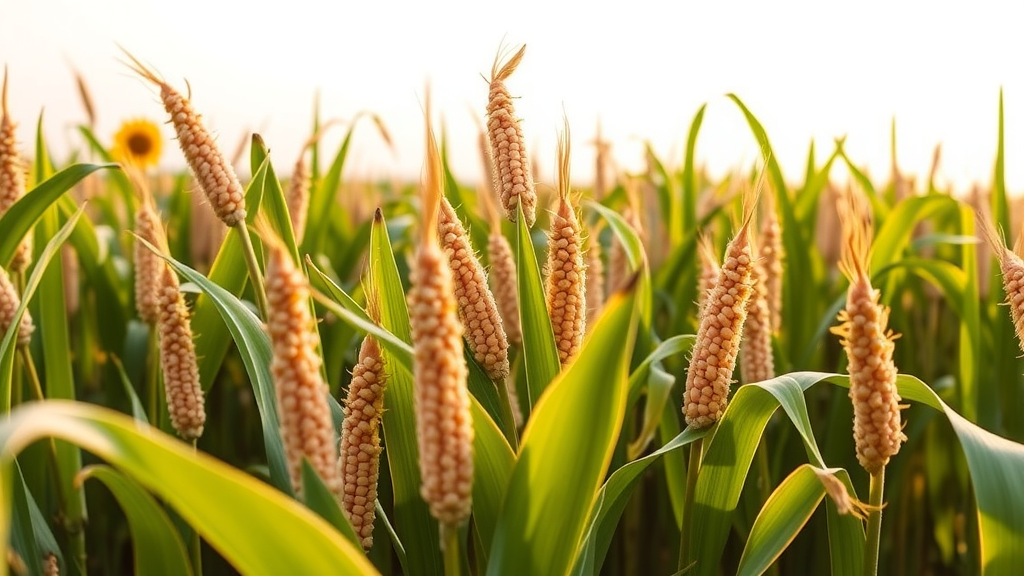
Maize is one of the hungriest crops on the planet, demanding enormous quantities of nitrogen fertilizer to fill its kernels each season. Yet much of that nitrogen never reaches the grain. It leaks into rivers as nitrate, escapes into the atmosphere as nitrous oxide, and lingers in soil as a latent pollutant. A new two-year field study from Texas A&M University, published in the journal Discover Soil, suggests that a deceptively simple change in fertilizer timing—splitting nitrogen applications between planting and the early reproductive stage—can keep maize productive while dramatically improving how efficiently the crop uses each kilogram of applied nitrogen, especially when drought strikes.
The research team, led by Kisman Bhattarai and Nithya Rajan of Texas A&M’s Department of Soil and Crop Sciences, conducted field experiments at the university’s research farm near College Station in 2021 and 2022. The site sits on Weswood silty clay loam in a humid subtropical climate, and the region’s rivers ultimately drain into the Gulf of Mexico, where nutrient-driven hypoxia has become a serious ecological concern. Maize in central Texas is grown primarily as a rainfed crop, making the interaction between fertilizer timing and rainfall a matter of both economic and environmental consequence.
The experimental design was thorough. The researchers tested eight different split nitrogen applications in 2021, ranging from applying all nitrogen at planting (a 100:0 split) to dividing it evenly between planting and the R1 silking stage (a 50:50 split). The full fertilizer rate was 240 kilograms of nitrogen per hectare, based on the highest recommended rate for corn in the region. In 2022, they added two reduced-rate treatments—50 percent and 25 percent of the full rate—to see whether cutting nitrogen inputs could maintain yields under stress. All treatments were replicated four times in a randomized complete block design, and the team measured everything from plant height and leaf area index to chlorophyll content, biomass, grain yield, plant nitrogen uptake, and residual soil nitrate at multiple depths down to 60 centimeters.
The two growing seasons could not have been more different, and that contrast turned out to be the study’s greatest asset. In 2021, growing-season precipitation totaled 572 millimeters, above the 20-year average of 508 millimeters, and timely rains coincided with the reproductive stages. In 2022, by stark contrast, only 100 millimeters of rain fell during the growing season—just 20 percent of the long-term average—accompanied by air temperatures one to three degrees Celsius higher than the previous year. The 2022 season was classified as drought-prone, and the results reflected it: average grain yield in fertilized plots collapsed from 11.67 megagrams per hectare in 2021 to 4.09 megagrams per hectare in 2022, a 63 percent decline.
Under the favorable conditions of 2021, the timing of nitrogen application had surprisingly little effect on final outcomes. Split applications did not change aboveground biomass or grain yield, although delaying 50 percent of the nitrogen until the R1 stage temporarily reduced leaf area index and chlorophyll content. Crucially, the plants recovered. Once the second fertilizer dose was applied, all split treatments showed rapid nitrogen uptake during early reproductive growth, and by the R5 stage there were no significant differences in plant nitrogen uptake among the split treatments. This recovery demonstrates that maize can compensate for early-season nitrogen deficits when water is available, absorbing substantial nitrogen during grain filling when demand peaks.
The drought year told a different and arguably more important story. Under severe water stress, reducing the nitrogen rate to 50 percent of the full application—120 kilograms per hectare instead of 240—did not reduce biomass or grain yield compared to full rates. Even more striking, the reduced rate improved nitrogen uptake efficiency and agronomic efficiency while slashing residual soil nitrate. The 50 percent treatment left 83 percent less residual nitrogen in the soil than the full-rate treatments, and the 25 percent treatment left 58 percent less. In 2022, between 40 and 60 percent of applied nitrogen remained as residual soil nitrate after harvest in the full-rate plots, with the highest treatment accumulating nearly 160 kilograms of residual nitrogen per hectare—fertilizer that had been paid for but never used, sitting in the soil as a future source of water contamination.
The physiological measurements revealed why drought changed the calculus. When soil moisture is scarce, plants cannot take up nitrogen regardless of how much is available, so extra fertilizer simply accumulates. Chlorophyll readings, taken with a handheld SPAD meter, declined from the V6 stage onward in all plots in 2022, even as plant nitrogen uptake continued to rise slowly. In 2021, by contrast, plant nitrogen uptake explained 86 percent of the variability in chlorophyll content at the silking stage, but in 2022 that relationship broke down entirely when both growth stages were combined. The study also found that cutting nitrogen to 25 percent of the full rate significantly reduced plant height, leaf area, chlorophyll content, and grain yield—establishing that there is a floor below which nitrogen reduction becomes genuinely yield-limiting, even under stress.
The efficiency metrics told a nuanced story. In the drought year, nitrogen uptake efficiency and agronomic efficiency were highest in the reduced-rate treatments, meaning each kilogram of fertilizer produced more grain and was recovered more completely by the crop. However, nitrogen utilization efficiency—grain yield per unit of nitrogen in the plant—declined at the 25 percent rate, showing that the crop could not convert such scarce nitrogen into grain effectively. Delaying 50 percent of nitrogen until R1 produced the highest nitrogen utilization efficiency in 2022, hinting that well-timed late applications help the crop convert absorbed nitrogen into yield even under stress.
The practical implications are significant for dryland maize systems facing increasingly erratic weather. The findings suggest a strategy of applying 50 percent of nitrogen at planting and holding the remainder in reserve, then deciding based on seasonal conditions whether to apply it. In a wet year, the second application supports rapid uptake during the nitrogen-hungry reproductive stages. In a drought year, farmers can skip or reduce the second application, saving money on fertilizer and fuel while avoiding the accumulation of unused nitrate that could leach into groundwater or run off into the Gulf of Mexico. With nitrogen fertilizer prices having risen sharply in recent years, the economic argument aligns neatly with the environmental one.
The authors caution that the differences in seasonal precipitation limited their ability to test nitrogen strategies under ideal conditions in both years, and they recommend further validation in non-drought seasons. Still, the core message is clear and actionable: adaptive nitrogen management—splitting applications, monitoring the weather, and adjusting rates in real time—can maintain productivity, enhance nitrogen use efficiency, and reduce environmental risk in dryland maize production. In an era when agriculture must feed a growing population while shrinking its footprint on water and climate, getting the timing and amount of nitrogen right may be one of the most powerful levers available.
Subject of Research: Effects of split and reduced nitrogen fertilizer application on maize growth, yield, and nitrogen use efficiency under variable rainfall conditions
Article Title: Split nitrogen application to soil improves maize agronomic performance and nitrogen use efficiency
Article References: Bhattarai, K., Salehin, S. M. U., Rajan, N., & Schnell, R. W. (2026). Split nitrogen application to soil improves maize agronomic performance and nitrogen use efficiency. Discover Soil, 3(1), Article 144. https://doi.org/10.1007/s44378-026-00295-w
Image Credits: AI Generated
DOI: 10.1007/s44378-026-00295-w
Keywords: maize, nitrogen fertilizer, split application, nitrogen use efficiency, drought, dryland agriculture, residual soil nitrate, grain yield, chlorophyll content, leaf area index, agronomic efficiency, sustainable farming
Cite Scienmag News
Alan Morgan. (September 13, 2026). Splitting Nitrogen Fertilizer Doses Boosts Maize Yields and Cuts Pollution. Scienmag. https://scienmag.com/splitting-nitrogen-fertilizer-doses-boosts-maize-yields-and-cuts-pollution/
Alan Morgan. "Splitting Nitrogen Fertilizer Doses Boosts Maize Yields and Cuts Pollution." Scienmag, 13 September 2026, https://scienmag.com/splitting-nitrogen-fertilizer-doses-boosts-maize-yields-and-cuts-pollution/. Accessed 5 October 2026.
Alan Morgan. "Splitting Nitrogen Fertilizer Doses Boosts Maize Yields and Cuts Pollution." Scienmag. September 13, 2026. https://scienmag.com/splitting-nitrogen-fertilizer-doses-boosts-maize-yields-and-cuts-pollution/


