


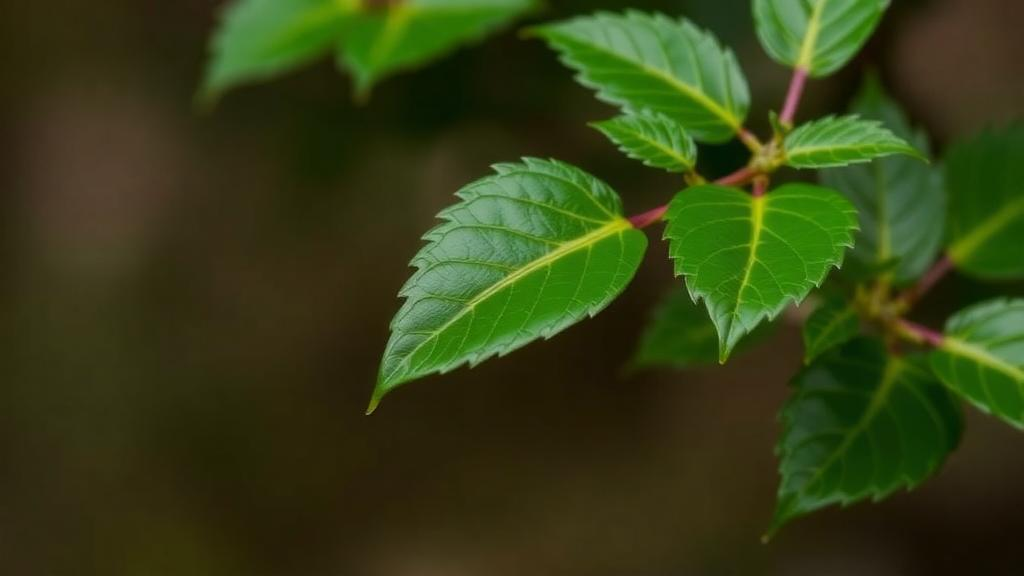
A tree that has quietly lined the temperate and tropical forests of Asia for centuries is now commanding attention in the laboratory. Vitex quinata, a member of the mint family Lamiaceae that botanists have long considered underexplored, has yielded a leaf essential oil with a striking portfolio of biological activities. In a study published in Plant Biosystems, researchers from Rama Devi Women’s University and Siksha O Anusandhan University in Bhubaneswar, India, report that the volatile oil extracted from the leaves of this species can inhibit the enzyme tyrosinase, suppress the growth of four medically important bacteria, and, most remarkably, disrupt the formation of bacterial biofilms, the slimy fortresses that make many infections so difficult to treat.
The research team, led by Alaka Mohanty and Sujata Mohanty, began with the foundational question of any natural product investigation: what exactly is in the oil? Using gas chromatography coupled with mass spectrometry, or GC–MS, the gold-standard technique for separating and identifying volatile compounds, they analyzed the chemical fingerprint of the leaf oil, known by the abbreviation VQLEO. The analysis revealed a complex mixture of 36 phytoconstituents. Three compounds dominated the profile: longifolene, a bulky sesquiterpene hydrocarbon, accounted for a remarkable 52.87 percent of the oil, followed by spathulenol at 9.54 percent and ar-curcumene at 5.74 percent. This dominance of longifolene is notable, because the chemical composition of essential oils can vary dramatically between species, populations, and even individual plants, and the major constituents often determine the biological behavior of the whole mixture.
Essential oils are concentrated hydrophobic liquids containing volatile aroma compounds that plants synthesize in specialized glands. They have served humanity as medicines, preservatives, and perfumes for millennia, but modern science is only now systematically cataloguing their chemistry and measuring their effects with rigorous assays. The Indian team’s work fits into a broader effort to screen the genus Vitex, which includes well-studied species such as Vitex negundo and Vitex agnus-castus, both of which have extensive ethnobotanical histories. By turning to the less famous V. quinata, the researchers hoped to find a chemical profile and activity spectrum distinct from its relatives, potentially revealing new leads for pharmacology, cosmetics, and agriculture.
The first biological test examined antioxidant capacity, the ability of a substance to neutralize reactive free radicals that damage cells and contribute to aging and disease. The researchers employed two complementary colorimetric assays, the DPPH and ABTS tests, which measure how effectively a compound scavenges synthetic radical dyes. Here the results were modest. The oil showed weak antioxidant activity in both assays, with IC50 values, the concentrations needed to neutralize half of the radicals, of 18.83 milligrams per milliliter for DPPH and 18.53 milligrams per milliliter for ABTS. These figures are high compared with potent antioxidant standards, which typically act at microgram levels, and the authors’ finding suggests that the sesquiterpene-rich composition of VQLEO does not translate into strong radical-scavenging power. This is a useful reminder that a plant oil can excel in one biological arena while remaining unremarkable in another.
The tyrosinase results tell a more interesting story. Tyrosinase is a copper-containing enzyme that catalyzes the rate-limiting steps of melanin biosynthesis, the biochemical pathway responsible for the pigmentation of skin, hair, and eyes. In dermatology and cosmetics, inhibitors of tyrosinase are prized ingredients for treating hyperpigmentation disorders such as melasma and age spots, and they also serve in food preservation, where browning caused by the enzyme degrades produce. The oil inhibited mushroom tyrosinase with an IC50 of 13.85 milligrams per milliliter. While this concentration is far above that of clinical inhibitors like kojic acid, the finding establishes V. quinata leaf oil as a genuine, if moderate, anti-tyrosinase agent, and it aligns with earlier reports of melanogenesis inhibition by essential oils from related Vitex species, including Vitex negundo, whose lignans were identified as tyrosinase inhibitors more than a decade ago.
The antibacterial screening is where the study delivers its most consequential numbers. The researchers tested the oil against four bacterial species of major clinical relevance: Escherichia coli, a Gram-negative gut bacterium and leading cause of urinary tract infections; Staphylococcus aureus, a Gram-positive pathogen notorious for antibiotic-resistant strains; Streptococcus mutans, the primary driver of dental caries; and Klebsiella pneumoniae, an encapsulated Gram-negative organism implicated in hospital-acquired pneumonia. Using broth microdilution methods aligned with the standards of the Clinical and Laboratory Standards Institute, the team determined minimum inhibitory concentrations, the lowest oil concentrations that prevent visible bacterial growth. VQLEO displayed significant antibacterial activity against all four organisms, with MIC values ranging from just 12.5 to 25 micrograms per milliliter. For an unfractionated essential oil, these values are impressively low and indicate that the oil’s constituents, individually or in synergy, potently interfere with bacterial physiology, likely by disrupting cell membranes, a mechanism common to many terpene-rich oils.
But the study’s boldest move was to go beyond killing or slowing planktonic, free-swimming bacteria and attack the biofilm lifestyle itself. Biofilms are structured communities of bacteria encased in a self-produced matrix of extracellular polymeric substances that adheres to surfaces. Within a biofilm, bacteria can be up to a thousand times more tolerant of antibiotics than their planktonic counterparts, because the matrix limits drug penetration and the slow-growing cells within it evade mechanisms that target actively dividing organisms. Biofilm-mediated infections by multidrug-resistant microbes are increasingly recognized as one of the most intractable problems in modern medicine, from catheter-associated infections to chronic wounds and dental plaque. Any natural compound that prevents biofilm formation at concentrations that do not necessarily kill the bacteria is therefore of great interest.
Testing at sub-inhibitory concentrations, doses below the level needed to stop growth outright, the researchers measured how effectively VQLEO prevented biofilms from forming, using a microtiter dish biofilm formation assay in which adherent biomass is stained and quantified. The results were striking. The oil inhibited biofilm formation most strongly against E. coli, achieving 79.41 percent inhibition, followed closely by S. aureus at 78.72 percent, S. mutans at 71.40 percent, and K. pneumoniae at 65.58 percent. In other words, at concentrations that the bacteria could survive, the oil still stripped away their ability to build their protective communities. This antibiofilm effect, observed across both Gram-positive and Gram-negative species, suggests that the oil’s constituents interfere with the early stages of surface adhesion or the production of the extracellular matrix, processes governed by quorum sensing and other regulatory networks that differ from the targets of conventional antibiotics.
The chemical composition offers clues to these activities. Longifolene, the overwhelmingly dominant constituent, is a tricyclic sesquiterpene found in numerous plant oils and has been associated with antimicrobial and anti-inflammatory properties in prior studies. Spathulenol, an oxygenated sesquiterpene, has itself been investigated for antioxidant, anti-inflammatory, and antimicrobial effects, including in work on the essential oil of Psidium guineense. Oxygenated sesquiterpenes like spathulenol tend to be more biologically active than pure hydrocarbons because their polar functional groups improve interaction with biological membranes and enzymes. The interplay between these major components and the remaining 33 minor constituents may involve synergistic effects, a phenomenon well documented in essential oil research, where whole oils sometimes outperform their isolated major compounds.
For V. quinata, a species distributed widely across temperate and tropical Asia yet largely absent from pharmacological literature, the study marks a significant step from obscurity toward evidence-based evaluation. The authors acknowledge that their work was conducted in vitro, in laboratory assays rather than in living organisms, and considerable work remains before any practical application could emerge: the active constituents must be isolated and confirmed, the mechanisms of biofilm inhibition elucidated at the molecular level, and safety and efficacy established in preclinical models. Nevertheless, the combination of potent antibacterial activity, broad antibiofilm protection, and measurable tyrosinase inhibition positions this underexplored tree as a promising subject for further phytochemical and pharmacological investigation. As antibiotic resistance continues to erode the effectiveness of conventional drugs and the cosmetics industry searches for plant-derived alternatives to synthetic skin-lightening agents, the humble leaf oil of Vitex quinata demonstrates that some of the most valuable chemical libraries are still growing quietly in the forests of Asia, waiting for the right analytical tools to read them.
Subject of Research: Chemical composition and antioxidant, anti-tyrosinase, antibacterial and antibiofilm activities of Vitex quinata leaf essential oil
Article Title: GC–MS characterization and biological activities of Vitex quinata leaf essential oil: Antioxidant, tyrosinase inhibitory and antibiofilm potential
Article References: Mohanty, A., Das, P. K., Sahoo, A., Nayak, S., Panda, P. C., & Mohanty, S. (2026). GC–MS characterization and biological activities of Vitex quinata leaf essential oil: Antioxidant, tyrosinase inhibitory and antibiofilm potential. Plant Biosystems, 160(4), Article 214. https://doi.org/10.1007/s44473-026-00214-5
Image Credits: AI Generated
DOI: 10.1007/s44473-026-00214-5
Keywords: Vitex quinata, essential oil, GC-MS, longifolene, spathulenol, antioxidant, tyrosinase inhibition, antibacterial, biofilm inhibition, antimicrobial resistance, natural products, Lamiaceae
Cite Scienmag News
Alan Morgan. (October 5, 2026). Leaf Oil from an Overlooked Asian Tree Blocks Bacterial Biofilms and Tyrosinase in New Study. Scienmag. https://scienmag.com/leaf-oil-from-an-overlooked-asian-tree-blocks-bacterial-biofilms-and-tyrosinase-in-new-study/
Alan Morgan. "Leaf Oil from an Overlooked Asian Tree Blocks Bacterial Biofilms and Tyrosinase in New Study." Scienmag, 5 October 2026, https://scienmag.com/leaf-oil-from-an-overlooked-asian-tree-blocks-bacterial-biofilms-and-tyrosinase-in-new-study/. Accessed 5 October 2026.
Alan Morgan. "Leaf Oil from an Overlooked Asian Tree Blocks Bacterial Biofilms and Tyrosinase in New Study." Scienmag. October 5, 2026. https://scienmag.com/leaf-oil-from-an-overlooked-asian-tree-blocks-bacterial-biofilms-and-tyrosinase-in-new-study/


