

Sunday, July 26, 2026
Science
No Result
View All Result
  • Login
  • HOME
  • SCIENCE NEWS
  • CONTACT US
  • HOME
  • SCIENCE NEWS
  • CONTACT US
No Result
View All Result
Scienmag
No Result
View All Result
Home Science News Marine

Sperm Whales Use Bubble Blowing for Restful, Upright Sleep

July 26, 2026
in Marine
Reading Time: 2 mins read
0
Sperm Whales Use Bubble Blowing for Restful, Upright Sleep

Sperm Whales Use Bubble Blowing for Restful, Upright Sleep

65
SHARES
587
VIEWS
Share on FacebookShare on Twitter
ADVERTISEMENT

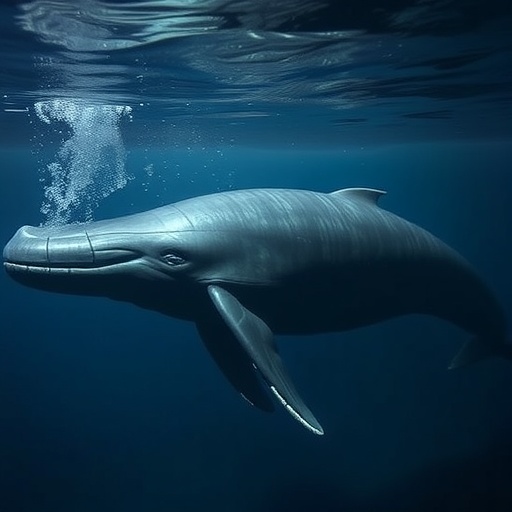
Sperm whales have long posed a puzzle for marine scientists: the only whale species known to rest vertically just beneath the ocean surface. This posture appears to help them sleep while limiting the jolting effects of surface waves, without paying the energetic cost of descending to deeper waters. But how do they stay in place, close enough to breathe yet stable enough to avoid drifting upward?

A new study by researchers from the University of St Andrews and Université de Neuchâtel reveals the mechanism that makes this near-surface “standing sleep” possible. The team reports that resting sperm whales actively release gas bubbles to regulate buoyancy, keeping them close to neutral buoyancy under the water’s surface.

The key challenge is physical: sperm whales are naturally positively buoyant. Their large heads contain spermaceti oil, which lowers overall density and tends to push them upward. If they simply relaxed without control, they would slowly rise while resting—until their physiology and the surrounding environment forced them to change behavior.

The answer involves diving gas dynamics. Because sperm whales are breath-hold divers, the gas already in their lungs expands gradually as external pressure decreases with ascent. That expansion would normally increase buoyancy and encourage the whales to rise faster. By releasing bubbles during rest, the animals counteract this shift, effectively reducing their net buoyancy.

To test the idea, the researchers used suction-cup tags deployed on sperm whales off the Norwegian coast. These devices recorded both three-dimensional movement and sound. The tags captured “clear bubble sounds,” providing direct evidence that bubble release occurs while whales are resting rather than only during active dives.

Using the movement and acoustic data, the team built a simulation that incorporated tissue density, drag forces, and changes in internal gas volume. The model reproduced the observed requirement: bubble release reduces positive buoyancy enough for whales to remain submerged with near-neutral stability.

The findings also suggest a behavioral implication. Resting dives appear to begin with less diving gas volume than deeper foraging dives, indicating that whales may fine-tune their internal conditions before switching into sleep mode. The authors further speculate that bubble release may connect to off-gassing of excess CO2 or N2 from tissues into the lungs, potentially influencing metabolic gas exchange as well.

Subject of Research: Animals (marine mammals; sperm whales)
Article Title: Buoyancy regulation through modulation of onboard gas volume by resting sperm whales (Physeter macrocephalus)
Web References: http://dx.doi.org/10.1242/jeb.251920
References: Journal of Experimental Biology, doi:10.1242/jeb.251920
Image Credits: University of St Andrews

Keywords: sperm whales; buoyancy regulation; marine ecology; breath-hold diving; gas bubbles; neutral buoyancy; tagging; underwater sleep; off-gassing; animal physiology

Tags: bubble blowing for buoyancy regulationdeep sea diving physiological mechanismsgas bubble production in whalesmarine mammal sleep adaptationsnear-surface whale sleepsperm whale sleep behaviorspermaceti oil and whale buoyancyunique whale resting strategiesvertical resting position in whaleswhale diving gas dynamicswhale respiratory and buoyancy controlwhale sleep posture and surface waves
Share26Tweet16
Previous Post

Recycling Helps, but Climate Change Still Requires Stronger Action

Next Post

Biomolecular Condensates Act as Unexpected Catalysts, Study Finds

Related Posts

NUS Researchers Create Electronic Skin That Senses, Heals, and Thrives Underwater
Marine

NUS Researchers Create Electronic Skin That Senses, Heals, and Thrives Underwater

July 18, 2026
Methane-Consuming River Bacteria Cannot Stop Human-Caused Climate Change
Marine

Methane-Consuming River Bacteria Cannot Stop Human-Caused Climate Change

July 17, 2026
ESA 2026 Annual Meeting to Spotlight Wildlife Ecology in Media Tip Sheet
Marine

ESA 2026 Annual Meeting to Spotlight Wildlife Ecology in Media Tip Sheet

July 17, 2026
Small Spatial Changes Reshape Baltic Sea Zooplankton Communities
Marine

Small Spatial Changes Reshape Baltic Sea Zooplankton Communities

July 17, 2026
How a Salt Surge Could Reshape Microbial Ecosystems
Marine

How a Salt Surge Could Reshape Microbial Ecosystems

July 17, 2026
Human Activities Weaken Coral Health and Reduce Their Resilience
Marine

Human Activities Weaken Coral Health and Reduce Their Resilience

July 17, 2026
Next Post
Biomolecular Condensates Act as Unexpected Catalysts, Study Finds

Biomolecular Condensates Act as Unexpected Catalysts, Study Finds

  • Mothers who receive childcare support from maternal grandparents show more

    Mothers who receive childcare support from maternal grandparents show more parental warmth, finds NTU Singapore study

    27656 shares
    Share 11059 Tweet 6912
  • University of Seville Breaks 120-Year-Old Mystery, Revises a Key Einstein Concept

    1061 shares
    Share 424 Tweet 265
  • Bee body mass, pathogens and local climate influence heat tolerance

    682 shares
    Share 273 Tweet 171
  • Researchers record first-ever images and data of a shark experiencing a boat strike

    546 shares
    Share 218 Tweet 137
  • Groundbreaking Clinical Trial Reveals Lubiprostone Enhances Kidney Function

    531 shares
    Share 212 Tweet 133
Science

Embark on a thrilling journey of discovery with Scienmag.com—your ultimate source for cutting-edge breakthroughs. Immerse yourself in a world where curiosity knows no limits and tomorrow’s possibilities become today’s reality!

RECENT NEWS

  • Study shows climate change alters cooling efficiency and increases energy demand
  • Generic semaglutide availability may lower barriers to affordable diabetes care
  • Biochar Assessment Should Focus on Soil Performance, Not Lab Appearance
  • Could a Robot Tutor Provide Too Much Help?

Categories

  • Agriculture
  • Anthropology
  • Archaeology
  • Athmospheric
  • Biology
  • Biotechnology
  • Blog
  • Bussines
  • Cancer
  • Chemistry
  • Climate
  • Earth Science
  • Editorial Policy
  • Marine
  • Mathematics
  • Medicine
  • Pediatry
  • Policy
  • Psychology & Psychiatry
  • Science Education
  • Social Science
  • Space
  • Technology and Engineering

Subscribe to Blog via Email

Enter your email address to subscribe to this blog and receive notifications of new posts by email.

Join 5,146 other subscribers

© 2025 Scienmag - Science Magazine

Welcome Back!

Login to your account below

Forgotten Password?

Retrieve your password

Please enter your username or email address to reset your password.

Log In
No Result
View All Result
  • HOME
  • SCIENCE NEWS
  • CONTACT US

© 2025 Scienmag - Science Magazine

Discover more from Science

Subscribe now to keep reading and get access to the full archive.

Continue reading
