

Sunday, July 26, 2026
Science
No Result
View All Result
  • Login
  • HOME
  • SCIENCE NEWS
  • CONTACT US
  • HOME
  • SCIENCE NEWS
  • CONTACT US
No Result
View All Result
Scienmag
No Result
View All Result
Home Science News Biology

Biomolecular Condensates Act as Unexpected Catalysts, Study Finds

July 26, 2026
in Biology
Reading Time: 2 mins read
0
Biomolecular Condensates Act as Unexpected Catalysts, Study Finds

Biomolecular Condensates Act as Unexpected Catalysts, Study Finds

65
SHARES
587
VIEWS
Share on FacebookShare on Twitter
ADVERTISEMENT

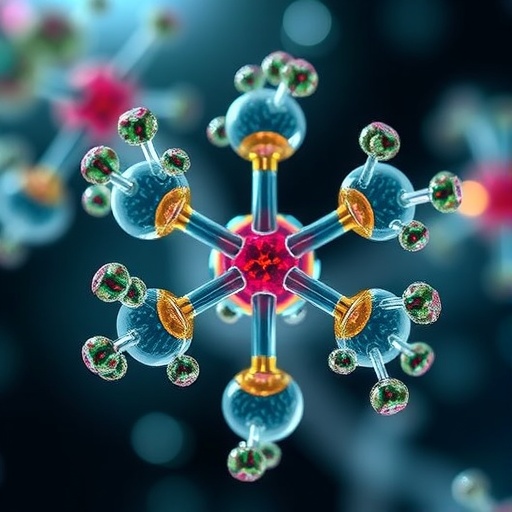
Membraneless biomolecular condensates—assemblies of DNA, RNA, and proteins—are emerging as active players in living cells rather than passive storage sites. These phase-separated “molecular communities” bring diverse molecules into close proximity, creating microenvironments where reactions can accelerate. For years, most work focused on the protein and nucleic acid components thought to drive condensate behavior. Now, new findings add an unexpected catalyst layer to condensate chemistry.

In research led by Yifan Dai and Rohit V. Pappu at Washington University in St. Louis, the team discovered “condenzymes”: condensates that catalyze reactions despite lacking the traditional catalytic machinery one would expect from enzymes. The central idea is that phase separation itself generates emergent catalytic function, turning otherwise noncatalytic mixtures into reactive interfaces.

The study shows that condensates formed from intrinsically disordered proteins can establish electric fields at their surfaces. These fields influence chemical reactivity, promoting reactions such as esterolysis (ester bond cleavage into an acid and alcohol) and hydrolysis (water-assisted bond breaking). Rather than relying on specific catalytic motifs, the condensate interface acts as the functional engine.

To connect physical chemistry to catalysis, the authors combined measurements and modeling with interdisciplinary collaboration across institutions including Columbia, Stanford, and Harvard. Their results link two key factors: the surface electric field created by the condensate and fundamental alterations in how water molecules behave at condensate interfaces. Together, these effects reshape the local reaction environment.

Beyond model reactions, the condensate behavior extends to broader substrates. The “condenzyme” effect enables hydrolysis across a variety of compounds. Importantly for cellular energetics, condensates can catalyze the breakdown of adenosine triphosphate (ATP), a central molecule for energy transfer in cells.

Dai reports that the findings hold relevance in bacterial cells, where condensed-phase catalysis could change how the biochemical landscape is established. In that context, condensates may help organize metabolism through spatially localized reaction acceleration, adding a new dimension to how cellular chemistry is regulated.

The work reframes a long-standing debate about whether condensates are merely bystanders. By demonstrating inherent catalytic activity, the study suggests cells either evolved mechanisms to exploit condenzyme function or developed strategies to suppress it when necessary.

Published in Molecular Cell on July 24, 2026, the research positions condenzymes as a new archetype for understanding biochemistry in phase-separated environments. The authors anticipate implications for physiology, disease, and synthetic biology, where designing reactive condensate systems could become a future tool.

Subject of Research: Membraneless biomolecular condensates as inherent catalysts (condenzymes)
Article Title: Condenzymes: Biomolecular condensates can function as inherent catalyts
News Publication Date: July 24, 2026
Web References: https://doi.org/10.1016/j.molcel.2026.07.008
References: Chen MW, Guo X, Farag M, Qian N, et al. Molecular Cell (July 24, 2026). DOI: 10.1016/j.molcel.2026.07.008
Image Credits:
Keywords: biomolecular condensates, phase separation, catalysis, electric fields, water interfacial effects, hydrolysis, ATP, intrinsically disordered proteins

Tags: biomolecular condensates as catalystscondensates facilitating biochemical reactionselectric fields at condensate surfaces influencing reactivityemergent catalytic activity in protein-RNA assembliesformation of "condenzymes" within cellular microenvironmentsimpact of phase separation on enzymatic processesimplications for understandinginterdisciplinary research in biomolecular condensatesmembraneless organelles in cell biologynovel mechanisms of cellular catalysisphase-separated cellular compartmentsrole of intrinsically disordered proteins in phase separation
Share26Tweet16
Previous Post

Sperm Whales Use Bubble Blowing for Restful, Upright Sleep

Next Post

Reciprocal cross-border learning uses education to build bridges during turbulence

Related Posts

Reproductive Isolation and Gene Introgression Sculpt Genomic Landscape in Hawaiian Alga
Biology

Reproductive Isolation and Gene Introgression Sculpt Genomic Landscape in Hawaiian Alga

July 26, 2026
GHP-88310 blocks airborne and contact transmission in ferret measles model
Biology

GHP-88310 blocks airborne and contact transmission in ferret measles model

July 26, 2026
Study Targets Flesh-Eating Screwworm by Researching Foul Odor Detection
Biology

Study Targets Flesh-Eating Screwworm by Researching Foul Odor Detection

July 26, 2026
The concealed geometry behind breeding constraints
Biology

The concealed geometry behind breeding constraints

July 18, 2026
Organic fertilizer helps biochar immobilize cadmium in contaminated soil
Biology

Organic fertilizer helps biochar immobilize cadmium in contaminated soil

July 17, 2026
Asteroid impact may have reshaped tuna evolution alongside dinosaur extinction
Biology

Asteroid impact may have reshaped tuna evolution alongside dinosaur extinction

July 17, 2026
Next Post
Reciprocal cross-border learning uses education to build bridges during turbulence

Reciprocal cross-border learning uses education to build bridges during turbulence

  • Mothers who receive childcare support from maternal grandparents show more

    Mothers who receive childcare support from maternal grandparents show more parental warmth, finds NTU Singapore study

    27656 shares
    Share 11059 Tweet 6912
  • University of Seville Breaks 120-Year-Old Mystery, Revises a Key Einstein Concept

    1061 shares
    Share 424 Tweet 265
  • Bee body mass, pathogens and local climate influence heat tolerance

    682 shares
    Share 273 Tweet 171
  • Researchers record first-ever images and data of a shark experiencing a boat strike

    546 shares
    Share 218 Tweet 137
  • Groundbreaking Clinical Trial Reveals Lubiprostone Enhances Kidney Function

    531 shares
    Share 212 Tweet 133
Science

Embark on a thrilling journey of discovery with Scienmag.com—your ultimate source for cutting-edge breakthroughs. Immerse yourself in a world where curiosity knows no limits and tomorrow’s possibilities become today’s reality!

RECENT NEWS

  • Study shows climate change alters cooling efficiency and increases energy demand
  • Generic semaglutide availability may lower barriers to affordable diabetes care
  • Biochar Assessment Should Focus on Soil Performance, Not Lab Appearance
  • Could a Robot Tutor Provide Too Much Help?

Categories

  • Agriculture
  • Anthropology
  • Archaeology
  • Athmospheric
  • Biology
  • Biotechnology
  • Blog
  • Bussines
  • Cancer
  • Chemistry
  • Climate
  • Earth Science
  • Editorial Policy
  • Marine
  • Mathematics
  • Medicine
  • Pediatry
  • Policy
  • Psychology & Psychiatry
  • Science Education
  • Social Science
  • Space
  • Technology and Engineering

Subscribe to Blog via Email

Enter your email address to subscribe to this blog and receive notifications of new posts by email.

Join 5,146 other subscribers

© 2025 Scienmag - Science Magazine

Welcome Back!

Login to your account below

Forgotten Password?

Retrieve your password

Please enter your username or email address to reset your password.

Log In
No Result
View All Result
  • HOME
  • SCIENCE NEWS
  • CONTACT US

© 2025 Scienmag - Science Magazine

Discover more from Science

Subscribe now to keep reading and get access to the full archive.

Continue reading
