


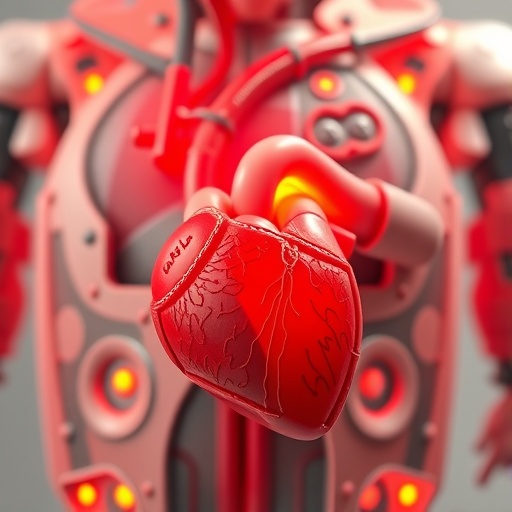
The landscape of cardiovascular medicine is on the brink of a transformative evolution, propelled by the advent of soft robotic technologies. Traditional devices and simulators employed in cardiovascular disease management have long struggled with inherent limitations — their rigidity, lack of biomimetic fidelity, and the invasive nature of surgical procedures often hinder clinical outcomes. In stark contrast, soft robotic devices emerge as a revolutionary solution, presenting structures and functions that closely mimic the compliance, flexibility, and dynamics of native tissues. This breakthrough is not merely incremental; it promises to redefine how cardiovascular diseases are modeled, treated, and managed, ushering in an era of advanced patient-specific care.
The fundamental challenge in cardiovascular interventions lies in the interface between man-made devices and the inherently delicate, dynamic biological tissues. Conventional rigid simulators, although pivotal in current clinical training and device testing, often fall short in replicating the nuanced biomechanical and electrophysiological properties of the heart and vasculature. This mismatch induces artificial stress concentrations and limits the accuracy of preclinical validations. Soft robotic technology, utilizing materials inspired by the viscoelastic and anisotropic characteristics of cardiovascular tissues, offers unparalleled biomimetic fidelity. These devices can deform and operate harmoniously with the cardiac environment, providing realistic simulations and therapeutic options that are minimally invasive.
One of the most promising frontiers illuminated by the rise of soft robotics is the development of soft robotic simulators. These sophisticated platforms, including in vitro ventricular simulators and in vivo assistive models, are engineered to replicate the biomechanical functions of the heart with exquisite precision. Unlike traditional simulators, these systems can emulate the contractile mechanics, intracardiac pressure dynamics, and electrical conduction patterns. This capability is crucial in advancing our understanding of complex pathophysiological conditions such as heart failure and arrhythmias, enabling clinicians and researchers to explore therapeutic interventions and device responses in controlled yet physiologically relevant environments.
Beyond simulation, soft robotic technology is revolutionizing interventional cardiovascular instruments. Percutaneous devices designed with soft robotic principles offer enhanced flexibility and adaptability, allowing navigation through tortuous vascular pathways with minimized risk of endothelial damage. Continuum instruments, a class of flexible, steerable tools, benefit extraordinarily from soft robotics, empowering surgeons with unprecedented dexterity and control during endovascular procedures. Moreover, the advent of untethered, miniaturized soft robots capable of remote navigation within the vascular system opens a new frontier for targeted drug delivery, embolism retrieval, and localized interventions, reducing the need for invasive surgeries and enhancing patient recovery.
The clinical translation of soft robotic implants holds immense promise in addressing challenging cardiovascular diseases. For vascular diseases, soft robotic stents and grafts adapt dynamically to pulsatile blood flow and vascular compliance, potentially reducing complications such as restenosis and thrombosis. In arrhythmia management, soft robotic pacing and defibrillation devices can achieve intimate and conformal contact with myocardial tissue, improving the efficacy and longevity of electrical therapies. Most notably, in heart failure patients, soft robotic ventricular assist devices exhibit the potential to replicate native cardiac mechanics more faithfully than their rigid counterparts, ensuring better hemodynamic support and reduced thrombogenic risks.
Technical implementation of soft robotic devices in cardiovascular medicine relies on an interdisciplinary synergy of materials science, mechanical engineering, and bioelectronics. Soft, biocompatible elastomers combined with intricate microfluidic networks and embedded sensors create devices that sense, respond, and adapt to physiological changes in real-time. Advanced manufacturing techniques, including 3D printing and laser cutting, enable precise fabrication of complex geometries optimized for individual patient anatomy. Moreover, integration of soft actuators such as pneumatic, hydraulic, or electroactive polymers facilitates active deformation and force generation, critical for mimicking cardiac contractions and vascular tone regulation.
However, the path from laboratory innovation to clinical adoption is fraught with challenges. Biocompatibility and long-term durability of soft materials under the dynamic and chemically hostile cardiovascular environment remain critical concerns. Device control and feedback mechanisms require refinement to ensure reliable, predictable operation synchronized with native cardiac cycles. Regulatory frameworks need to adapt to evaluate the unique properties and functionalities of these soft robotic implants. Nevertheless, ongoing translational research and iterative prototyping continue to address these challenges, demonstrating increasing clinical maturity of prototypes tested in preclinical models and early human trials.
Soft robotic simulators not only advance therapeutic research but also transform educational paradigms. Medical trainees can utilize highly realistic cardiac models that simulate physiological responses and pathological conditions dynamically, enhancing experiential learning and surgical skill acquisition. This educational impact is profound, as it reduces reliance on animal models and cadaveric specimens, promoting ethical research and accelerating translational pathways. Soft robotic simulation platforms are envisioned to evolve into comprehensive modules integrating hemodynamics, electrophysiology, and tissue mechanics, enabling holistic cardiovascular education.
In the cardiovascular interventional arena, soft robotic instruments empower minimally invasive procedures with heightened precision and safety. Their compliance allows devices to traverse complex anatomical geometries without imposing injury risks. Feedback-rich designs incorporating embedded sensors provide real-time data on device-tissue interactions, guiding clinicians during navigation and intervention. Additionally, the development of autonomous or semi-autonomous soft robotic systems controlled via remote interfaces could revolutionize surgical robotics, expanding access to high-quality cardiovascular care in underserved regions.
Soft robotic implants offer the tantalizing possibility of personalized medicine in cardiology. Customizable devices can be tailored to patient-specific anatomy and pathophysiology, informed by advanced imaging and computational modelling. Adjustments in material stiffness, device geometry, and actuation patterns allow for bespoke mechanical therapies that adapt to disease progression or recovery. This adaptability contrasts starkly with the standardized, one-size-fits-all approach of conventional cardiac devices and could substantially improve patient outcomes, quality of life, and device longevity.
On the technological horizon, emerging innovations promise to elevate soft robotic cardiovascular devices further. Integration of bioresorbable materials may pave the way for temporary implants that provide mechanical support during healing phases and subsequently dissolve harmlessly, obviating the need for removal surgeries. Wireless energy transfer and ultralow-power electronics could enable permanently implanted soft robotic devices with sustained function and minimal maintenance. Coupling soft robotics with advanced imaging modalities and artificial intelligence will enhance device navigation, diagnostics, and therapeutic personalization, shaping the next generation of precision cardiovascular medicine.
Nevertheless, to realize the full potential of soft robotic devices in cardiovascular medicine, a concerted translational roadmap is essential. This pathway must encompass robust preclinical validation, standardized testing protocols, interdisciplinary collaboration between engineers, clinicians, and regulatory bodies, and carefully designed clinical trials assessing safety and efficacy. Commercial scalability and cost-effectiveness will influence widespread adoption. Patient acceptability and ethical considerations surrounding implantable soft robots require proactive engagement to build trust and acceptance in real-world clinical practice.
In summary, soft robotic technology is at the vanguard of a paradigm shift in cardiovascular medicine. By transcending the mechanical and biological mismatches of traditional devices, these innovations are enhancing biomimicry, reducing invasiveness, and ushering in an era where cardiac simulators, instruments, and implants operate harmoniously within the dynamic cardiovascular milieu. This emerging technology promises to redefine diagnosis, intervention, rehabilitation, and education in cardiovascular healthcare, with the potential to significantly reduce morbidity and mortality from heart diseases globally.
The convergence of soft robotics with cardiovascular science exemplifies the transformative power of interdisciplinary innovation. As research accelerates and clinical translation advances, the deployment of soft robotic devices will likely become integral to cardiology practice within the next decade. This will not only improve patient experiences but also catalyze new standards of care tailored to individual physiological and pathological nuances. The horizon of cardiovascular medicine is undeniably soft, flexible, and intelligent — heralding a new dawn in the fight against the world’s leading cause of death.
Cite Scienmag News
Frances Kline. (April 17, 2026). Soft Robotics Revolutionize Cardiovascular Medicine. Scienmag. https://scienmag.com/soft-robotics-revolutionize-cardiovascular-medicine/
Frances Kline. "Soft Robotics Revolutionize Cardiovascular Medicine." Scienmag, 17 April 2026, https://scienmag.com/soft-robotics-revolutionize-cardiovascular-medicine/. Accessed 4 September 2026.
Frances Kline. "Soft Robotics Revolutionize Cardiovascular Medicine." Scienmag. April 17, 2026. https://scienmag.com/soft-robotics-revolutionize-cardiovascular-medicine/


