


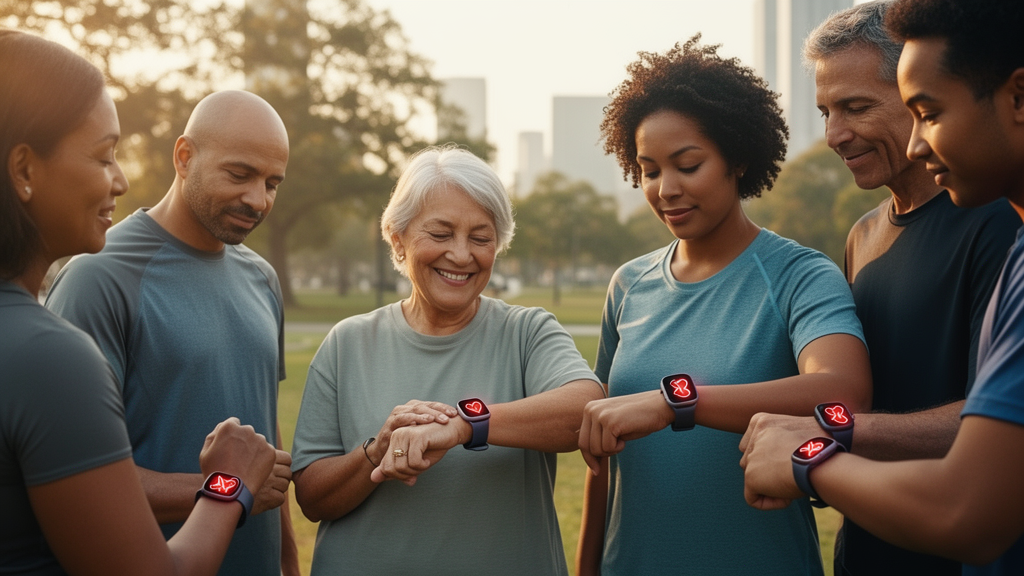
Cardiovascular disease remains the world’s leading cause of death, claiming an estimated 17 million lives in 2019, a figure projected to climb to 23.3 million by 2030. For decades, medical progress pushed cardiovascular mortality steadily downward, but that momentum has stalled. Recent evidence shows age-standardised cardiovascular mortality is now rising in some populations, particularly in low- and middle-income countries. The stagnation has alarmed researchers and public health officials alike, because it suggests that the tools and strategies that once delivered dramatic gains are no longer sufficient on their own. A new editorial published in PLOS Medicine argues that an unexpected ally may be sitting on millions of wrists: the smartwatch, a consumer gadget whose continuous stream of heart-related data could become one of the most powerful research resources in modern cardiology, provided that formidable ethical and logistical obstacles can be overcome.
The case for looking beyond traditional biobanks rests on a structural weakness in how cardiovascular research is currently conducted. Large-scale databases such as UK Biobank, the All of Us Research Program, and the China Kadoorie Biobank contain cardiovascular data from hundreds of thousands of participants and have already informed work on predictive models and drug repurposing. Yet these resources typically rely on single-country data and participant pools that do not reflect the general population. That lack of representativeness limits how well findings generalise across different geographies, ethnicities, and socioeconomic groups, ultimately constraining the effectiveness of the research they support. A database built from smartwatches, by contrast, would draw on a device worn by nearly a quarter of the world’s population, spanning continents and demographics in a way no conventional cohort study could realistically achieve.
The clinical potential of smartwatch data is no longer speculative. Every day, these devices track heart rate, heart rate variability, blood pressure, and sleep quality, generating a longitudinal record of cardiovascular function that would have been unimaginable a generation ago. Case reports have documented smartwatch data leading to diagnoses of conditions such as cardiomyopathy and atrial fibrillation, giving patients the chance for early intervention before catastrophic events occur. In one observational clinical study, smartwatch-derived heart rate variability data showed high concordance with high-resolution electrocardiogram measurements in patients with established cardiovascular disease, demonstrating that consumer-grade sensors can approach the accuracy of clinical gold standards. As wearables become more accurate and their measurements more diverse, research institutions and technology companies have begun formal partnerships to harness this data at scale.
Several flagship initiatives illustrate what is already possible. The British Heart Foundation Data Science Centre has explored how to integrate smartphone and wearable information into a resource that can be linked to participants’ National Health Service records and to cardiovascular outcomes. Apple has partnered with the American Heart Association and Brigham and Women’s Hospital on the Apple Heart & Movement Study, which collects individual-level data to explore the relationships between activity, wellness, and health. Singapore has launched Health Insights Singapore, known as hiSG, in which participants are provided with a smartwatch to take part in a study assessing the health behaviours and lifestyles of residents. These programmes demonstrate that large-scale wearable-based cardiovascular research is feasible, but they also expose the barriers that must be resolved before such efforts can deliver equitable, globally representative science.
One of the thorniest issues is the tension between commercial and research ethics. Research using patient data is traditionally conducted under strict ethical guidelines, but data collected by smartwatch companies is typically geared toward commercial and profit-oriented goals. If that data were repurposed for research, companies would likely need to adhere to more stringent ethical requirements, particularly around confidentiality, which could prove difficult when commercial and research interests conflict. The Apple Heart & Movement Study offers a cautionary example: although the study allows users to share their health records through a smartphone app, only about 10 percent of users were able to do so, owing to difficulties in interoperability between health records systems and smartwatch apps. The episode highlights persistent problems of data standardisation and sharing, complications that multiply when researchers attempt to integrate data across multiple smartwatch manufacturers to maximise the number of participants.
Beneath these organisational challenges lie genuine technical problems rooted in how the devices themselves work. Modern smartwatches generally rely on photoplethysmography, a low-cost optical technique that detects blood volume changes in the skin’s microvasculature to obtain direct heart rate measurements. Manufacturers then apply proprietary sensors and algorithms to derive additional metrics such as resting heart rate, meaning that identical physiological states can produce different readings on different devices. Standardisation between devices is therefore essential if data from millions of heterogeneous wearables is to be pooled meaningfully. More troubling still, research indicates that photoplethysmography may perform less accurately on darker skin tones due to melanin’s effect on light absorption, a disparity that demands correction algorithms and additional validation to ensure the resulting datasets remain accurate and representative of the full diversity of the populations they claim to describe.
Equity concerns extend well beyond sensor physics. A scoping review found that while wearables can help reduce cardiovascular disease burden in low- and middle-income countries, adoption is hindered by technological literacy, cost, and cultural considerations. As smartwatches grow more sophisticated and potentially less user-friendly, ownership among older adults, a population at the highest cardiovascular risk, may actually decline. Affordability compounds the problem: in 2019, 31 percent of US households that purchased a smartwatch earned more than 75,000 dollars, while only 12 percent of households earning under 30,000 dollars owned one. Individuals with lower incomes who do own devices often hold older or cheaper models that track heart-related biometrics less comprehensively and less accurately. Ethnic representation is equally problematic. In a public survey by the British Heart Foundation on which smartwatch data would be most useful for cardiovascular research, only 6 percent of the 194 respondents identified as non-white, a figure that, while not reflecting the demographics of smartwatch owners overall, signals the risk of research being shaped by and tailored toward particular groups, thereby entrenching the very health inequities such research aims to reduce.
Potential remedies are already being tested. Researchers and manufacturers could provide subsidised smartwatches, as the hiSG initiative in Singapore is doing, paired with targeted subsidy schemes and educational campaigns in low- and middle-income countries, and hands-on training for individuals willing to participate but facing practical limitations. Data governance presents a parallel challenge. Ownership of smartwatch data is dictated by terms and conditions that consumers agree to when purchasing a device or using its apps. While the most popular manufacturers maintain that consumers own their data and can delete it at any time, the same terms usually specify that the company can control and share that data. In the Apple Heart & Movement Study, data access is granted to Apple, Brigham and Women’s Hospital, the American Heart Association, and the Research Studies Support Center. Any international database would need to comply with research policies from multiple countries and with consumer disclosure laws governing how the data is used by both manufacturers and research stakeholders. Consumers will need genuine reassurance about safety, particularly regarding involuntary surveillance and medicalisation, communicated through concise and accessible means rather than buried in excessively lengthy legal documents.
The scientific payoff, if these hurdles can be cleared, would be substantial. Mapping longitudinal cardiovascular data from smartwatches could reveal the early physiological changes that precede the onset of cardiovascular disease, improving disease prediction and opening windows for early intervention. Connecting biometric data to cardiovascular outcomes and integrating it into researcher-accessible databases could accelerate insights into arrhythmia, hypertension, heart failure, and ischaemic events, ultimately supporting the optimisation of treatment. The hope articulated in the editorial is that such efforts, by sharpening prediction, diagnosis, and early intervention, could reverse the stagnated progress in reducing global cardiovascular mortality. But the authors are clear that this outcome is not automatic. It depends on smartwatch manufacturers and researchers working collaboratively to build globally representative databases, maximise their scientific utility, and place equitable research goals at the centre of the enterprise rather than treating them as an afterthought.
The smartwatch on a commuter’s wrist is, in effect, an unfinished clinical instrument: rich in potential, uneven in accuracy, and governed by rules written for commerce rather than science. Whether the billions of heartbeats it records each day become the foundation of a truly global cardiovascular database or merely another source of commercial data will depend on decisions now being made about standardisation, privacy, and access. The editorial’s message is ultimately one of conditional optimism. The technology exists, the partnerships have begun, and the clinical evidence is accumulating. What remains is the harder work of ensuring that the benefits of wearable-driven cardiovascular research reach the populations where the disease burden is greatest, not just those who can afford the newest device.
Subject of Research: Using smartwatch-derived cardiovascular data for equitable cardiovascular disease research
Article Title: From wrist to research: Harnessing smartwatch data for equitable cardiovascular research
Article References: Kaur, M., & on behalf of the PLOS Medicine Staff Editors (2026). From wrist to research: Harnessing smartwatch data for equitable cardiovascular research. PLOS Medicine, 23(9), e1005260. https://doi.org/10.1371/journal.pmed.1005260
Image Credits: AI Generated
DOI: 10.1371/journal.pmed.1005260
Keywords: smartwatches, cardiovascular disease, wearable technology, photoplethysmography, health equity, biobanks, data privacy, heart rate variability, low- and middle-income countries, digital health, atrial fibrillation, data standardisation
Cite Scienmag News
Ophelia Keating. (October 9, 2026). Smartwatches Could Transform Heart Research If Equity Barriers Fall. Scienmag. https://scienmag.com/smartwatches-could-transform-heart-research-if-equity-barriers-fall/
Ophelia Keating. "Smartwatches Could Transform Heart Research If Equity Barriers Fall." Scienmag, 9 October 2026, https://scienmag.com/smartwatches-could-transform-heart-research-if-equity-barriers-fall/. Accessed 9 October 2026.
Ophelia Keating. "Smartwatches Could Transform Heart Research If Equity Barriers Fall." Scienmag. October 9, 2026. https://scienmag.com/smartwatches-could-transform-heart-research-if-equity-barriers-fall/


