


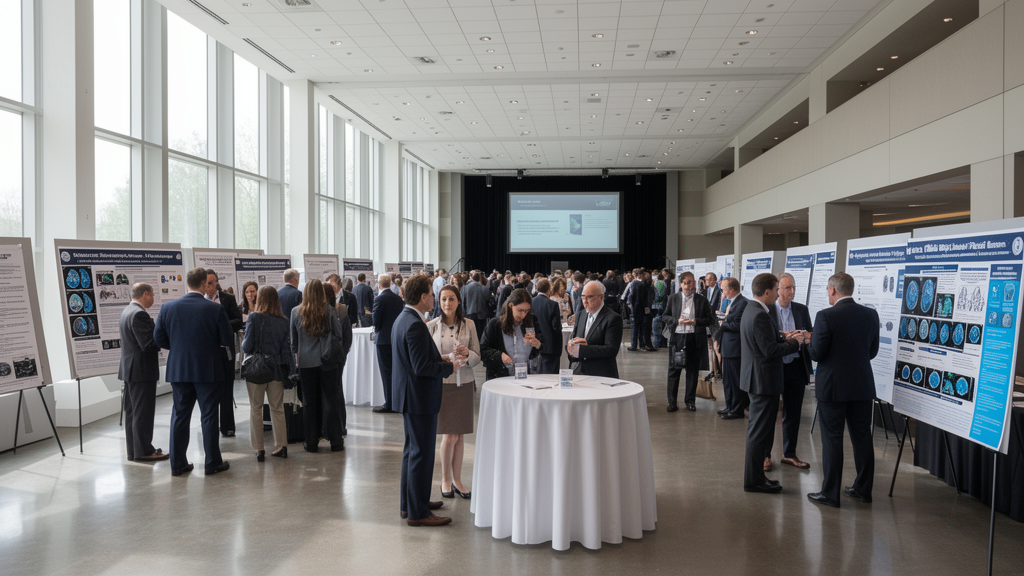
Each year, the Neurocritical Care Society convenes clinicians, scientists, and trainees from around the world to share the newest findings in the care of patients with life-threatening neurological illness. The society’s twenty-fourth annual meeting, scheduled for 2026, is now represented in the scientific literature through a dedicated collection of abstracts published in the journal Neurocritical Care. The collection, released by Springer Nature under the DOI 10.1007/s12028-026-02638-5, compiles the short research summaries submitted for presentation at the meeting, giving the international community a citable, permanent record of the work on display long before many of the underlying studies appear as full papers.
Abstract collections occupy a distinctive place in biomedical publishing. Unlike a conventional review or original research article, an abstract supplement is a snapshot of work in progress: hundreds of concise summaries, each typically describing a single study, case series, quality-improvement project, or technological innovation. The format trades depth for breadth and immediacy. A reader can scan the entire landscape of a field in a single sitting, identifying which questions are attracting attention, which methods are gaining traction, and where the field’s energy is heading. For meeting attendees, the collection functions as a companion volume to the oral and poster sessions; for those who cannot attend, it offers a structured window into conversations they would otherwise miss entirely.
Neurocritical care itself is one of the youngest subspecialties in medicine, and its rapid maturation is part of what makes annual abstract collections from the society so closely watched. The field emerged from the recognition that patients with severe brain injury, whether caused by trauma, stroke, hemorrhage, seizures, or infection, require intensive management that addresses not only the primary insult but also the secondary injuries that unfold in the hours and days afterward. Elevated intracranial pressure, disrupted cerebral blood flow, metabolic derangements, and inflammation can each compound the original damage. Preventing those secondary insults is the central task of the neurocritical care unit, and it demands expertise that spans neurology, neurosurgery, anesthesiology, emergency medicine, nursing, and pharmacy.
The scope of work typically presented at the society’s meetings reflects that interdisciplinary character. In past cycles, abstracts have ranged from clinical trials and large observational cohort analyses to bedside physiology studies, investigations of novel monitoring technologies, surveys of practice variation across institutions and countries, and analyses of outcomes and health equity. Quality-improvement and implementation science projects are well represented as well, since translating evidence into consistent bedside practice remains one of the field’s persistent challenges. The 2026 abstracts continue this tradition, gathering contributions from investigators at every career stage, including a substantial share from trainees whose first scientific presentations often begin as meeting abstracts.
For researchers, the publication of meeting abstracts in a peer-reviewed journal serves several practical functions. It establishes priority by timestamping an idea or finding in the permanent record. It allows the work to be cited while the full manuscript is being prepared, which matters enormously in fast-moving areas where a two-year lag between meeting presentation and journal publication can render a finding stale. It also provides early-career investigators with a citable entry on their records at a stage when authorship on a full paper may still be months or years away. Journals in the field, including Neurocritical Care, have long treated these supplements as an integral part of their annual publishing cycle rather than an afterthought.
Readers and clinicians, meanwhile, use abstract collections in a different way: as a forecasting tool. Patterns across hundreds of summaries can reveal where consensus is forming and where controversy persists. When multiple groups from different countries independently report on the same question in the same year, that convergence often signals that a shift in practice or in trial design is imminent. Conversely, persistent disagreement across abstracts can highlight areas where the evidence base remains thin and where large collaborative studies are needed. Meeting abstracts therefore function as an informal but valuable barometer of the field’s direction, one that complements the slower and more definitive signal of fully published trials.
The twenty-fourth annual meeting arrives at a moment of genuine ferment in brain injury medicine. Questions about how best to monitor the injured brain, how to individualize targets for blood pressure, oxygenation, and intracranial pressure, and how to integrate artificial intelligence and advanced analytics into bedside decision-making are all active areas of investigation across the neurocritical care community. Multicenter collaboration has become increasingly central to the field’s progress, because many of the conditions it treats, while devastating for individual patients, are individually rare enough that no single institution can recruit adequate numbers for definitive studies. Annual meetings and their published abstracts are where those collaborations are forged, refined, and announced.
It is worth emphasizing what an abstract collection is not. The summaries in a supplement have typically undergone review for relevance and scientific soundness, but they are not full peer-reviewed papers, and their findings should be regarded as preliminary until they survive the more demanding scrutiny of a complete manuscript. Sample sizes in abstracts are often small, analyses are sometimes interim, and conclusions are appropriately hedged. Responsible reporting and reading of these collections means treating each summary as a hypothesis-generating contribution to an ongoing conversation rather than as settled evidence. That caution applies with particular force to any abstract touching on treatment effects, where premature changes in practice based on preliminary data can do real harm.
Even with those caveats, the appearance of the 2026 abstracts in Neurocritical Care marks the formal opening of the scientific record for the society’s twenty-fourth annual meeting. Clinicians and scientists can now locate, cite, and build upon the work presented there, and the wider public can glimpse the questions that the specialists who care for patients with the most severe neurological injuries are asking next. The full articles that many of these abstracts will become are already in preparation in laboratories and clinical research units around the world, and over the coming months and years they will carry the field’s findings from the meeting hall to the bedside. For a subspecialty defined by the race against secondary brain injury, that pipeline from preliminary result to validated practice is not an administrative detail. It is the mechanism by which the discipline improves, one meeting, one abstract, and one published paper at a time.
Subject of Research: Publication of the Neurocritical Care Society's 24th Annual Meeting 2026 abstracts in the journal Neurocritical Care
Article Title: Neurocritical Care Society Abstracts from the 24th Annual Meeting 2026
Article References: Neurocritical Care Society Abstracts from the 24th Annual Meeting 2026. (2026). Neurocritical Care. https://doi.org/10.1007/s12028-026-02638-5
Image Credits: AI Generated
DOI: 10.1007/s12028-026-02638-5
Keywords: neurocritical care, Neurocritical Care Society, annual meeting, conference abstracts, brain injury, Springer Nature, medical publishing, intensive care, clinical research, scientific meetings, Neurocritical, Care
Cite Scienmag News
Ophelia Keating. (October 9, 2026). Neurocritical Care Society Gathers Its Latest Research for 2026 Annual Meeting. Scienmag. https://scienmag.com/neurocritical-care-society-gathers-its-latest-research-for-2026-annual-meeting/
Ophelia Keating. "Neurocritical Care Society Gathers Its Latest Research for 2026 Annual Meeting." Scienmag, 9 October 2026, https://scienmag.com/neurocritical-care-society-gathers-its-latest-research-for-2026-annual-meeting/. Accessed 9 October 2026.
Ophelia Keating. "Neurocritical Care Society Gathers Its Latest Research for 2026 Annual Meeting." Scienmag. October 9, 2026. https://scienmag.com/neurocritical-care-society-gathers-its-latest-research-for-2026-annual-meeting/


