


When a pregnant woman tells her doctor she does not smoke, clinicians generally take her at her word. A new study suggests that, at least for tobacco and nicotine, that trust may leave a surprising number of exposed newborns unidentified. Researchers analyzing data from a multi-site cohort of mother-infant pairs found that cotinine, the primary metabolite of nicotine, could be detected in the umbilical cord tissue of nearly all babies whose mothers reported using tobacco products during pregnancy, but also in roughly one third of babies whose mothers said they had used none at all. The findings, published in the Journal of Perinatology, add to a growing body of evidence that self-reported smoking status during pregnancy substantially underestimates fetal exposure to nicotine.
The study was a secondary analysis of data drawn from the Outcomes of Babies with Opioid Exposure, or OBOE, study, a prospective observational cohort conducted at four clinical sites: Cincinnati Children’s Hospital Medical Center, Case Western Reserve University, Children’s Hospital of Philadelphia, and the University of Alabama at Birmingham. From 287 enrolled mother-infant dyads, 179 had complete data on both maternal self-report and umbilical cord biochemical analysis, and these formed the analytic sample. The mothers had a mean age of 29.5 years, 78.5 percent were non-Hispanic White, 85.2 percent had public insurance, and just over half, 51.4 percent, had used opioids prenatally. This population, already at elevated risk for adverse birth outcomes, offered the researchers an unusually detailed window into the relationship between what mothers say about tobacco and what their newborns’ tissues reveal.
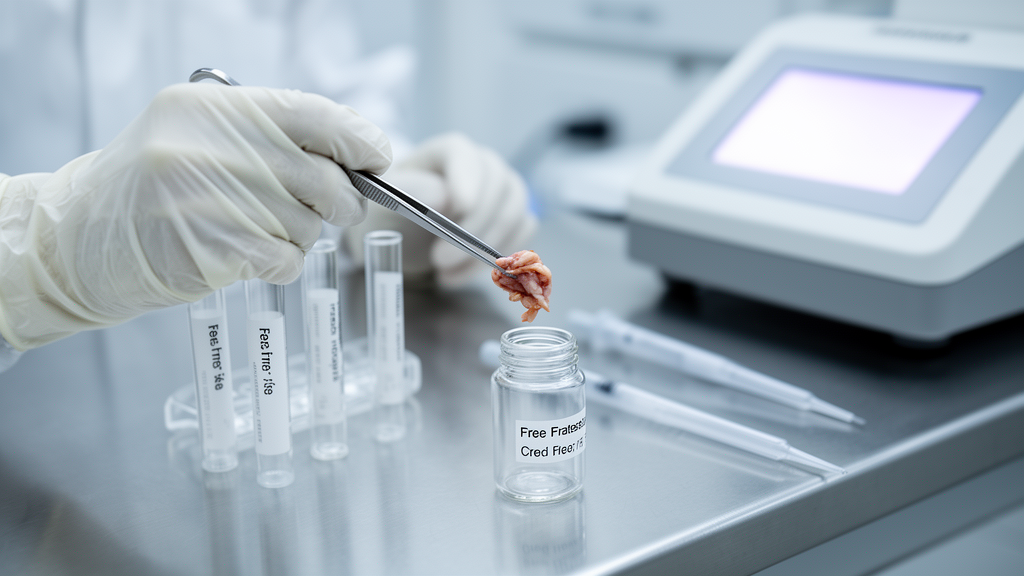
The biochemical method at the heart of the study was liquid chromatography-tandem mass spectrometry, or LC-MS/MS, performed in a CAP/CLIA-certified laboratory. Researchers collected a six-to-eight-inch segment of umbilical cord at birth, froze it at minus 80 degrees Celsius, and shipped it overnight on cold packs. In the lab, approximately one gram of cord tissue was homogenized and hydrolyzed with glucuronidase enzyme in the presence of stable isotopically labeled internal standards, then subjected to solid-phase extraction before mass spectrometric analysis. The assay could detect cotinine at concentrations as low as 0.4 nanograms per gram of tissue. Because cotinine is a specific and relatively persistent metabolite of nicotine, its presence in cord tissue is considered strong evidence that the fetus was exposed to nicotine near the time of delivery, whether the source was maternal smoking, vaping, or environmental smoke.
The headline result was stark. Ninety-five of the 179 mothers, 53.1 percent, self-reported using tobacco products or e-cigarettes at some point during pregnancy, and cotinine was detected in the umbilical cords of all but one of their babies, a detection rate of 98.9 percent. But among the 84 mothers who reported no tobacco or e-cigarette use, cotinine was still found in 34.5 percent of the cords. Overall agreement between self-report and biochemical detection was moderate, with a Gwet’s AC1 coefficient of 0.680, a statistic that ranges from zero to one and is considered substantial only above 0.61. In other words, the two measures aligned far less often than clinicians might hope, and the discordance ran almost entirely in one direction: toward hidden exposure.
Stratifying the results by maternal opioid use sharpened the picture. Among women who used opioids during pregnancy, cotinine was detected in at least 58.8 percent of cords regardless of whether the mother reported tobacco use, and agreement between report and biochemistry was high, with a Gwet’s AC1 of 0.859. Among women without prenatal opioid use, the pattern was similar but weaker, with 28.4 percent of non-reporters showing cotinine detection and an AC1 of 0.586. Sensitivity of self-report was excellent in both groups, 0.95 among controls and 1.0 among opioid-exposed mothers, meaning women who admitted smoking almost always had biochemical confirmation. Specificity, however, varied widely, at 0.72 for the control group and just 0.41 for the opioid-exposed group, indicating that many women who denied use had babies with clear biochemical evidence of nicotine exposure.
The researchers also examined whether the accuracy of self-report varied by trimester, since prior work has suggested women may underreport use early in pregnancy. Mothers were asked in detail about their use of cigarettes, chewing tobacco, and e-cigarettes in each trimester through questionnaires completed at the first study visit, up to one month after birth. The proportion reporting tobacco use did not differ significantly by trimester, and agreement between self-report and cord cotinine remained moderate across all three trimesters, with Gwet’s AC1 coefficients between 0.595 and 0.643. Because cotinine was measured only in cord tissue at a single time point, however, the study could not biochemically verify exposure during the first and second trimesters, leaving open the possibility that early-pregnancy use was underreported even more than the cord data can reveal.
One of the most consequential findings concerned the home environment. Among mothers who reported no personal tobacco use and provided information about household exposure, 19.5 percent reported that someone in the household smoked or vaped. Cotinine was detected in 27 of 82 cords, or 32.9 percent, from babies whose mothers reported no personal use, and this association with household exposure was statistically significant. The highest detection rate, 87.5 percent, occurred in households where tobacco products were used but no one vaped. The authors point to secondhand smoke and its less visible cousin, thirdhand smoke, the residual pollutants that linger in household dust, on surfaces, and in multiunit housing long after active smoking has stopped, as plausible routes of fetal exposure through inhalation, dermal absorption, or ingestion by nonsmoking mothers. Because no biomarker can distinguish secondhand from thirdhand exposure, the precise source remains uncertain, but the fetal consequences may not be: prenatal smoke exposure has been linked to preterm birth, intrauterine growth restriction, and later cardiopulmonary and neurodevelopmental problems.
The study also documented patterns of e-cigarette use that exceed what most national surveys have captured. Exclusive e-cigarette use was reported by 8.4 percent of mothers, higher than the 0.1 to 3.4 percent prevalence reported in prior US studies of pregnant women, and dual use of cigarettes and e-cigarettes reached 14.0 percent. Notably, cotinine was detected in 100 percent of newborns whose mothers reported either exclusive vaping or dual use, confirming that e-cigarettes deliver nicotine to the fetus efficiently. This matters because many pregnant women perceive vaping as a safer alternative to smoking, yet emerging research associates prenatal nicotine exposure from e-cigarettes with low birth weight, preterm birth, and small-for-gestational-age infants. The authors argue that women who are pregnant or contemplating pregnancy need clearer information about these harms.
Why do so many women deny tobacco use that their babies’ cords contradict? The authors consider several explanations. Stigma surrounding smoking during pregnancy is well documented and may lead women to conceal use even in confidential research settings. Some participants may not classify products such as cigars, pipes, hookah, shisha, or nicotine pouches as tobacco, producing unintentional underreporting. Recall bias is another candidate, since questionnaires were completed up to a month after delivery. Socioeconomic patterns also emerged: both self-reported use and cotinine detection were more common among mothers with a high school education or less, those with public insurance, those with more than two children, and those living with smokers or vapers. Interestingly, prior research cited by the team suggests that self-reports can be highly accurate when collected non-judgmentally with assured confidentiality, offering a practical path for clinics that lack access to laboratory testing.
The public health implications are considerable. Cotinine was detected in nearly 70 percent of the overall sample and in 92.4 percent of neonates whose mothers used opioids prenatally, rates that stand in sharp contrast to national figures of 19.5 percent tobacco use among all US adults in 2023 and 4.6 percent during pregnancy in 2021. Newborns co-exposed to opioids and nicotine are known to experience more severe neonatal opioid withdrawal syndrome, so accurate identification of exposure directly affects how clinicians prepare for and manage an infant’s care after birth. The authors recommend that providers ask pregnant women not only about their own tobacco and nicotine use but also about household and community smoke exposure, and they call for harmonized survey instruments covering all product types, timing, amounts, and e-cigarette nicotine concentrations. Where feasible, serial maternal cotinine measurements early in pregnancy could enable timely cessation interventions and proactive newborn care plans. Until such measures become routine, the study’s central message stands: in high-risk populations, what mothers report about tobacco captures only part of the nicotine exposure their babies actually experience, and the hidden remainder may be clinically significant.
Subject of Research: Comparison of maternal self-reported prenatal tobacco use with umbilical cord cotinine measurement in newborns
Article Title: Comparison of prenatal self-report of tobacco use to direct measurement of umbilical cord cotinine
Article References: Mahabee-Gittens, E. M., Mack, N., Bann, C. M., Newman, J. E., Dai, H. D., Zhao, J., Setchell, K. D. R., Stone, L., Ambalavanan, N., Peralta-Carcelen, M., DeMauro, S. B., Lorch, S. A., Wilson-Costello, D. E., Poindexter, B. B., Limperopoulos, C., Davis, J. M., & Merhar, S. L. (2026). Comparison of prenatal self-report of tobacco use to direct measurement of umbilical cord cotinine. Journal of Perinatology. https://doi.org/10.1038/s41372-026-02902-8
Image Credits: AI Generated
DOI: 10.1038/s41372-026-02902-8
Keywords: cotinine, umbilical cord, prenatal tobacco exposure, nicotine, e-cigarettes, self-report, secondhand smoke, thirdhand smoke, neonatal opioid withdrawal, LC-MS/MS, pregnancy, biomarkers
Cite Scienmag News
Harold Sullivan. (October 9, 2026). Umbilical Cord Test Reveals Hidden Prenatal Tobacco Exposure Missed by Mothers’ Own Reports. Scienmag. https://scienmag.com/umbilical-cord-test-reveals-hidden-prenatal-tobacco-exposure-missed-by-mothers-own-reports/
Harold Sullivan. "Umbilical Cord Test Reveals Hidden Prenatal Tobacco Exposure Missed by Mothers’ Own Reports." Scienmag, 9 October 2026, https://scienmag.com/umbilical-cord-test-reveals-hidden-prenatal-tobacco-exposure-missed-by-mothers-own-reports/. Accessed 9 October 2026.
Harold Sullivan. "Umbilical Cord Test Reveals Hidden Prenatal Tobacco Exposure Missed by Mothers’ Own Reports." Scienmag. October 9, 2026. https://scienmag.com/umbilical-cord-test-reveals-hidden-prenatal-tobacco-exposure-missed-by-mothers-own-reports/


