


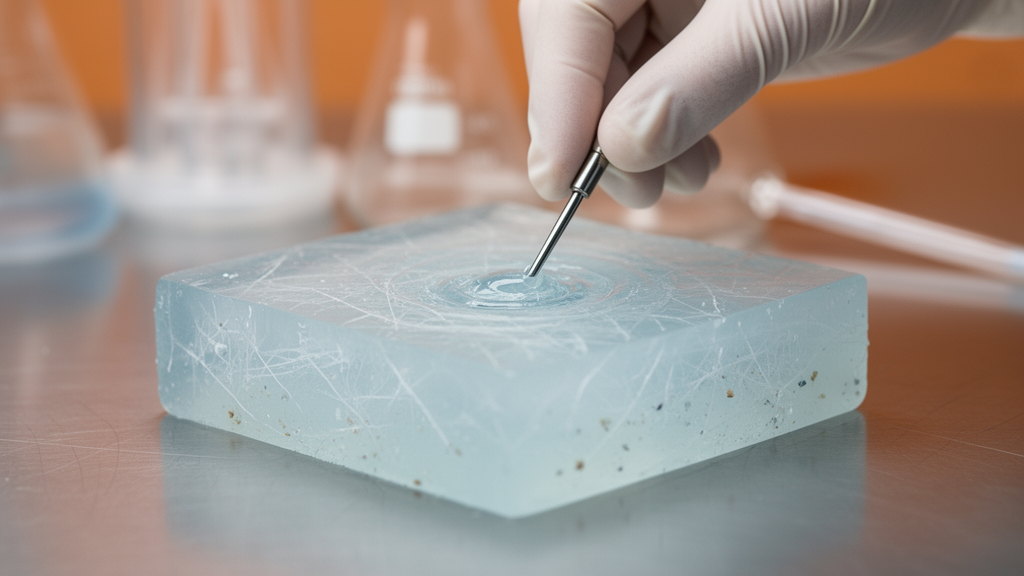
Bone has a remarkable trick: it remodels itself in response to the forces placed upon it, a principle first formalized as Wolff’s Law more than a century ago. Yet most synthetic scaffolds designed to repair broken or missing bone are mechanically static, holding one stiffness from the moment they are implanted until the day they degrade. A new review published in Frontiers in Medical Engineering argues that this mismatch may be one of the biggest bottlenecks in bone tissue engineering, and it makes the case that a special class of materials — mechanically adaptive hydrogels — could finally bridge the gap between laboratory promise and clinical reality.
Hydrogels are three-dimensional polymer networks with a water content typically ranging from 70 to 99 percent of their weight, making them naturally suited to mimic the hydrated environment of the extracellular matrix that surrounds living cells. Their intrinsic viscoelasticity and tunable stiffness allow them to replicate the biomechanical microenvironments of native tissues, which has made them staples of regenerative medicine, localized drug delivery and 3D bioprinting. But conventional hydrogels, once fabricated, keep the mechanical properties they were given. Mechanically adaptive hydrogels break that rule: they can dynamically alter their stiffness and viscoelasticity in response to stimuli such as temperature, pH, enzymatic activity and, crucially, the mechanical forces of daily loading.
The review, authored by Ioana-Cristina Băncilă of TU Wien, synthesizes 86 studies selected from an initial pool of 279 papers spanning 2011 to 2025. It organizes hydrogels into four broad classes. Natural hydrogels like collagen and hyaluronic acid offer excellent biocompatibility but lack the strength needed for load-bearing bone. Synthetic systems based on polyethylene glycol or polyvinyl alcohol deliver tunable, stable stiffness through covalent crosslinks. Hybrid materials attempt to balance bioactivity with mechanical robustness. And at the frontier sit mechanoresponsive hydrogels, which embed mechanosensitive elements that modulate stiffness in real time under physiological load.
The biomechanical parameters that govern whether such scaffolds succeed are quantified in detail. Elastic moduli in the range of 0.1 to 5 megapascals can support osteogenic differentiation, though hydrogels at the low end cannot bear the full mechanical demands of a load-bearing defect. Swelling ratios of 10 to 60 times the dry weight influence stiffness and degradation, with swelling above 40-fold associated with a 20 to 30 percent reduction in scaffold stiffness. Porosity above 80 percent promotes cell infiltration and vascularization but can undermine tensile strength. Stress relaxation and creep — the time-dependent behaviors that let native tissue dissipate energy under repetitive loading — are highlighted as essential design targets rather than afterthoughts, because they directly shape how cells sense and respond to their surroundings.
One of the more striking findings synthesized in the review comes from studies comparing scaffold stiffness at the kilopascal scale: softer matrices of 0.66 kilopascals actually enhanced osteogenic differentiation and matrix mineralization compared with stiffer 5.4-kilopascal scaffolds, a counterintuitive result that underscores how mechanotransduction is not simply a matter of making materials harder. Stiffer microenvironments generally favor osteogenesis while softer ones steer cells toward chondrogenic pathways, and the timing and spatial distribution of these cues may matter as much as their magnitude. Hydrogels with programmable spatiotemporal mechanical cues have now been shown to improve stem cell differentiation and mineralization without relying exclusively on biochemical growth factors.
Standout examples illustrate the direction of travel. A dual-crosslinked, injectable hydrogel combining oxidized hyaluronic acid, gelatin, borax and Prussian blue nanoparticles exhibits self-healing behavior, scavenges reactive oxygen species, fights bacteria and maintains mechanical integrity under physiologically relevant loads. Gelatin methacryloyl hydrogels reinforced with polycaprolactone nanofibers and bioactive glass have promoted bone regeneration in critical-size cranial defects. Photocrosslinkable systems such as GelMA and PEGDA can be printed with spatial stiffness gradients that mimic the transition from trabecular to cortical bone, and composites loaded with hydroxyapatite nanoparticles emulate the mineralized matrix without sacrificing viscoelasticity.
Computation enters as the second pillar of the review. Finite element modeling, or FEM, has been used to simulate hydrogel scaffolds assigned Young’s moduli of 1 to 5 megapascals under compressive loads of roughly 1000 newtons, incorporating the properties of surrounding trabecular and cortical bone. Such models predict how scaffold stiffness, geometry and porosity distribution shape the local mechanical environment that governs osteogenic differentiation. But the review is blunt about the limitations: most FEM studies assume material homogeneity, ignore swelling, degradation and viscoelastic change over time, apply oversimplified axial loading, and lack experimental validation. Simulations that cannot capture these dynamics have limited power to predict what will happen inside a living patient.
The third pillar is the bone-on-chip, a microfluidic platform that recreates the bone microenvironment in vitro with far more physiological relevance than static cell cultures. Mechanically adaptive hydrogels are especially suited to these devices because they respond to compression, shear stress and cyclic deformation — the forces central to bone physiology. Recent platforms have demonstrated thermoresponsive hydrogels actuated by laser-based systems to stimulate osteogenesis in human mesenchymal stem cells without any biochemical factors, microporous biodegradable hydrogels supporting functional human bone cell networks under perfusion, and stiffness-gradient systems activating YAP/TAZ mechanotransduction pathways under dynamic compression. These chips can monitor cellular behavior, matrix remodeling and drug responses in real time under conditions that approximate the body.
The review does not shy away from the field’s fragmentation. Standards bodies including ASTM and ISO have published rigorous mechanical testing protocols for hydrogels, yet actual adoption remains sporadic, producing a literature that is difficult to compare or reproduce. Bulk tests like uniaxial compression average the response of an entire sample, masking the microscale stiffness gradients introduced by embedded cells, growth factors and nanoparticles — variations that profoundly influence cell fate. The author argues that spatially resolved techniques such as atomic force microscopy nanoindentation, Brillouin light scattering microscopy and scanning acoustic microscopy should be indispensable parts of the characterization pipeline, not optional extras, and that bone-on-chip data should feed directly into multiscale computational frameworks combining FEM with molecular dynamics.
The translational path forward links mechanical adaptability to specific clinical scenarios: craniofacial reconstruction, where scaffolds must withstand masticatory forces; spinal fusion, where compressive and cyclic loading dominate; and osteochondral repair, where stiffness gradients are inherent to the tissue. Regulatory hurdles, GMP-compliant manufacturing and long-term in vivo data gaps remain formidable, and candidates like the PEG-fibrinogen hydrogel GelrinC show promise while exposing challenges in scalability and vascularization. The convergence of adaptive materials, machine-learning-guided design, embedded biosensors and validated chip-model coupling offers, in the reviewer’s framing, a concise framework for rational scaffold design — one in which the material that heals your bone might one day adjust itself in step with your own skeleton.
Subject of Research: Mechanically adaptive hydrogels for bone tissue engineering
Article Title: Mechanically adaptive hydrogels for bone tissue engineering: from classification and biomechanics to modeling and translational applications
Article References: Băncilă, I.-C. (2025). Mechanically adaptive hydrogels for bone tissue engineering: from classification and biomechanics to modeling and translational applications. Frontiers in Medical Engineering, 3, Article 1703555. https://doi.org/10.3389/fmede.2025.1703555
Image Credits: AI Generated
DOI: 10.3389/fmede.2025.1703555
Keywords: hydrogels, bone tissue engineering, mechanically adaptive materials, finite element modeling, bone-on-chip, mechanobiology, stimuli-responsive biomaterials, stress relaxation, extracellular matrix, regenerative medicine, 3D bioprinting, vascularization
Cite Scienmag News
Denise Maddox. (October 17, 2026). Smart Hydrogels That Shift Stiffness Could Transform Bone Repair. Scienmag. https://scienmag.com/smart-hydrogels-that-shift-stiffness-could-transform-bone-repair/
Denise Maddox. "Smart Hydrogels That Shift Stiffness Could Transform Bone Repair." Scienmag, 17 October 2026, https://scienmag.com/smart-hydrogels-that-shift-stiffness-could-transform-bone-repair/. Accessed 17 October 2026.
Denise Maddox. "Smart Hydrogels That Shift Stiffness Could Transform Bone Repair." Scienmag. October 17, 2026. https://scienmag.com/smart-hydrogels-that-shift-stiffness-could-transform-bone-repair/


