


3D Printed Scaffolds Still Fall Short on Vascularization for Bone Repair
A new review argues that 3D-printed bone scaffolds still lack the functional, perfusable vascular networks needed for clinical translation.
A new review argues that 3D-printed bone scaffolds still lack the functional, perfusable vascular networks needed for clinical translation.

Researchers have demonstrated that the phosphatase inhibitor sodium tungstate accelerates host vascularization and doubles tissue survival in transplanted human beta-like ...

Researchers 3D bioprinted heart tissue patches containing human endothelial cells and found that those with vessel-like networks supported more aligned ...
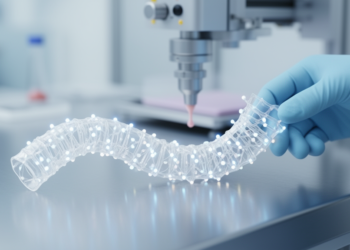
A new review maps how sensor-embedded 3D-bioprinted tracheal grafts, supported by AI and digital twins, could transform airway reconstruction while ...

A new review in the Journal of Translational Medicine examines how cancer stem cells, vascularization and immune evasion contribute to ...
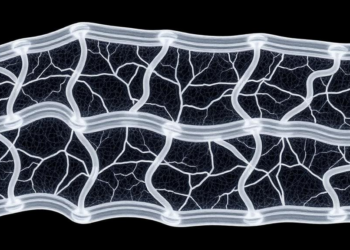
A controlled rabbit study found that a trilayer chitosan/PLGA/chitosan electrospun scaffold was safe and preserved urethral patency but did not ...
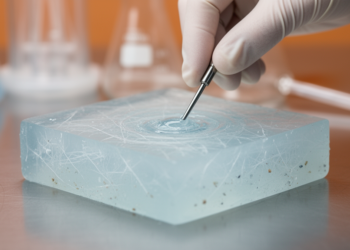
A new review maps how mechanically adaptive hydrogels that dynamically tune their stiffness, combined with finite element modeling and bone-on-chip ...
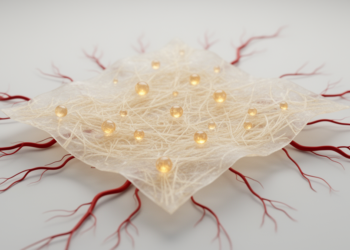
Nanovesicles embedded in decellularized bovine pericardium drive blood vessel formation in cell cultures and rescue ischemic limbs in mice, opening ...

Researchers have built vascularized, immune-integrated human skin assembloids from stem-cell-derived organoids that model atopic dermatitis-like inflammation and respond to approved ...

A Stanford-led review in Nature Biomedical Engineering maps how multi-organ tissue chips that preserve each organ's native niche could transform ...


Embark on a thrilling journey of discovery with Scienmag.com—your ultimate source for cutting-edge breakthroughs. Immerse yourself in a world where curiosity knows no limits and tomorrow’s possibilities become today’s reality!