


Direct Printed Aligners Deliver More Controlled Rotational Forces Than Thermoformed Appliances
An in vitro biomechanical evaluation demonstrates that direct printed clear aligners apply lower, more stable forces with less unwanted vertical ...
An in vitro biomechanical evaluation demonstrates that direct printed clear aligners apply lower, more stable forces with less unwanted vertical ...

Engineering molecular network symmetry in renewable benzoxazine and epoxidized palm oil copolymers enables triple-shape memory programming and maintains recovery stability ...

A systematic review published in Progress in Orthodontics reveals that clear aligners undergo clinically relevant degradation in physical, mechanical, and ...

A one-step bioextrusion process creates hydrogel grafts with mineral gradients that mirror native osteochondral tissue to support joint repair.

A novel solvent slurry impregnation technique enables uniform resin infiltration into woven glass fibers, significantly enhancing the mechanical, thermal, and ...

A review in Med-X details how surface stiffness, topography, and viscoelasticity mechanically direct macrophage behavior to steer tissue regeneration and ...

Cyclic hydrostatic testing reveals that internal stress relaxation and fatigue damage cause sharp increases in water absorption in deep-sea polymer ...

A thiazole-functionalized copolymer spray-coated onto kaolin suppresses particle agglomeration in styrene-butadiene rubber and increases composite tensile strength by 51.3 percent.
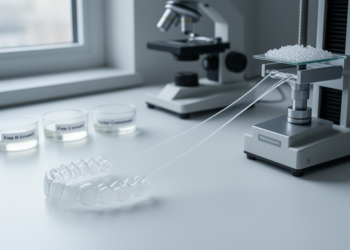
A new structured literature review shows that clear aligner performance depends far more on exact formulation, processing and ageing conditions ...
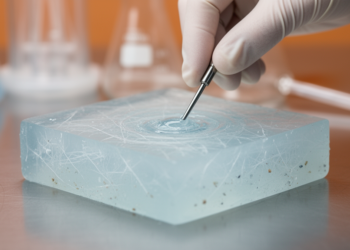
A new review maps how mechanically adaptive hydrogels that dynamically tune their stiffness, combined with finite element modeling and bone-on-chip ...


Embark on a thrilling journey of discovery with Scienmag.com—your ultimate source for cutting-edge breakthroughs. Immerse yourself in a world where curiosity knows no limits and tomorrow’s possibilities become today’s reality!