

Tuesday, July 28, 2026
Science
No Result
View All Result
  • Login
  • HOME
  • SCIENCE NEWS
  • CONTACT US
  • HOME
  • SCIENCE NEWS
  • CONTACT US
No Result
View All Result
Scienmag
No Result
View All Result
Home Science News Medicine

Single-Plane Imaging Tracks Dynamic 3D Structures in Living Cells with Focus Feedback

July 28, 2026
in Medicine
Reading Time: 2 mins read
0
Single-Plane Imaging Tracks Dynamic 3D Structures in Living Cells with Focus Feedback

Single-Plane Imaging Tracks Dynamic 3D Structures in Living Cells with Focus Feedback

65
SHARES
587
VIEWS
Share on FacebookShare on Twitter
ADVERTISEMENT

A new protocol promises to make three-dimensional tracking in living cells far less punishing for both cells and microscopes. Instead of repeatedly acquiring full z-stacks—which can blur temporal dynamics and raise light exposure—the method uses “focus feedback” to keep a target structure accurately registered in a single optical plane over time. The result is longer imaging sessions, faster sampling, and reduced phototoxicity during studies of rapid molecular motion.

The approach tackles a core bottleneck in live-cell imaging: obtaining high precision in depth (the z-axis) without the delays and bleaching risks of volumetric scanning. Focus feedback microscopy continuously estimates focus and adjusts acquisition to follow structures as they move slightly out of the focal plane. By doing so, it sidesteps common limitations of traditional z-stacks while preserving spatial accuracy.

At the heart of the protocol is a feedback algorithm that interfaces with microscope control software such as Zeiss Zen or custom environments. Researchers integrate a z-detection strategy based on a cylindrical lens, enabling the system to infer defocus from optical signals. This transforms what is typically a static focus setting into an actively controlled variable during time-lapse imaging.

The protocol provides a practical workflow for bringing the system online. It includes bead-based calibration steps to quantify how focus-related measurement signals map onto actual z-position changes. With calibration in place, the microscope can interpret real-time imaging data to adjust focus and maintain the target structure within the desired imaging plane.

Because the method is designed as a step-by-step guide, it can be adopted by laboratories with different levels of microscopy experience. Depending on experimental complexity, the full setup and initial validation can be completed within a single day—an important factor for teams that need rapid deployment in ongoing projects.

The protocol also emphasizes compatibility. It is described as suitable for multichannel experiments and for challenging regimes such as single-molecule imaging, where maintaining focus stability is critical for quantitative localization. This broad applicability could extend focus-feedback tracking beyond nuclei to other compartments that exhibit dynamic rearrangements.

Demonstrations include tracking single gene loci within the nucleus, a scenario where subtle depth shifts and motion must be resolved without sacrificing temporal continuity. The authors also outline natural extensions to cytoplasmic structures such as organelles or vesicles, potentially broadening the method’s impact across cell biology.

By reframing “3D tracking” as a controlled single-plane problem, the technique offers a powerful alternative to volumetric acquisition. For researchers chasing fast biological dynamics with minimal light damage, the combination of precision, speed, and practical implementability could quickly become a go-to strategy.

Finally, the protocol’s design supports the core scientific need behind live imaging: capturing dynamic processes with both spatial fidelity and temporal responsiveness. If widely adopted, focus feedback microscopy could help shift the field toward more continuous, less invasive observation of cellular life in motion.

Subject of Research: Live-cell three-dimensional tracking using single-plane focus-feedback microscopy.
Article Title: Three-dimensional tracking of dynamic structures in living cells using single-plane imaging with focus feedback.
Article References: Antonova, S.V., Pomp, W., Meeussen, J.V.W. et al. Three-dimensional tracking of dynamic structures in living cells using single-plane imaging with focus feedback. Nat Protoc (2026). https://doi.org/10.1038/s41596-026-01419-w
DOI: https://doi.org/10.1038/s41596-026-01419-w
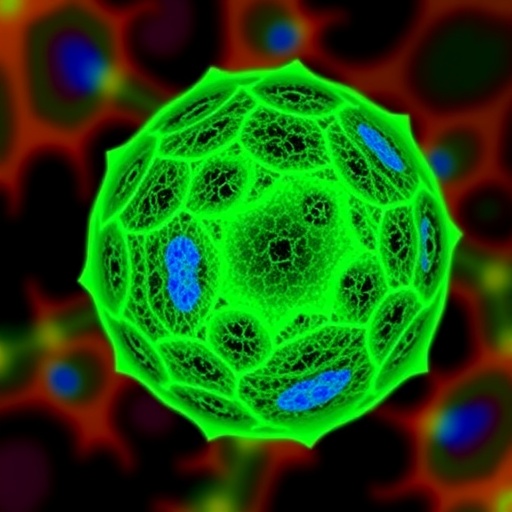
Image Credits: AI Generated
Keywords:

Tags: advanced z-detection methods for live-cell imagingcontinuous focus adjustment in microscopycylindrical lens-based focus inferencedynamic 3D structure trackingfeedback algorithms for microscopy controlfocus feedback microscopyhigh-precision depth tracking in live cellshigh-speed molecular motion imaging in living cellslive-cell 3D imagingminimally invasive microscopy techniquesreal-time single-plane imagingreduced phototoxicity in live-cell imaging
Share26Tweet16
Previous Post

Adaptive policies could boost Zambia nutrition security amid future climate shocks

Next Post

Study finds higher healthcare costs linked to inappropriate medication use in seniors

Related Posts

Fractionated Proteomics Uncovers Protein Network Reducing Exercise-Induced Muscle Damage
Medicine

Fractionated Proteomics Uncovers Protein Network Reducing Exercise-Induced Muscle Damage

July 28, 2026
Standardizing Lung Ultrasound to Improve Neonatal Care Outcomes
Medicine

Standardizing Lung Ultrasound to Improve Neonatal Care Outcomes

July 28, 2026
Alpha-synuclein Aggregates Differentially Alter Electrophysiology of SNpc and VTA Neurons
Medicine

Alpha-synuclein Aggregates Differentially Alter Electrophysiology of SNpc and VTA Neurons

July 28, 2026
Study finds higher healthcare costs linked to inappropriate medication use in seniors
Medicine

Study finds higher healthcare costs linked to inappropriate medication use in seniors

July 28, 2026
Adaptive policies could boost Zambia nutrition security amid future climate shocks
Medicine

Adaptive policies could boost Zambia nutrition security amid future climate shocks

July 28, 2026
Nanoneedle Arrays Enable Sequencing-Free Spatial Profiling of Fresh Tissue Regulation
Medicine

Nanoneedle Arrays Enable Sequencing-Free Spatial Profiling of Fresh Tissue Regulation

July 28, 2026
Next Post
Study finds higher healthcare costs linked to inappropriate medication use in seniors

Study finds higher healthcare costs linked to inappropriate medication use in seniors

  • Mothers who receive childcare support from maternal grandparents show more

    Mothers who receive childcare support from maternal grandparents show more parental warmth, finds NTU Singapore study

    27656 shares
    Share 11059 Tweet 6912
  • University of Seville Breaks 120-Year-Old Mystery, Revises a Key Einstein Concept

    1061 shares
    Share 424 Tweet 265
  • Bee body mass, pathogens and local climate influence heat tolerance

    682 shares
    Share 273 Tweet 171
  • Researchers record first-ever images and data of a shark experiencing a boat strike

    546 shares
    Share 218 Tweet 137
  • Groundbreaking Clinical Trial Reveals Lubiprostone Enhances Kidney Function

    531 shares
    Share 212 Tweet 133
Science

Embark on a thrilling journey of discovery with Scienmag.com—your ultimate source for cutting-edge breakthroughs. Immerse yourself in a world where curiosity knows no limits and tomorrow’s possibilities become today’s reality!

RECENT NEWS

  • Fractionated Proteomics Uncovers Protein Network Reducing Exercise-Induced Muscle Damage
  • Rescuer Rotation Affects Neonatal Chest Compression Metrics, Simulation Study Finds
  • Standardizing Lung Ultrasound to Improve Neonatal Care Outcomes
  • Alpha-synuclein Aggregates Differentially Alter Electrophysiology of SNpc and VTA Neurons

Categories

  • Agriculture
  • Anthropology
  • Archaeology
  • Athmospheric
  • Biology
  • Biotechnology
  • Blog
  • Bussines
  • Cancer
  • Chemistry
  • Climate
  • Earth Science
  • Editorial Policy
  • Marine
  • Mathematics
  • Medicine
  • Pediatry
  • Policy
  • Psychology & Psychiatry
  • Science Education
  • Social Science
  • Space
  • Technology and Engineering

Subscribe to Blog via Email

Enter your email address to subscribe to this blog and receive notifications of new posts by email.

Join 5,146 other subscribers

© 2025 Scienmag - Science Magazine

Welcome Back!

Login to your account below

Forgotten Password?

Retrieve your password

Please enter your username or email address to reset your password.

Log In
No Result
View All Result
  • HOME
  • SCIENCE NEWS
  • CONTACT US

© 2025 Scienmag - Science Magazine

Discover more from Science

Subscribe now to keep reading and get access to the full archive.

Continue reading
